


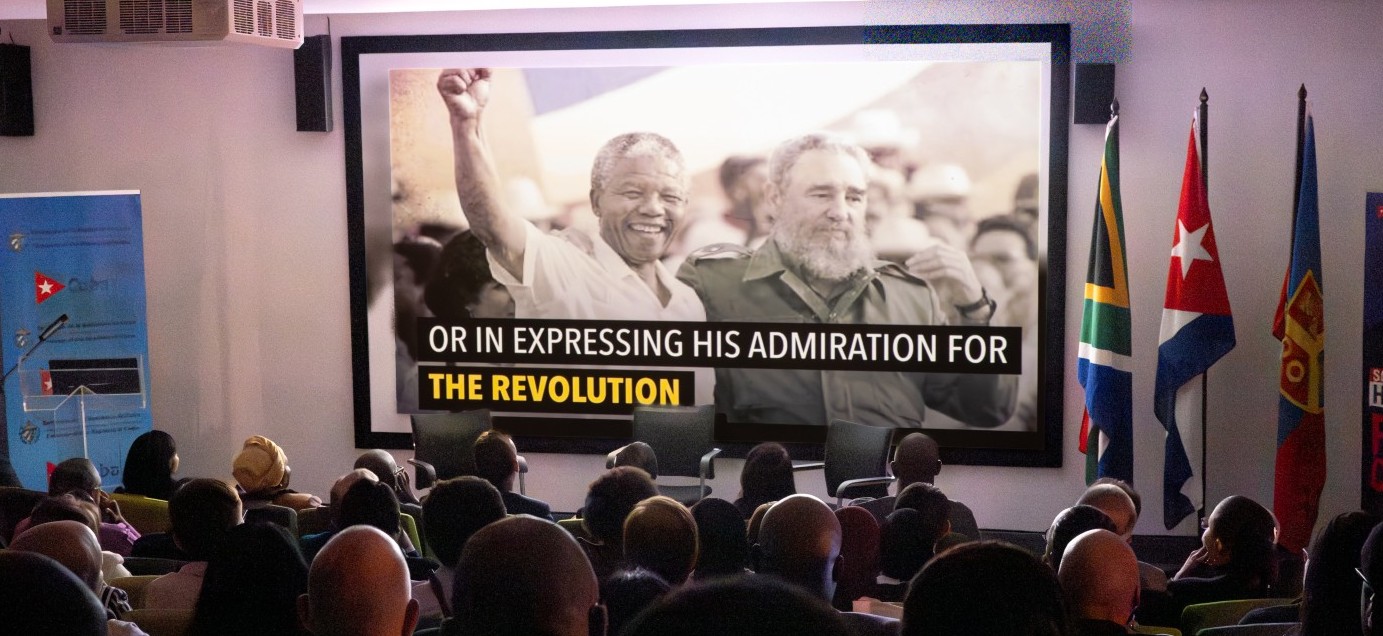
- Speakers emphasised that the relationship between Mandela and Castro was rooted in solidarity, principle and mutual respect.
- Cuba’s support during South Africa’s liberation struggle, as well as its contributions to healthcare and education, were highlighted as a lasting legacy.
- Calls were made to strengthen cooperation among the Global South in science, technology, and development.
The enduring relationship between Nelson Mandela and Fidel Castro was framed as one grounded in principle rather than self-interest at a recent University of Pretoria seminar, where speakers reflected on how their shared values continue to shape global conversations on justice and solidarity.
Hosted by the University of Pretoria’s Department of Internationalisation and Strategic Partnerships, in collaboration with the Embassy of Cuba in South Africa, the seminar titled “Fidel and Mandela: The Legacy of Two Great Leaders” brought together political leaders, diplomats and academics to examine how the two figures influenced education, healthcare and international cooperation.
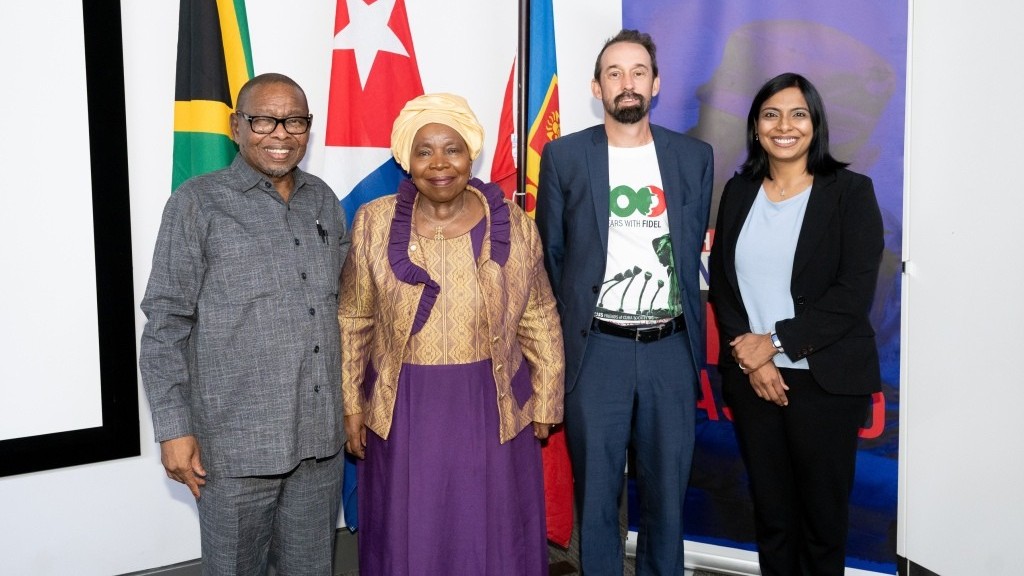
Among those in attendance were Professor Blade Nzimande, Dr Nkosazana Dlamini-Zuma, Ambassador Fakri Rodríguez Pinelo and Professor Francis Petersen.
Shared legacy of solidarity and justice
Welcoming delegates, Petersen positioned the relationship between Mandela and Castro as one that continues to resonate well beyond their lifetimes, particularly across the Global South.
He said, “Today, we gather not only to reflect on the enduring relationship between Fidel Castro and Nelson Mandela, but also on their shared commitment to justice, solidarity and human dignity, which shaped the histories of Cuba and South Africa and continues to resonate in the Global South.”
Petersen was clear that these ideals were not abstract for the University of Pretoria, linking them directly to the institution’s own values. He said, “Both leaders believed that education is a cornerstone of liberation, that health is a fundamental human right, and that solidarity across nations is essential in advancing a more just and equitable world.”
He went on to describe the partnership between South Africa and Cuba as one of the most meaningful examples of cooperation among countries in the Global South, adding, “From Cuba’s support during the liberation struggle to its longstanding contributions in health and education, this relationship embodies a model of solidarity that transcends geography and political boundaries.”
Nzimande expanded on this history, placing Cuba’s role in South Africa’s liberation struggle at the centre of his reflections. He said, “Today we did not only reflect, we challenged, we also inspired, and we remembered the values and lessons imparted by these two great leaders.”
He linked the bond between Mandela and Castro to broader anti-colonial struggles, stating, “The bond between President Castro and Madiba has its basis in Cuba and South Africa’s gallant histories of anti-imperialist and anti-colonial resistance.”
Nzimande highlighted Cuba’s direct support for the African National Congress, noting, “As an expression of solidarity, Cuba supported our liberation movement, the African National Congress, by providing military training and equipment, and by fighting alongside uMkhonto weSizwe.”
He pointed to the Battle of Cuito Cuanavale as a defining moment, adding, “One of the most notable expressions of Cuban-South African solidarity was the 1988 Battle of Cuito Cuanavale, whose outcome gave impetus to the independence of Namibia and the eventual fall of apartheid.”
He was emphatic that Cuba’s assistance was not driven by profit, stating, “Cuba never sought material gain from this support, which remains a powerful example of international solidarity.”
Healthcare, education and future cooperation
Dlamini-Zuma drew on her personal experiences in Cuba and how they shaped her understanding of equality and public service. She described Cuba as a society that truly lived its values and highlighted its distinctive approach to international solidarity.
She said, “Cuba practised solidarity by sending medical personnel, training international students and investing in health and education.”
Dlamini-Zuma spoke in detail about how Cuba helped strengthen South Africa’s healthcare system after 1994, particularly in rural and underserved communities. She said, “Cuba’s contribution went beyond numbers.”
She added, “Their model of strong primary healthcare, where communities are served at a local level, offered invaluable lessons for South Africa. It remains a powerful example of what international solidarity can achieve.” Her remarks also underscored how training South African medical students in Cuba helped build a generation of doctors committed to serving disadvantaged communities.
Looking ahead, Nzimande called for renewed collaboration in emerging fields, including artificial intelligence, robotics and space systems, while maintaining a focus on technological sovereignty and climate resilience.
He said, “The personal bond between Madiba and President Castro was not only predicated on their lifelong struggle against injustice, but also on a shared commitment to a world where no nation or group imposes its will on another.”
Ambassador Pinelo traced the historical roots of the relationship, noting that it had taken root even before Mandela and Castro met in person. He said, “One of Mandela’s first international visits after his release from prison in 1990 was to Cuba in 1991, where he met Castro and was honoured at the commemoration of the Moncada Barracks attack.”
He added, “Castro later attended Mandela’s 1994 presidential inauguration, a testament to the enduring strength of their relationship.”
As the seminar drew to a close, participants, including South African doctors trained in Cuba and international students, reflected on how to carry forward the values of Mandela and Castro.
Ramoutar-Prieschl urged a renewed commitment to these principles, encouraging individuals and institutions alike to apply them in addressing the global challenges of today.
Get your news on the go. Click here to follow the Conviction WhatsApp channel.
