


- The Labour Appeal Court has found that calling someone a ‘white racist’ does not automatically amount to racist conduct.
- The employer failed to prove the dismissal was justified.
- The dismissed employee was reinstated, with back pay.
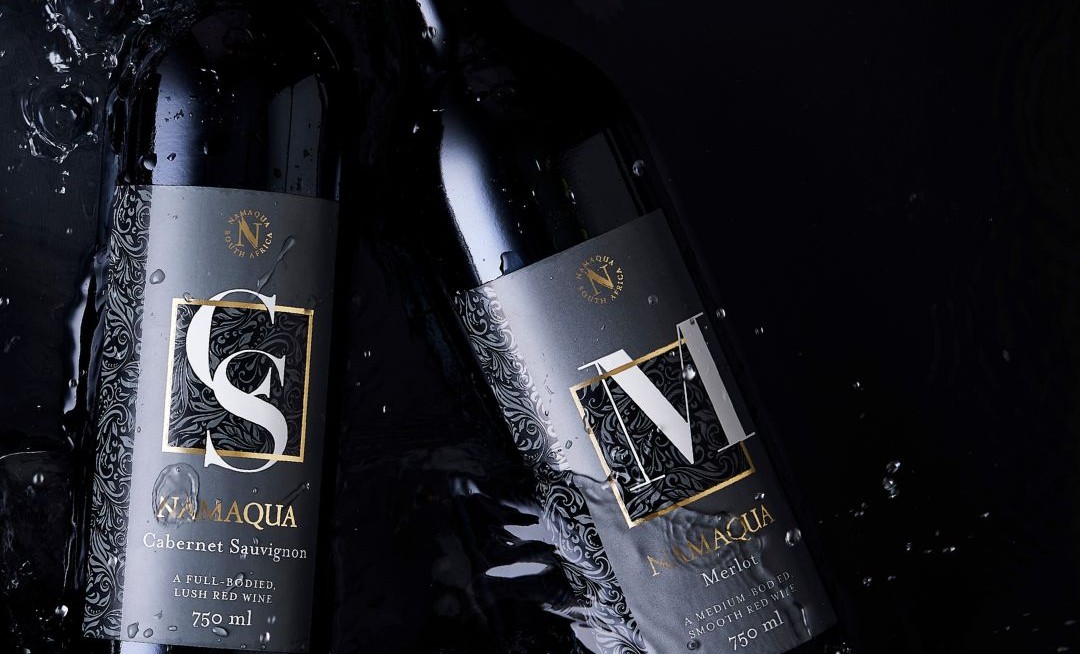
The Labour Appeal Court has ruled that calling a manager a “white racist” does not automatically amount to racist behaviour, overturning the dismissal of a shop steward who lost his job following a heated confrontation at Namaqua Wines.
Acting Judge GN Moshoana, writing for the court, held that context, history, and the objective meaning of words must all be weighed carefully before any conduct can be labelled racist. The court found that the dismissal of Vuyani Qomoyi was substantively unfair and ordered his reinstatement with full back pay.
Background and parties
The dispute arose after Qomoyi, a shop steward for the Commercial Stevedoring Agricultural and Allied Workers Union, clashed with his manager, Albrie Meyer, during a heated workplace exchange. The matter was initially referred to the Commission for Conciliation, Mediation and Arbitration, where Commissioner Anthony Ruggiero found the dismissal to be fair.
Qomoyi had been employed by Namaqua Wines since 27 August 2019 as a general worker and later became a recognised shop steward, responsible for representing employees in disciplinary matters. Namaqua operates within the agricultural sector and employs both permanent and seasonal workers across its wine production operations.
The events unfolded on 3 August 2021, when Meyer summoned Qomoyi to the human resources office without explaining why. Qomoyi asked what the meeting was about, but was told only that he was there to act as a witness.
When he arrived, he found Meyer telling another employee, Sipho Maimane, that he had been dismissed, a process Qomoyi had played no part in, despite his role as shop steward.
Believing the process was unfair, Qomoyi pushed back. During the heated exchange that followed, he raised his voice and called Meyer a “white racist” multiple times, accusing him of dismissing black workers without proper representation. The confrontation was captured on video.
Qomoyi was suspended and faced multiple misconduct charges, including gross insubordination, racist behaviour, refusing a lawful instruction, and breach of trust. The disciplinary chairperson ultimately found him guilty of insolence and racist behaviour. He received a final written warning for the insolence, but was dismissed for the racism allegation.
The central issue before the Labour Appeal Court was whether the words used by Qomoyi, in their full context, amounted to racist conduct justifying dismissal.
The legal question and test
Judge Moshoana said the case was not about whether the words were offensive, but whether they objectively amounted to racist behaviour.
Referring to binding authority from the Constitutional Court of South Africa, particularly the decision in Rustenburg Platinum Mine v SAEWA obo Bester, the court emphasised that the correct test is objective.
The judgment read, “The test is not based on how the employer understood the words nor on the subjective feelings of the person to whom the remark was made, but whether a reasonable, objective and informed person would perceive it to be racist.”
Judge Moshoana criticised the commissioner for skipping this test entirely, instead assuming from the outset that the statement was a racist tirade. Rather than first establishing whether the words were racist, the commissioner focused on dismissing Qomoyi’s justification for them.
The court stressed that this approach effectively flipped the burden of proof. It is the employer’s responsibility to show that a dismissal was for a fair reason, not the employee’s to prove it was not.
Context and workplace realities
The court placed considerable weight on the circumstances surrounding the statement. Qomoyi had been brought in to witness the dismissal of a fellow worker without any prior involvement, a direct contradiction of his role as shop steward, which ordinarily requires participation in disciplinary processes.
Judge Moshoana noted, “The correct facts suggest that when Mr Qomoyi called Mr Meyer a white racist, it was after a black worker was dismissed in a manner perceived by Mr Qomoyi to be unfair.”
The court accepted that the statement was a reaction to what Qomoyi perceived as unfair treatment, not an expression of racial superiority or prejudice. His evidence at arbitration painted a picture of someone frustrated at being shut out of the very processes designed to protect workers.
In a key passage, the court explained, “A reasonable, objective, and informed person would have perceived Mr Qomoyi as a person expressing his opinion about Mr Meyer on the strength of what he had just observed.”
The court further noted the broader societal and historical context of South Africa, including patterns of racial inequality and reported exploitation in the agricultural sector, which form part of the background against which such disputes must be assessed.
Labour Court errors
The Labour Appeal Court also found that the Labour Court had overstepped its role, effectively re-evaluating the dispute from scratch without first setting aside the arbitration award.
Judge Moshoana said, “The Labour Court is simply not permitted to… augment the arbitration award by determining issues left out of account by a commissioner.”
Rather than sticking to the review test, the Labour Court applied the correct legal test on its own and used it to justify the outcome, even though the commissioner had never applied that test in the first place.
The court also rejected the Labour Court’s view that accusing someone of racism is, in itself, a racist act, finding that such a blanket conclusion ignores context, legal principle, and binding precedent.
Findings on racism and fair comment
A significant portion of the judgment explored what racism actually means in law and in society. The court was firm that not every reference to race, and not even every accusation of racism, qualifies as racist conduct.
Judge Moshoana stated, “Gratuitous references to race… may be that not every reference to race is a product or manifestation of racism.”
The court held that the word “white” is a neutral racial descriptor and cannot be inherently racist on its own. The real question was whether the word “racist”, in the full context of what had just happened, amounted to a racially offensive attack or simply an expression of opinion.
The court found that Qomoyi’s statement was rooted in what he had just witnessed and could amount to fair comment, even if strongly worded. Nothing in his conduct suggested a belief in racial superiority or an intent to demean Meyer on the basis of his race.
The judgment also rejected earlier Labour Court authority, suggesting that accusing someone of racism is automatically misconduct, finding that such a position sits uncomfortably with constitutional jurisprudence.
Outcome and remedy
The court concluded that Qomoyi’s dismissal was not for a fair reason and therefore substantively unfair.
Judge Moshoana held, “The usage of the words white racist in the context and circumstances of this case does not amount to a display of racist behaviour.”
The court also noted an inconsistency in the disciplinary outcome: Qomoyi had already been sanctioned with a final written warning for insolence arising from the very same incident, making dismissal on top of that difficult to justify.
The court ordered Qomoyi’s reinstatement with retrospective effect. No order was made as to costs.
Get your news on the go. Click here to follow the Conviction WhatsApp channel.
