


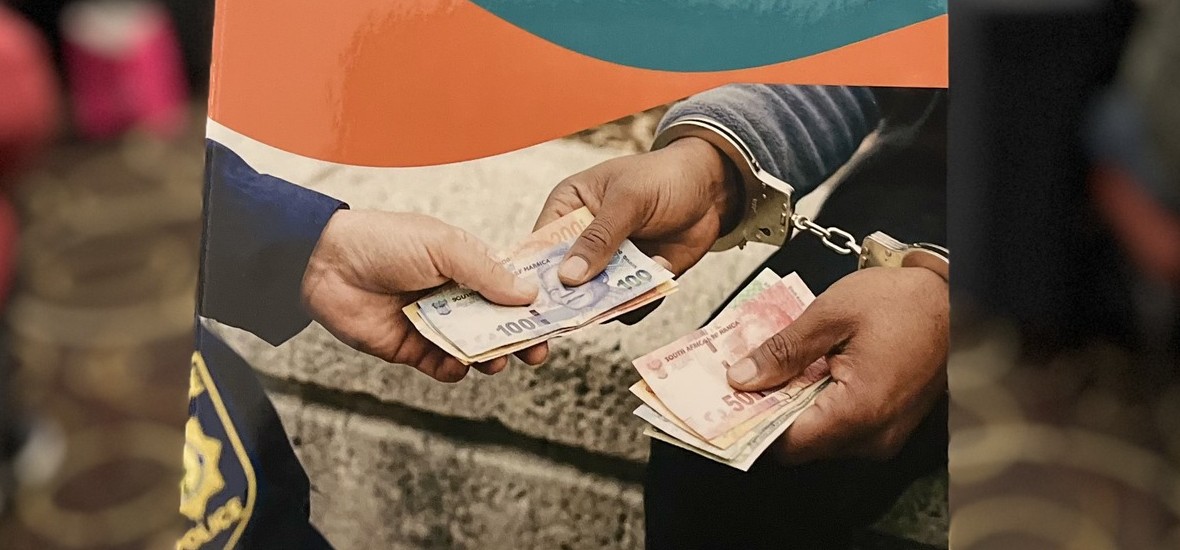
- Asylum seekers report paying bribes to avoid arrest, secure release from detention and access documentation.
- Police and immigration officials are repeatedly implicated in extortion across multiple stages of the asylum process.
- Administrative delays are pushing people into undocumented status, exposing them to a cycle of exploitation.
Asylum seekers in South Africa are being forced to pay bribes to avoid arrest, get out of detention and access documents they are legally entitled to, according to a new report by Lawyers for Human Rights.
On Thursday, 16 April 2026, the organisation launched the research in Johannesburg, examining corruption inside South Africa’s asylum system and the barriers that asylum seekers and refugees face when trying to regularise their status.
The report finds that corruption is a serious and ongoing obstacle to accessing legal protection, with asylum seekers and refugees regularly expected to pay for legally free services.
People described being stopped by police and pressured to hand over money to avoid arrest, even when they had valid documents. Others were detained and only let go after paying. “The only way to be released was to pay,” one participant said. Another described how these demands have become routine. “Even when you have your permit, they still say you must pay, or they will arrest you.”
The report sets out allegations against public officials, including members of the South African Police Service and Department of Home Affairs staff. These officials are alleged to have demanded bribes in exchange for letting people go, keeping them out of detention, or helping them access documents. There are also documented cases where people were detained or moved by police and only freed once they had paid.
People reported being asked for money during asylum applications, permit renewals and when collecting documents, with payments presented as the only way to get an application processed. “If you need assistance, you need to give us something,” one participant was told.
The report found that fixed amounts are demanded for legally free services, with some participants reporting requests of up to R1,500 per person.
Detention and documentation used as tools of control
When permits are delayed or not renewed on time, people lose their legal status and become targets for arrest, detention and harassment. The report documents how this happens not through any wrongdoing by the applicant, but through the system’s own failures.
People described how administrative delays routinely push valid applicants into undocumented status, not because they have done anything wrong, but because the system cannot keep up with its own paperwork. This forces people into repeated contact with law enforcement, and every encounter is another opportunity for extortion.
The report finds that officials who control processing timelines also control whether a person can work, access services or stay out of detention, a power imbalance the research links directly to the normalisation of informal payments.
A system that criminalises vulnerability
The findings are drawn from qualitative research carried out in Pretoria, Johannesburg and Durban, with participants aged between 18 and 60 from 10 African countries. The report captures a snapshot of real experiences from people who came to Lawyers for Human Rights’ walk-in law clinics while trying to access or remain in the asylum system.
The report finds that administrative failures are directly criminalising asylum seekers, with valid applicants arrested and detained not for any wrongdoing but because the system failed to process their paperwork in time.
The report describes a cycle in which administrative delays lead to undocumented status, undocumented status draws increased police attention, and increased police contact creates further opportunities for extortion.
People described losing their jobs, struggling to get healthcare and being blocked from education, all because of documentation problems. Some said they had sold their belongings or borrowed money just to meet the payment demands being made of them.
Corruption across institutions, not isolated incidents
The findings document payment demands at every stage of the asylum process, across immigration administration and law enforcement, in three cities, pointing to systemic patterns rather than isolated misconduct.
People reported being asked for payments during asylum applications, permit renewals, document collection and police stops. The consistency of these experiences across different cities and institutions suggests these practices are deeply entrenched.
The report also highlights how fear, insecure documentation and a lack of legal support stop many people from reporting corruption, which is exactly why these practices continue with so little accountability.
Law promises protection, but reality delivers exclusion
South Africa’s laws guarantee the right to dignity, equality and freedom from arbitrary detention, and allow asylum seekers to remain in the country while their applications are processed, yet the report shows that these protections regularly fail in practice.
The report concludes that access to legal status, services and personal freedom is, in practice, contingent on payment rather than entitlement, undermining the constitutional protections asylum seekers are legally guaranteed.
The report warns that the gap between legal guarantees and lived experience is eroding the rule of law and undermining public confidence in state institutions.
Urgent call to restore accountability
The report calls for stronger oversight of immigration officials, transparent administrative processes and genuine consequences for those found to have solicited bribes.
Ultimately, the report argues that fixing the asylum system is not just about protecting migrants but about upholding the values on which the constitution was built.
Get your news on the go. Click here to follow the Conviction WhatsApp channel.
