


- This opinion examines South Africa’s anti-rights movement as a coordinated ecosystem rather than isolated actors.
- It explores how religion, nationalism, populism, and state silence converge to undermine equality and dignity.
- Sikhander Coopoo argues that resisting this movement requires intersectional, accountable, and materially grounded solidarity.
When I speak about the anti-rights movement in South Africa, I am not talking about a handful of loud extremists shouting from the margins. I am speaking about a system, a convergence of actors, interests, and narratives that together form an ecosystem.
It is not always centrally coordinated, but it is patterned, mutually reinforcing, and increasingly effective. It feeds on fear, respectability, religion, nationalism, and the unfinished business of colonial and apartheid power.
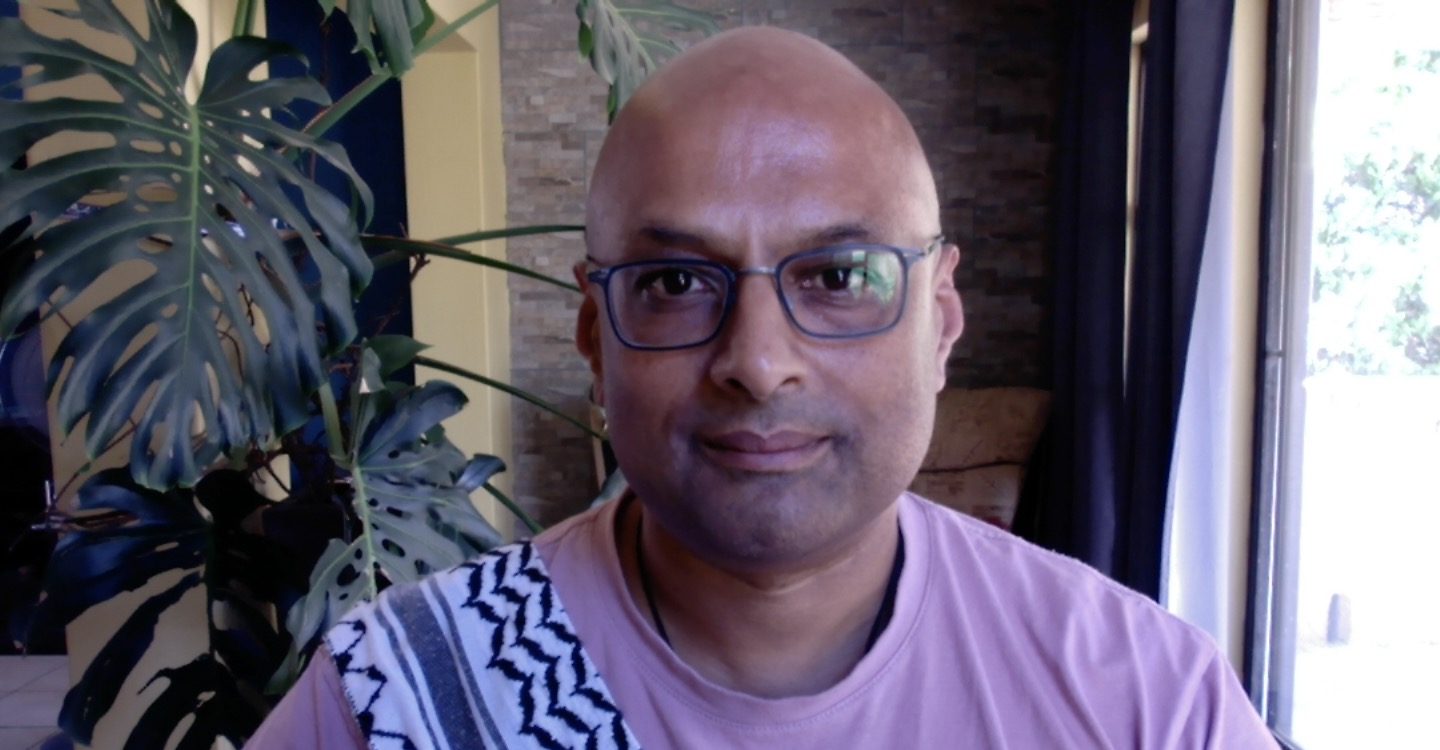
I write from within this reality, not outside it. As someone who self-identifies as queer to reclaim an identity historically used as a weapon, I understand that queer liberation has never been about assimilation. It has always been about dismantling and reimagining systems so that all of us can live across race, class, gender, faith, migration status, and embodiment.
The anti-rights movement understands this, too. That is precisely why it targets intersectional existence itself. The possibility of being Black, Muslim, and queer at the same time threatens the order they seek to preserve. They may not all want me dead in the same way, but many are invested in a social world where my life is rendered unlivable.
From the Eastern Cape, I watch this convergence unfold daily. What we are facing is not one organisation or one ideology, but a layered terrain of actors with different capacities and roles.
Religious conservatism and institutional power
Conservative religious organisations such as the Family Policy Institute, ForSA, the Muslim Judicial Council, and extensive church and mosque networks reach deep into our communities. These bodies differ in theology, structure, and constituency, but many share a sustained opposition to comprehensive sexuality education, gender equality, reproductive autonomy, and LGBTQIA+ inclusion. They pursue these goals through policy submissions, court challenges, and parliamentary engagement.
Alongside them are far-right, nationalist, and populist movements and political formations such as the ACDP, Freedom Front Plus, Al Jama-ah, the Patriotic Alliance, and AfriForum. These actors operate primarily in electoral and ideological arenas. They mobilise grievance politics around race, religion, migration, and culture, frequently framing equality as a threat imposed by elites or foreign interests. Their platforms differ, but their exclusions overlap.
From ideology to intimidation on the ground
On the ground, formations such as PAGAD and Operation Dudula, alongside figures like Dawood Lagardien and Ngizwe Mchunu, translate these narratives into direct intimidation, harassment, and violence, particularly against migrants, refugees, and the queer community. They may not draft legislation or file constitutional challenges, but they shape the social conditions under which it becomes dangerous to exercise one’s rights.
These actors are not identical, and they are not always aligned. There are tensions, contradictions, and opportunism between them. What matters is how their narratives increasingly converge.
Convergence rather than conspiracy
Conservative religious groups obsess over gender, sexuality, and family. Nationalist and populist movements fixate on migration, belonging, and cultural purity. Political parties and civic formations stitch these anxieties together into stories about who belongs in South Africa and who must be disciplined, excluded, or expelled.
That stitching is not always the result of a single plan or command structure. Often, it is convergence rather than conspiracy. Actors borrow language, frames, and tactics that have proven effective elsewhere. They learn from one another. They watch what mobilises fear and replicate it.
Across this landscape, certain patterns repeat. Many of these movements are locally rooted but connected, formally or informally, to transnational anti-gender and far-right discourses. Phrases like “gender ideology” appear across continents because they travel well. Researchers have documented how this language circulates globally through conferences, faith networks, advocacy materials, and digital platforms. I cannot confirm the precise funding flows in every case, but investigative reporting shows that some South African actors have access to legal expertise and resources far beyond what their public profiles would suggest.
Courts, moral panic, and manufactured crisis
Strategic litigation has become a central tactic. It allows anti-rights actors to shape law and policy without winning broad public support. Court challenges, policy submissions, and procedural delays stall or dilute rights in practice, even when constitutional protections remain intact on paper.
They consistently target sexual and reproductive health and rights, women’s autonomy, LGBTQIA+ lives, gender-affirming healthcare, migrants and refugees, and Black and indigenous communities asserting control over land, culture, and bodies. Moral panic is their primary fuel. Media campaigns, sermons, social media content, and misinformation blend into a manufactured sense of crisis.
Within this ecosystem, different actors play different roles. Religious conservative networks often operate in courts and Parliament. Populist and nationalist movements normalise hostility on the streets. Political parties absorb these sentiments and convert them into policy pressure. None of this happens in a vacuum.
Poverty, precarity, and the role of the state
Material conditions matter. Mass unemployment, housing shortages, collapsing public services, and deep inequality create real anger and fear. Instead of justice, people are offered scapegoats: migrants, queer people, and women who refuse obedience. The state’s failure to meet basic needs creates fertile ground for exclusionary politics.
This is where the state itself must be named. South Africa’s Constitution promises equality, dignity, and non-discrimination, including on the grounds of sexual orientation and gender identity. But rights do not survive through text alone. They require political will, budgets, implementation, and protection. Too often, the state enables anti-rights advances through silence, delay, selective enforcement, or political compromise. The danger does not only come from fringe actors. It comes from what the state chooses not to do.
Normalisation, faith and political proximity
We have watched anti-rights positions move closer to the mainstream. Al Jama-ah now sits within the Government of National Unity while opposing queer equality under the language of representation. The ACDP and Freedom Front Plus have long-standing resistance to LGBTQIA+ rights in conservative biblical literalism. These positions are not new, but their proximity to power has increased.
We see policy capture in documents such as the Family Values White Paper sitting quietly in the halls of Parliament, echoing international anti-gender frameworks. We see regional coordination in initiatives like the Pan-African Family Values Conference in Kenya and calls to host similar gatherings in South Africa. These are documented events, not speculation.
We also see faith being weaponised in spaces that claim liberation. At pro-Palestine solidarity marches in Cape Town, groups with well-known anti-queer positions have been given a platform. I do not raise this to fracture solidarity, but to insist that liberation that excludes queer lives is not liberation at all. Coalition-building cannot come at the cost of our safety or dignity.
Zionism, pinkwashing, and global alignment
This contradiction is especially visible in Palestine solidarity spaces, where resistance to occupation and apartheid is sometimes mixed with political and religious ideas that mirror the same exclusion and control at the heart of the anti-rights movement.
Across this wider landscape, Zionism appears not as a religious identity but as a political ideology shaped by settler colonialism, ethno-nationalism, and militarised state power. Globally, Zionist institutions frame Israel as a defender of civilisation, treating Palestinian life, Muslim presence, and queer and feminist dissent as security threats rather than human realities. This mirrors the familiar anti-rights logic of policing bodies, borders, and belonging in the name of nation, tradition, and survival.
Pinkwashing is central to this project, using limited LGBTQIA+ inclusion to obscure occupation, racial hierarchy, and the denial of Palestinian freedom.
Professional authority and the politics of “common sense”
We also see professional authority abused when collectives such as “Do No Harm” misuse medical credentials to oppose gender-affirming healthcare, selectively citing science to legitimise prejudice. This is not a debate about evidence. It is about power.
These are not isolated incidents. They reflect a broader pattern of infiltration into civil society, faith spaces, solidarity movements, and state institutions. The strategy relies less on overt repression than on normalisation, making exclusion sound reasonable and turning harm into common sense.
This ecosystem thrives on contradiction. Its leaders claim to defend freedom while working to restrict it. They speak of protecting families, but only those that are cisgender, heterosexual, patriarchal, and compliant. They invoke African values while policing Black bodies through colonial gender norms.
Resistance is not optional
For some, this project is justified through faith. For others, through nationalism or race. What unites them is a desire to control bodies, borders, and narratives, deciding who is human enough to matter.
Understanding this ecosystem is not an academic exercise for me. It is about survival. But understanding alone is not enough. If we are serious about resistance, we must be equally intersectional, materially grounded, and strategically disciplined. We must contest courts and streets, policy and culture, faith and economy. We must reject the false choice between solidarity and accountability.
The anti-rights movement is not inevitable. It is organised, which means it can be disrupted.
Get your news on the go. Click here to follow the Conviction WhatsApp channel.
