


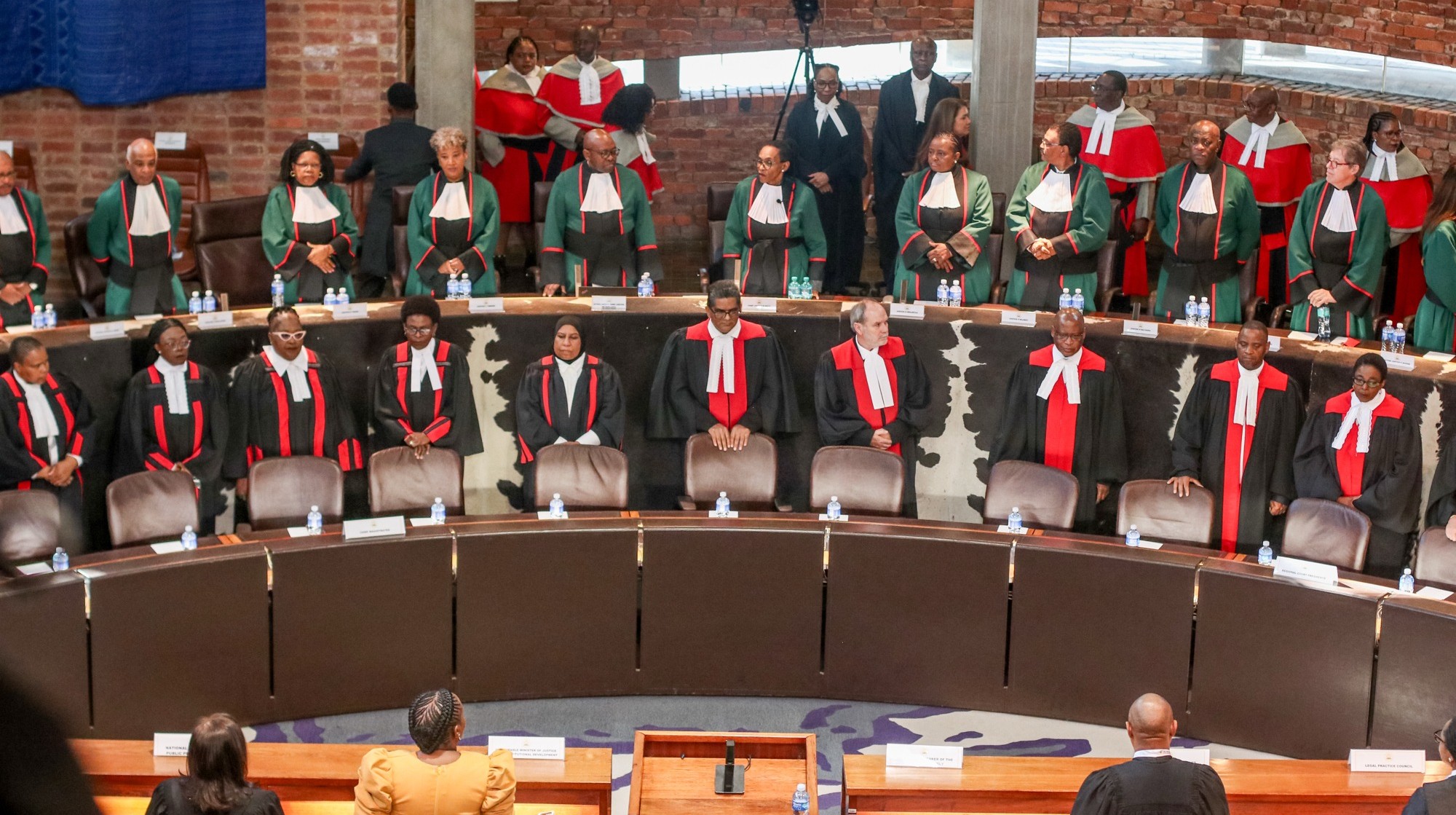
- The Butas are challenging an order for the exhumation of Simon Velaphi Buta’s remains from their family homestead.
- The dispute is over burial rights under the Extension of Security of Tenure Act and the protection of cultural rights.
- Mafube Coal Mining contends that the burial was done without its consent and therefore infringed its property rights.
A family’s battle to protect their father’s final resting place has got to the Constitutional Court where the judges are being asked to consider the interplay between burial rights, land tenure and property ownership.
The family are seeking leave to appeal a Land Court decision which declared the burial of Simon Velaphi Buta at the family homestead to be unlawful and ordered the exhumation of his remains. The case is being heard by the Constitutional Court on Thursday 12 November 2026.
The burial dispute
Simon Buta and his wife Sophie Dlamanga Buta had both been resident on the farm from birth. They both died (simon in March 2024 and Sophie in November 2024). The children and other family members continue to reside at the family homestead on the property. Mafube Coal Mining (Pty) Ltd acquired the property on 9 November 2017.
The homestead is 1.5km from the company’s mining blasting area and Graveyard 1 (the existing family burial ground) is 157.2m from the mining. Mafube has been moving graves and families as part of their mining expansion. Some families have been moved and some graves have been relocated.
After Simon Buta’s death the family contacted Mafube on 13 March 2024 to request access to Graveyard 1 in order to prepare for the burial which was due to take place on 16 March 2024.
At a meeting on 15 March 2024 Mafube offered the funds, the transport costs and a burial plot (with all the associated fees) on the condition that the burial would be at a new cemetery which it had developed as part of its relocation plan. The family turned it down and insisted that Buta should be buried in the original graveyard.
Mafube went to the Land Court in a very urgent manner on 15 March 2024 asking for an interdict to prevent the burial at Graveyard 1 or indeed at any other cemetery on their land. The court did issue an interim interdict but the family went ahead and buried the person on 16 March 2024.
Mafube then amended its application to seek a declaration that the burial was unlawful and an order for the exhumation of Buta’s body.
On 18 July the Land Court granted the further relief sought by the mining company. It found that the burial had occurred without Mafube’s consent and that there was no practice of burying family at the homestead. The court declared the burial unlawful and ordered the exhumation of Buta’s remains.
The family applied for leave to appeal but that was dismissed by the Land Court on the grounds that there were no reasonable prospects of success and no compelling reason to grant leave. The Supreme Court of Appeal dismissed the petition on 6 May 2025.
The family’s constitutional arguments
Prior to the Constitutional Court the applicants are arguing that the dispute raises a number of significant constitutional issues relating to the right to a fair hearing, the right to burial and the protection of cultural rights.
They argue their rights under Section 34 of the Constitution were infringed when Mafube was permitted to introduce new relief via an amended notice of motion after the burial had occurred.
The family say the original proceedings were concerned with an interim interdict and that they were not afforded a proper opportunity to respond to the company’s subsequent application for exhumation. They submit that Mafube should have brought fresh proceedings to obtain that relief.
The applicants also submit that Judge T Ncube of the Land Court misread Section 6(2)(dA) of the Extension of Security of Tenure Act (ESTA) which provides for protection of burial rights.
As the family say, the provision must be read in the context of the historical dispossession of land and the constitutional protection of cultural practices and human dignity.
They argue that an existing burial practice should not be dependent solely on the landowner’s consent and that the provision is there to protect burial rights even in the face of the landowner’s objection.
The applicants also rely on Section 25, Section 30 and Section 31 of the Constitution, arguing that the removal of the graves could have the effect of dispossessing families and in some cases interfere with their cultural practices and their dignity.
They also go on to challenge the exhumation order on the grounds that the Land Court failed to take into account the relevant constitutional provisions in determining the appropriate remedy.
Mafube opposes the appeal
Mafube submits that this is not a matter which raises any constitutional issues which would warrant the Constitutional Court stepping in.
The company is of the view that the applicants are attempting to bring forward constitutional arguments which were not raised in the Land Court. The issue is fundamentally one of whether there was an established burial practice at the homestead, not one of the interpretation of constitutional rights.
On the merits Mafube submits that the family didn’t establish a burial practice at the homestead. The presence of graves at Graveyard 1 cannot be used to establish a right to bury family members anywhere on the farm.
The company also states that an established burial practice is predicated upon the landowner’s routine consent and that the family had not in any way established the location or terms of any prior consent.
It’s the family’s burial rights that have to be weighed up against their ownership and their mining rights, especially in the light of the continued blasting and the fact that other graves have already been moved.
Mafube also denies that the family were denied a fair hearing. They submit that the supplementary relief arose out of the same underlying facts and that the applicants had the opportunity to respond to the allegations.
Legal organisations admitted as friends of the court
The Centre for Applied Legal Studies (CALS) and the Centre for Environmental Rights (CER) have been admitted as friends of the court to assist with the constitutional and legal issues.
CALS intends to look at how international law informs the interpretation of constitutional rights in relation to burial, access to family graves and the protection afforded under ESTA.
It will also be making submissions on alternative burial arrangements and the appropriate remedy in the event of exhumation. Its principal argument is that the requirements of a lawful burial and the justification for exhumation should be two separate legal questions.
CER will be considering the legal framework around mining rights and whether the Land Court properly exercised its discretion in ordering the exhumation.
It will also assist the Constitutional Court in determining whether the record currently on file is sufficient to allow the Court to decide the matter or whether further information is required or whether it is appropriate to refer it back to the Land Court.
The Constitutional Court will have to decide whether the applicants should be granted leave to appeal the Land Court’s decision.
Get your news on the go. Click here to follow the Conviction WhatsApp channel.
