


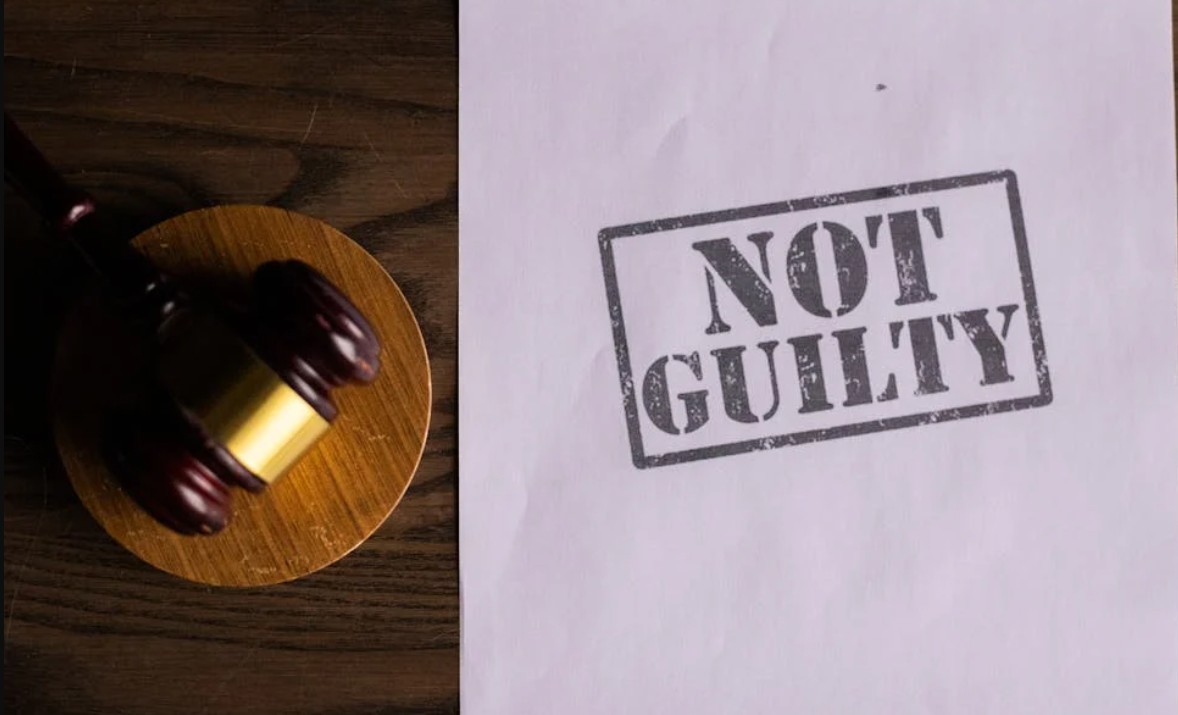
- High Court sets aside life sentence and rape conviction after finding trial court failed to properly assess contradictions and improbabilities in the complainant’s account.
- Judges identify a lack of corroboration from medical and family witnesses, as well as failure to call key witnesses.
- Judgment criticises both prosecution and defence for inadequate legal argument and warns that legal aid must be effective.
The High Court in Pietermaritzburg has set aside the conviction and life sentence of the man accused of raping and sexually assaulting his niece.
Following the appeal heard by Acting Judge W Nicholson and Judge R Seegobin, the court found that the Scottburgh Regional Court misdirected itself in accepting the complainant’s uncorroborated evidence without sufficient scrutiny.
The accused was convicted on 15 November 2023 and sentenced to life imprisonment for rape and five years for sexual assault, with the sentences running concurrently. In terms of Section 309(1) of the Criminal Procedure Act, the accused’s appeal was automatic.
Contradictions and improbabilities in the complainant’s evidence
The State called four witnesses at trial. They are the complainant, her grandmother, her mother, and the medical doctor who examined her. The complainant, testifying through an intermediary in terms of Section 170A of the Criminal Law Amendment Act, alleged that at age 6 she was raped by her uncle and in 2022 was sexually assaulted by him.
The complainant’s evidence was, in the words of the court, “marked by substantial inconsistencies and lacks sufficient detail.”
Judge Nicholson noted, “Her account shifted repeatedly regarding the whereabouts of other children, the nature of the sexual assault, and whether she cried out or reported pain after the rape.”
The court highlighted that the complainant’s explanation of events contained improbabilities. Judge Nicholson wrote, “Upon evaluation of the biological and physical differences between a child of 6 years and an adult, this version of events appears highly improbable.
“The physical dynamics of such an act, given the respective ages and statures of the complainant and the accused, would have rendered it extremely difficult, if not impossible, for the accused to perform such an act in the position described.”
The judgment specifically noted that the complainant testified she was picked up by the accused, taken to his room, undressed, and then made to lean against the wall while the accused, standing, raped her.
Judge Nicholson questioned the plausibility of these details, stating that such penetration between an adult and a 6-year-old child, in the standing position described, would likely have caused significant injury and pain.
The court further observed that neither the complainant nor her mother reported any bleeding, infection, or difficulty walking after the alleged event, and that the complainant claimed to have resumed normal activities and continued playing immediately afterwards, which the court found inconsistent with the expected physical and emotional response to such trauma.
The judgment also referenced leading questions during examination-in-chief that “significantly diminish the probative value of that evidence.” The court stated, “As such, the responses given under these circumstances carry limited weight and cannot be regarded as reliable evidence upon which to base a conviction.”
Lack of corroboration from other witnesses and medical evidence
The testimony of the complainant’s grandmother and mother was found to be vague and inconsistent in material respects. Judge Nicholson wrote, “Significant inconsistencies were apparent concerning both the location and specific details of the alleged rape.”
The court found that the evidence of “virginity testing” conducted by the grandmother was inadmissible, stating, “While the practice of virginity testing may hold significance within a traditional or cultural setting, the findings therefrom are inadmissible for the purposes of legal proceedings.”
The medical evidence provided by the doctor was equally inconclusive. The J88 report stated that the findings were “suggestive of a possible sexual assault,” but noted the delayed presentation for examination.
The court found, “It is not clear whether the medical findings in this matter are exculpatory or non-exculpatory in nature. As such, they are best regarded as neutral evidence.”
Key witnesses, including the complainant’s cousin and others present during or after the incidents, were not called by the State. Judge Nicholson stated, “Their absence leaves a gap in the record, as their testimonies could have served either to corroborate the complainant’s account or to clarify the circumstances surrounding the incident.”
Critique of legal representation and trial process
The judgment sharply criticised the heads of argument from both the defence and the prosecution. Judge Nicholson said, “The heads of argument filed by Ms Fareed for the accused and by Mr Kathi for the State were described as ‘of limited assistance,’ failing to engage substantively with the record or the trial judgment, and falling short of the standards required for criminal appeals.”
The court warned, “Adequate legal representation is the cornerstone of both a fair trial and a fair appeal. Counsel are obliged to prepare clear, detailed, and comprehensive arguments, addressing all relevant evidence and applicable case law and legal principles.”
Order and result
The High Court found that the State had not proved the accused’s guilt beyond a reasonable doubt. Judge Nicholson concluded, “I believe that the trial court erred in finding that the evidence provided by the single witness, the complainant, was satisfactory in every material aspect.
“The court found it safe to convict the accused for rape and sexual assault based solely on her uncorroborated testimony, despite the improbabilities present within her version of events.”
The convictions and sentences were set aside.
Get your news on the go. Click here to follow the Conviction WhatsApp channel.
