


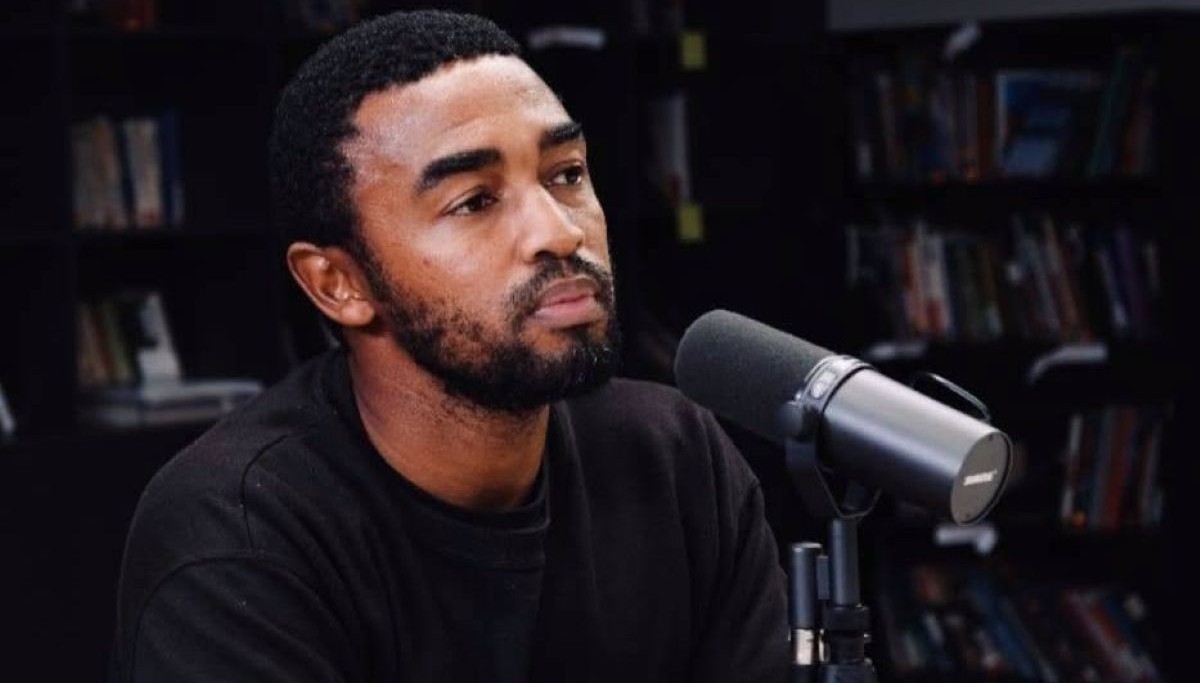
- Penuel Mlotshwa’s decision to embrace the label of a deadbeat father has opened a difficult conversation about fatherhood, parental alienation and the struggles men face in accessing their children.
- The debate exposes how financial pressures, unemployment, gender expectations and the breakdown of traditional family structures shape perceptions of fatherhood.
- Memela argues that men must be allowed to speak about their pain and vulnerability without being automatically dismissed or labelled as absent fathers.
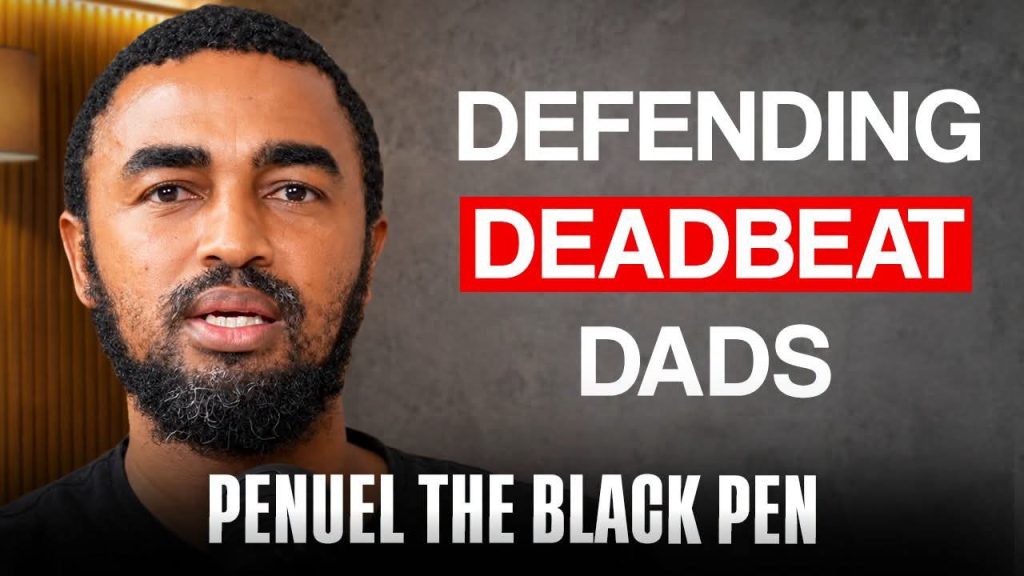
There is a podcast doing the rounds. A man sits in front of a camera. No fancy lights. No script. He looks straight into the lens and says, “I choose to be a deadbeat.” His name is Penuel Mlotshwa, known to the country as Penuel The Black Pen. Podcast anchor, thinker, provocateur, the man who made philosophy streetwise. And now, the self-declared poster boy for deadbeat fathers.
At first glance, it looks like self-destruction. Why would any man, especially a public figure, volunteer to wear the most hated label in South Africa? Deadbeat. The word alone summons images of a man who drinks his salary, impregnates women and disappears, who never buys nappies, never pays maintenance, never cares. But Penuel is doing something far more dangerous and far more necessary. He has chosen to be vulnerable about being a father in a country where fathers are not allowed to be vulnerable. Or to be fathers.
He is an unmarried father of at least three children. He says so openly. He does not hide them. He does not deny them. And that is precisely the point. Penuel has chosen this route to liberate many men. He is fully aware that previously his vulnerability got him burned.
A few months ago, he opened up and cried on social media. Not the curated cry of a celebrity. A real, ugly, male cry. He confessed how he was denied access to his children, how he begged, how he was shut out and how the mothers used the children as weapons in a war he did not start. What happened? It was weaponised.
Women who had never met him projected their pain onto him. “You are just like my baby daddy who left.” “Men are trash.” “Pay maintenance and stop crying.” His confession became content for other people’s trauma. His pain was turned into a meme.
Most men would have retreated. Penuel did the opposite. He leaned in. He said, if you want to call me a deadbeat, I will be your deadbeat. I will be the face of it, so we can finally talk about what it really means. Because South Africa has no concept of what a deadbeat actually is. We use the word loosely, erroneously, violently.
Every man who does not live with his children is a deadbeat. Every man who falls behind on payments is a deadbeat. Every man who argues with the mother is a deadbeat. The word has lost meaning, and in losing meaning, it has become a whip to beat all men. Penuel insists on tightening the definition. Raising a child, he says, needs two things.
Tightening the definition
First, money. Shelter, food, clothing, entertainment, school fees and medical aid. The hard currency of survival. Secondly, hands-on operations. Homework help. Standing on the sports field in the rain watching under-9 soccer. Attending the concert where your daughter forgets the words. Going shopping for the matric dance dress. The invisible labour of presence.
In many instances, he argues, neither of these comes from the parents themselves anymore, and we lie about it. We call a woman a single mother, but financially she is not single because someone pays. There is a father paying maintenance, or a grandfather paying, or a new boyfriend paying, or the state paying the Child Support Grant. She is not alone financially. But we still call her single, and we call him absent.
And we call a man absent from hands-on parenting, but in many instances, the hands-on is not done by the mother either. It is done by gogo, by aunties, by crèche teachers, by neighbours, by sisters. The child is raised communally, but the father alone is shamed for not being there physically, while the mother is praised even when she, too, is not there physically.
He asks a hard question: If a mother is not contributing financially, is she a deadbeat? If deadbeat means you don’t pay, then many mothers are deadbeats. But we never use that word for women. The word is gendered. It is designed to shame men only.
The war men fight in silence
And men are dying inside. Four out of five suicides in this country are men. Not because men are weak. Because of silent trauma and pain. Because men are at war with mothers but silent. The war is real. It is fought in maintenance courts, in WhatsApp groups, in families, at funerals where a man is not allowed to see his own child. But men are taught not to speak. “Indoda ayikhali.” A man does not cry.
So they die. Quietly. They drink. They disappear. They become players. They become the deadbeat we said they were, because it is easier to be a villain than to be a vulnerable man begging to see his child and being denied. Penuel says men don’t choose to walk away.
Sometimes, women lie about paternity. A man raises a child for three years, then finds out it is not his. When he leaves, he is called a deadbeat. But who deceived whom? Sometimes, men divorce because of stealing, violence and beatings. Yes, women beat men. Women steal from men. They take over their houses. Women cheat. And call boyfriends ‘my cousin.’ But when a man leaves that house, we say he abandoned his children. We never ask what he was running from.
Then there is parental alienation. And it is rife. No lobola or inhlawulo is paid, so the maternal family says you have no right to the child. Or lobola was paid, but the mother moves on, and the new boyfriend becomes “daddy”, and your child is taught to call another man father. Or you are unemployed, in a country with 40% unemployment, and because you don’t have money, you are told you cannot see your child. You become a deadbeat because you don’t have money.
How does 40% unemployment contribute to GBV? Simple. A man who cannot provide is stripped of his self-respect and dignity by a capitalist system that says a man’s only value is money. He is told he is not a man. He comes home frustrated. He hits. Or he is hit. Or he leaves before he hits. And then we call him a deadbeat.
Penuel made a video: “I have not seen one of my kids for 10 years.” Ten years. Imagine that. Ten birthdays. Ten first days of school. Ten Christmases. And you are alive. And you love your child deeply. But you are told that if you cannot pay, you cannot come. If you argue with the mother, you cannot come. If you did not pay damages, you cannot come.
Like many other fathers, he loves his kids deeply. But he has realised kids suffer for the sins of the father. He cites the example of politicians’ kids who are compromised and use wrong names to survive. He knows that stigma. He lives it. He can take the beating and has thick skin, called a deadbeat erroneously. But he is asking, “Can we tell the truth?”
There are mothers who lie even in official settings. In maintenance court, they lie about income. They lie about who is caring for the child. They lie about access. They lie about paternity. And the system believes them, because the system is built on the idea that mothers are nurturers and fathers are providers, and nothing else.
Women are allowed to kill a fetus, legally, through abortion, which is their right, but a guy who offers abortion money because he is not ready to be a father is called a deadbeat. Think about that contradiction. A woman can choose not to be a mother. A man cannot choose not to be a father. If he tries, he is a monster.
Penuel says, “I am the face of deadbeat fathers. But I am only accountable to my children. I am not my child’s mother’s father. I have this weird call to speak up for deadbeat fathers.”
Fatherhood beyond money
He is not saying men are innocent. He is saying men need to be taught to be fathers. Many think the prerequisite is to have money. Men are taught to be providers and women nurturers. Such men need unlearning and decolonisation.
Money is not the only value of a father. This is the lie capitalism taught us. If you don’t have R5000 for maintenance, you have no value. If you cannot buy the best sneakers, you must stay away. So men stay away. They think it is better to be absent than to be seen as poor.
But apartheid and colonialism dismantled black families long before capitalism finished them. We lived communally and shared with the unemployed. Everyone would eat. A child had many fathers. An uncle was a father. A grandfather was a father. A neighbour was a father. No child was a deadbeat’s child because no child belonged to one man alone.
Then the migrant labour system came. Men were taken to mines. Women were left in Bantustans. The family was broken. Then apartheid made black men providers who could not provide, because their wages were too low. Then democracy made black men providers who could not provide, because jobs disappeared.
The black boy child was marginalised to promote the black girl child. We invested in the girl child, correctly, but we forgot the boy child, and now that boy child is a father who does not know how to father. That must be addressed.
A confession about the system
Penuel The Black Pen’s confession is not a confession of guilt. It is a confession of a system. He is saying he is not a perfect father. He has not paid all the time. He has not been there all the time. Some of his children he has not seen in ten years. Call him a deadbeat if you must. But let us talk about why.
Let us talk about parental alienation. Let us talk about mothers who weaponise children. Let us talk about men who are denied access. Let us talk about unemployment and suicide. Let us talk about how we define fatherhood only by money, and then we make sure men have no money.
He accepts the punishment. He knows many women will project their pain on him. He knows he will be cancelled. He knows Julius Malema himself once accused Penuel of being a deadbeat, and Penuel wears that accusation as a badge, because if even a revolutionary can use that word so casually, it shows how deep the rot is.
But he is doing it to liberate men. To say, you can love your children deeply and still be called a deadbeat. You can be broke and still be a father. You can walk away intelligently from a toxic relationship with the mother and not walk away from the child, even if the mother makes it look like you did.
To every man dying inside, he is saying, speak. Cry if you must. Even if they weaponise it. Because four out of five will not speak. They will die silent. They will commit suicide. And then we will call them deadbeats at their funerals too.
Get your news on the go. Click here to follow the Conviction WhatsApp channel.
The opinions expressed in this article are solely those of the author and do not necessarily reflect the views of Conviction.co.za
