


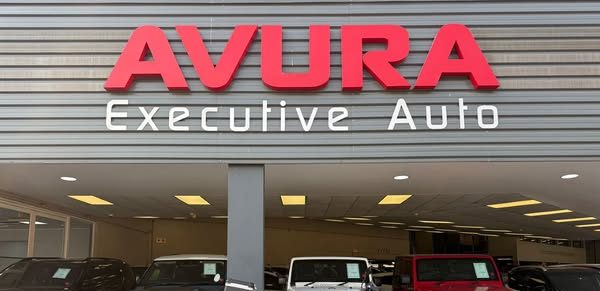
- The High Court rejected Avura Motors' appeal and held the dealership fully responsible.
- The consumer was paid back for all repair costs after initially having to cover them alone.
- The court confirmed a R100 000 administrative penalty under the Consumer Protection Act.
The High Court in Gauteng has ordered Avura Motors, also known as Avura Executive Auto, to pay a R100 000 penalty and cover all repair costs for a faulty vehicle.
The court’s ruling reaffirms the decision of the National Consumer Tribunal, which found that Avura Motors had violated the Consumer Protection Act when it sold a vehicle riddled with latent defects.
The ordeal began when a consumer purchased a used Mazda BT-50 from Avura Motors on 15 July 2022 for R288 577.50. Within less than a month, the vehicle developed severe engine problems, including disturbing noises and frequent stalling. Despite immediately reporting these faults to the dealership, Avura Motors refused to assist or take responsibility.
Left stranded, the consumer was forced to seek independent repairs. The total bill for parts and labour exceeded R100 000. While the consumer’s warranty insurer paid R75 000, the consumer was left out of pocket for R31 088.28.
The National Consumer Commission referred the matter to the Tribunal, which found Avura Motors in breach of sections 55(2)(a) to (d) and 56(2)(a) of the Consumer Protection Act, 68 of 2008. The Tribunal ordered the dealership to reimburse the consumer for repairs and imposed an administrative penalty of R100 000.
High Court upholds full accountability
Avura Motors appealed the Tribunal’s decision, but the High Court dismissed the appeal in its entirety. In its judgment, the Court held that, “on a balance of probabilities, the vehicle was sold with a latent defect that made it unsuitable for use without major repairs.” The High Court confirmed that the Tribunal acted correctly in law and fact, and that the penalty was both reasonable and justified.
NCC Acting Commissioner, Hardin Ratshisusu, praised the outcome: “This judgment should serve as a deterrent and a reminder to all suppliers that they have an obligation to comply with the Consumer Protection Act in every transaction. Consumers cannot be left to bear the cost of defective goods while suppliers ignore their responsibilities.”
He added, “Finally, the consumer will be afforded redress, and the supplier has been held accountable for violating the law.”
Get your news on the go. Click here to follow the Conviction WhatsApp channel.