Skip to content
Close Menu
ConvictionConviction
  • Home
  • Law & Justice
  • Special Reports
  • Opinion
  • Ask The Expert
  • Get In Touch

Subscribe to Updates

Get the latest creative news from FooBar about art, design and business.

What's Hot

How March and March turned a deadline into a death sentence for migrants in South Africa

July 23, 2026

Municipal effort to charge student housing commercial rates ruled unlawful

July 23, 2026

Husband ordered to pay R106,211 monthly maintenance or face jail time

July 23, 2026
Facebook X (Twitter) Instagram
Trending
  • How March and March turned a deadline into a death sentence for migrants in South Africa
  • Municipal effort to charge student housing commercial rates ruled unlawful
  • Husband ordered to pay R106,211 monthly maintenance or face jail time
  • Lawyers face the music for poor court papers in asylum case, ordered to repay client
  • Two common mistakes can sink CSOS disputes before hearings begin
  • Only one of four WhatsApp allegations against Harmony Gold found defamatory
  • Augmenting apartheid memory through art, exhibition and lived experience
  • Labour Court stops municipal disciplinary hearing over AI citation concerns
Facebook X (Twitter) Instagram
ConvictionConviction
Sonneblom
  • Home
  • Law & Justice
  • Special Reports
  • Opinion
  • Ask The Expert
  • Get In Touch
ConvictionConviction
Home » Dignity SA asks Pretoria High Court to open a lawful path for assisted dying
Human Rights

Dignity SA asks Pretoria High Court to open a lawful path for assisted dying

Application seeks to end a blanket prohibition and give Parliament the space to regulate end-of-life choice.
Kennedy MudzuliBy Kennedy MudzuliApril 16, 2026No Comments
Facebook Twitter Pinterest LinkedIn WhatsApp Reddit Tumblr Email
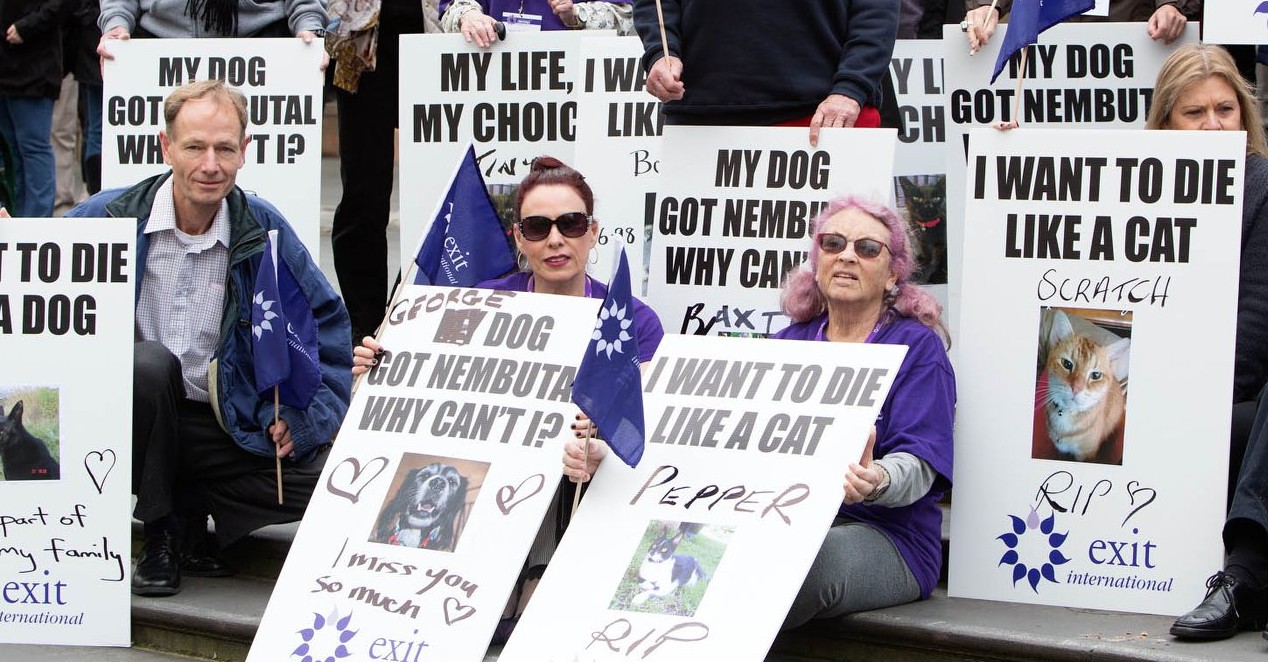
Dignity SA supporters gather during a 2020 protest calling for the legal recognition of medical assistance in dying in South Africa. Picture: Dignity SA/Facebook
Share
Facebook Twitter LinkedIn Pinterest Email
  • Dignity SA is asking the High Court to recognise a legal right to medical assistance in dying.
  • The application challenges a law that criminalises doctors who help their patients die.
  • The case seeks to open space for Parliament to regulate assisted dying within 24 months.

South African law does not permit medical assistance in dying. That is the position Dignity SA has placed before the High Court in Pretoria, asking the court to declare that this position is unconstitutional and cannot continue.

Dignity SA filed its application on 9 April 2026. It asks the court to declare that the common law prohibition on medical assistance in dying is unconstitutional and invalid, and to suspend that declaration for 24 months to allow Parliament to create a lawful framework.

What Dignity SA is asking the court to recognise

Dignity SA seeks recognition that a competent and informed person who is living with a terminal or irremediable condition, and whose suffering is unbearable, may request medical assistance in dying.

The application states that the current law does not permit this, even where a competent and informed patient makes such a request voluntarily and with full understanding of what they are asking for. The application asks the court to declare that this position is inconsistent with the Constitution.

The application notes that South African law allows a patient to refuse life-sustaining treatment or to ask for it to be withdrawn, even knowing that decision will lead to their death.

Yet a doctor who helps a patient die, even at that patient’s explicit request, may be found guilty of murder. The application describes this as a blanket prohibition, one that draws a hard line and offers no room for compassion or context.

What this means for patients

The founding affidavit includes accounts of people who faced terminal or degenerative illness without any access to medical assistance in dying.

These are not abstract scenarios. They are the stories of real people who were unable to get help to end their lives and who, in desperation, took matters into their own hands, often in traumatic and undignified circumstances.

Why doctors are part of the case

The application makes clear that a healthcare practitioner who helps a patient die may face criminal prosecution and professional sanction, even where that help was given at the patient’s own request.

This puts doctors in an impossible position. They are trained to relieve suffering, yet the law treats an act of compassion at a patient’s request as a potential murder.

The constitutional question the court must decide

Dignity SA challenges the prohibition on the basis that it cuts across fundamental constitutional rights, including the rights to dignity, equality, freedom and security of the person, and life itself.

The application asks the court to determine whether a law that denies dying people any choice over how they go can truly be consistent with a Constitution built on human dignity.

What happens if the challenge succeeds

Dignity SA asks that any declaration of invalidity be suspended for 24 months to give Parliament time to enact legislation that properly regulates medical assistance in dying.

Conviction.co.za

Get your news on the go. Click here to follow the Conviction WhatsApp channel.

Constitutional Law End of life rights Healthcare law High Court Human Rights
Share. Facebook Twitter Pinterest LinkedIn Tumblr Telegram Email
Kennedy Mudzuli

Multiple award-winner with passion for news and training young journalists. Founder and editor of Conviction.co.za

Related Posts

How March and March turned a deadline into a death sentence for migrants in South Africa

July 23, 2026

Municipal effort to charge student housing commercial rates ruled unlawful

July 23, 2026

Husband ordered to pay R106,211 monthly maintenance or face jail time

July 23, 2026
Leave A Reply Cancel Reply

Prove your humanity: 3   +   7   =  

Subscribe to our newsletter:
Top Posts

Making sectional title rules that work: A practical guide

January 17, 2025

Protection order among the consequences of trespassing in an ‘Exclusive Use Area’

December 31, 2024

Between a rock and a foul-smelling place

November 27, 2024

Irregular levy increases, mismanagement, and legal threats in a sectional title scheme

June 2, 2025
Don't Miss
Opinion
9 Mins Read

How March and March turned a deadline into a death sentence for migrants in South Africa

By Mandy Jovial and Sikhander CoopooJuly 23, 20269 Mins Read

Mandy Jovial and Sikhander Coopoo argue that South African law leaves no room for vigilante immigration enforcement, warning that unlawful campaigns against undocumented migrants threaten constitutional rights, deny access to healthcare and place vulnerable people at risk of violence.

Municipal effort to charge student housing commercial rates ruled unlawful

July 23, 2026

Husband ordered to pay R106,211 monthly maintenance or face jail time

July 23, 2026

Lawyers face the music for poor court papers in asylum case, ordered to repay client

July 23, 2026
Stay In Touch
  • Facebook
  • Twitter
  • WhatsApp
Demo
About Us
About Us

Helping South Africans to navigate the legal landscape; providing accessible legal information; and giving a voice to those seeking justice.

Facebook X (Twitter) YouTube WhatsApp Twitch RSS
Latest posts

Making sectional title rules that work: A practical guide

January 17, 2025

Protection order among the consequences of trespassing in an ‘Exclusive Use Area’

December 31, 2024

Between a rock and a foul-smelling place

November 27, 2024
OUR PICKS

Judge dismisses bid to suspend attorneys over R23 million dispute, citing unfair investigation

July 22, 2026

Wedding rehearsal or workplace protest? Judge rules in favour of singing mineworkers

July 21, 2026

Mpumalanga records highest initiation death toll, prompting CRL Rights Commission inquiry

July 21, 2026
© 2026 Conviction.
  • Home
  • Law & Justice
  • Special Reports
  • Opinion
  • Ask The Expert
  • Get In Touch

Type above and press Enter to search. Press Esc to cancel.

Powered by
►
Necessary cookies enable essential site features like secure log-ins and consent preference adjustments. They do not store personal data.
None
►
Functional cookies support features like content sharing on social media, collecting feedback, and enabling third-party tools.
None
►
Analytical cookies track visitor interactions, providing insights on metrics like visitor count, bounce rate, and traffic sources.
None
►
Advertisement cookies deliver personalized ads based on your previous visits and analyze the effectiveness of ad campaigns.
None
►
Unclassified cookies are cookies that we are in the process of classifying, together with the providers of individual cookies.
None
Powered by