


- Reinstatement revived the employment contract automatically, meaning the driver was legally treated as if he had never been dismissed, and his salary remained due throughout.
- The employer’s claim that he failed to tender his services in 2014 did not defeat the claim, because physical reinstatement later restored all contractual rights.
- The company was ordered to pay R354 815.64 in arrear wages, plus interest and legal costs, after leaving him unpaid for more than three years.
A transport company named GVR Vervoer BK t/a Trio Vervoer has been ordered to pay more than R354 000 to a driver who went unpaid for years despite already winning reinstatement.
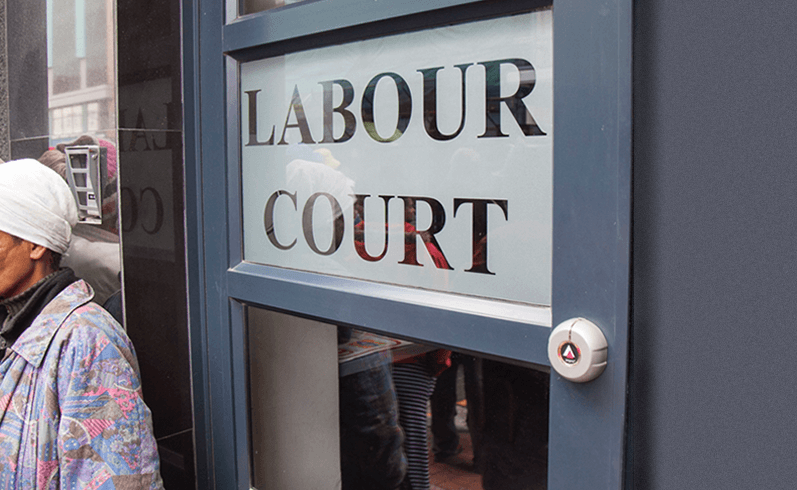
The Johannesburg Labour Court ruled that once an employee is taken back into service, the employment contract is revived in full and back pay becomes legally enforceable. The court made it clear that reinstatement is not a hollow victory on paper but a restoration of both the job and the salary that should have flowed with it.
Elvis Ramotsonga succeeded in recovering wages dating back years after the employer delayed implementing an arbitration award that required his return to work with retrospective effect. The case turned not on complicated facts but on a simple legal principle, namely, what reinstatement actually means.
Ramotsonga had worked as a driver since 2009. In October 2013, he was told by a supervisor to leave the premises and was suspended. With the assistance of the South African Transport and Allied Workers Union, he referred an unfair labour practice dispute to the bargaining council. The employer failed to attend arbitration, and a default award ordered that he be reinstated and paid retrospectively.
He was instructed to tender his services in February 2014. But despite the order, the company did not take him back. Instead, he remained out of work and without income for more than three years, only being physically reinstated in July 2017 after the employer unsuccessfully tried to rescind the award.
Although he had legally “won”, his household still had no salary. He then approached the court under Section 77(3) of the Basic Conditions of Employment Act to claim the wages he said should have been paid all along.
Reinstatement means the job never ended
Delivering judgment, Judge GN Moshoana said the matter was a straightforward contractual claim and rejected the employer’s attempt to send the case to oral evidence. There was, he found, no real factual dispute that could defeat the claim on paper.
The judge spelt out the legal effect of reinstatement in plain terms. “By law, reinstatement simply means that the status quo remains,” he wrote. “Thus, the order of reinstatement meant that Ramotsonga should be treated as if he were never terminated.”
That finding cut through the employer’s main defence. The company argued that Ramotsonga had not properly tendered his services in February 2014 and therefore should not be paid for the period he was away. Judge Moshoana was unmoved.
“It matters not whether Ramotsonga failed to tender in February 2014,” he said. “Of importance, for a contractual claim for arrear wages is the physical reinstatement, which has as a legal effect the revival of the employment contract.”
He continued, “Once revived, an employee enjoys a contractual claim.” In other words, once the company accepted him back, the contract came to life again, and the unpaid salary followed automatically.
Employer cannot benefit from its own delay
The court found it telling that the employer only reinstated Ramotsonga after failing to overturn the award. If the company truly believed he had lost his right to reinstatement, it would not have taken him back at all.
Judge Moshoana noted that the probabilities showed the employer had simply failed to comply earlier. “The probabilities are that, as alleged by Ramotsonga, the respondent failed and refused to comply,” he wrote.
Quoting established authority, the court added that where an employee is unable to work because of the employer’s conduct, payment may still be due. As the judgment recorded, “where a party does not accept the tender, an obligation to still pay wages even if services are not provided remains.”
The court also reaffirmed that “once an employee is reinstated, the contractual right to back pay accrues to that employee,” making the entitlement automatic rather than discretionary.
A practical victory, not just a legal one
For Ramotsonga, the ruling translates legal language into something concrete, namely, years of unpaid income finally recognised. The judgment acknowledges that reinstatement without pay is no real remedy at all. Workers cannot survive on awards that exist only on paper.
By treating arrear wages as a matter of contract rather than sympathy, the court reinforced that employers must comply fully and promptly with reinstatement orders.
Order
The court ordered the employer to pay Ramotsonga R354 815.64 together with interest at the prescribed rate and to cover the applicant’s legal costs. Judge Moshoana held that, as a civil contractual matter, costs should follow the result.
Get your news on the go. Click here to follow the Conviction WhatsApp channel.
