


- The courts considered whether residents can force multiple state entities to address chronic flooding and infrastructure failures.
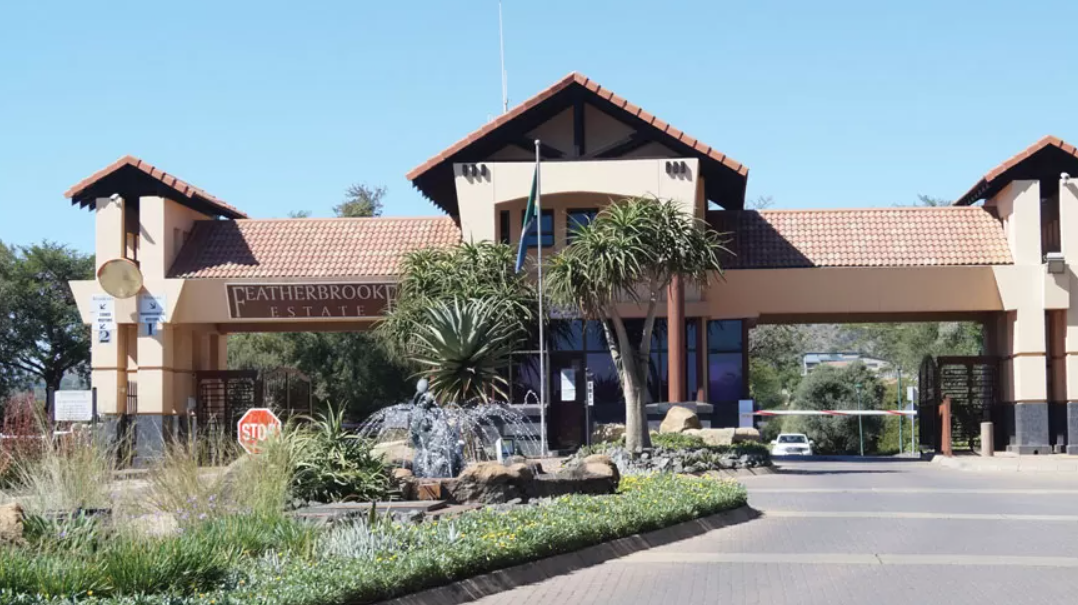
- Featherbrooke Country Estate spent more than a decade seeking assistance as flooding exposed sewer lines, power cables and damaged riverbanks.
- The High Court ultimately ordered several government bodies to act, rejecting attempts to shift responsibility between departments.
Residents across South Africa face chronic infrastructure failures. Flooding, exposed sewer lines, collapsing riverbanks and stormwater mismanagement are increasingly common.
When residents approach their local municipality for help and are met with nothing more than buck-passing between government departments, what can they do? Can they obtain a court order compelling the state to act? And if so, which state entity is responsible?
These questions were considered first by the Supreme Court of Appeal (SCA) in a judgment delivered on 22 March 2024, and then on remittal by the High Court in a judgment delivered on 29 May 2026.
The Featherbrooke Estate case
Featherbrooke Country Estate is a residential complex situated in the Mogale City Local Municipality in the western part of Gauteng. The Muldersdrift se Loop River traverses through the estate and ends in the Hartbeespoort Dam.
What was historically a manageable stream became a torrent after heavy rains due to increased urban development, hard surfaces, climate change and inadequate stormwater management by the relevant municipalities.
Since approximately 2010, Featherbrooke has experienced increasingly frequent and severe flooding. The flooding exposed sewer infrastructure, underground power cables and caused the collapse of riverbeds and embankments.
Featherbrooke’s security fence was left hanging “by a thread”, and residents faced risks of electrocution, exposure to sewage, property damage and security threats. A previous occasion when the fence came down resulted in a resident being shot by robbers and a R35 million damages claim against the Homeowners Association (HOA).
For over 10 years, Featherbrooke sought assistance from the Department of Water and Sanitation, Mogale City and the City of Johannesburg. No steps were taken by any department except to shift the blame from one to another.
The application
In May 2020, Featherbrooke launched an application in the High Court against six respondents: Mogale City, City of Johannesburg, the Minister of Water and Sanitation, the MEC for Agriculture and Rural Development, the Johannesburg Roads Agency, and the West Rand District Municipality.
Featherbrooke sought a structural interdict compelling the respondents, jointly and severally and in the alternative, to repair the riverbeds and embankments, insert gabions, moderate the volume and flow of stormwater, repair exposed State-owned infrastructure, and draft a stormwater management plan.
Every respondent denied responsibility
Each state entity pointed the finger at someone else. Mogale City argued that managing floods was not within its competence and that Featherbrooke should look to the minister under the National Water Act.
The City of Johannesburg and Johannesburg Roads Agency argued that since the Estate was in Mogale City’s jurisdiction, they had no role to play.
The minister argued that the damage was due to poor planning by the developers and that Featherbrooke was required to apply for a water licence at its own expense.
The High Court’s initial order
The High Court found that there was a constitutional duty on all spheres of government to prevent and mitigate disaster situations.
However, it inexplicably made an order only against Mogale City, without deciding the case against the other respondents.
The Full Court
Mogale City appealed. The Full Court upheld the appeal, set aside the order entirely and dismissed Featherbrooke’s application with costs.
It reasoned that Featherbrooke was required to obtain a water licence from the department and, having failed to do so, its case had to fail.
The Supreme Court of Appeal
The SCA (Makgoka JA, with the full bench concurring) upheld Featherbrooke’s appeal, set aside the Full Court’s order, and remitted the matter to the High Court.
The SCA was critical of both courts below. It held that Featherbrooke had carefully cast its net wide to include all relevant state entities and had asserted a case against each one in the alternative.
The High Court was obliged to resolve the dispute in respect of each of those entities, and its failure to do so was “bafflingly inchoate.”
The SCA did not decide the merits. It directed the High Court to determine whether, in addition to Mogale City, any of the originally cited state entities was responsible for the remedial work, and to make an appropriate order against each.
The High Court on remittal
The matter returned to the High Court (Mahalelo J), and judgment was delivered on 29 May 2026. This time, the court found against multiple respondents.
The court found that there was very little contradictory evidence to Featherbrooke’s version. None of the respondents had taken any positive or immediate steps to address the situation, apart from bald denials.
On Mogale City, the court found that it had clear constitutional and statutory obligations to manage stormwater and promote a safe and healthy environment. It was contravening its own precinct plan and had no stormwater management plan for the area.
On the City of Johannesburg and the Johannesburg Roads Agency, the court rejected the argument that they owed no duty because the Estate was not in their jurisdiction.
Stormwater originating from the City of Johannesburg’s jurisdiction flowed into the river and contributed to the flooding. The principle of cooperative government required the City of Johannesburg to coordinate its actions with neighbouring municipalities. It could not simply ignore stormwater originating from its jurisdiction because the impact was felt across a municipal boundary.
On the minister, the court found that the river was owned by the minister and that the National Water Act imposed a clear duty to take reasonable measures to prevent pollution of water resources.
Critically, the court pointed to evidence that at a meeting on 24 March 2016, department officials had themselves recommended issuing a directive to Mogale City and the City of Johannesburg to address the very problems before the court.
To date, the department has failed to issue that directive. The minister could not simultaneously acknowledge the need for intervention and then argue she owed no legal duty to act.
The court held that Featherbrooke satisfied all the requirements for a final interdict: a clear right, an injury committed or reasonably apprehended, and the absence of any other remedy.
The order
The court ordered Mogale City, the City of Johannesburg and the Johannesburg Roads Agency, jointly and severally, to repair, underpin, remediate and manage the riverbeds and embankments, including inserting gabions and moderating the flow of water through attenuation dams and culverts.
Mogale City and the City of Johannesburg were ordered to draft and implement a stormwater management plan. The minister was ordered to mitigate, remediate and prevent flooding, including moderating the flow from the Walter Sisulu Botanical Gardens and preventing erosion of the riverbank.
All parties were ordered to repair exposed state-owned sewer and power infrastructure. Costs were awarded against the respondents.
Conclusion
This case reinforces the principle that courts will intervene where the state fails to discharge its constitutional obligations to maintain critical infrastructure and protect residents from environmental harm. It is not sufficient for government departments to point fingers at one another.
The duty of cooperative government means that where stormwater and flooding cross municipal boundaries, all relevant state entities bear responsibility and may be compelled to act.
Residents and homeowners’ associations facing chronic infrastructure failures should take note. It is not necessary to wait for a disaster to occur. The Disaster Management Act adopts a forward-looking approach focused on managing future risks.
Where residents can show extensive complaints, years of inaction and real threats to life, health and property, the courts will grant orders compelling the state to act, regardless of budgetary excuses or attempts to shift responsibility.
Get your news on the go. Click here to follow the Conviction WhatsApp channel.
