


- Routine pump trips and power failures are exposing metropolitan systems operating without buffers or redundancy.
- High demand, ageing infrastructure and non-revenue water losses are forcing bulk withdrawals beyond sustainable limits.
- Without storage expansion, leak reduction and governance reform, outages will become the norm rather than the exception.
Gauteng’s latest water disruptions, particularly within its metros, should not be dismissed as isolated technical events. Pump trips, power failures, emergency reservoir repairs, and maintenance shutdowns may dominate headlines, but they are merely triggers.
What these events reveal is far more concerning: metropolitan water systems whose resilience has been steadily eroded by a lack of forward planning, rising demand, ageing infrastructure, insufficient storage, and ongoing under and deferred investment.
None of these events should be extraordinary in modern utility operations. Mechanical failures occur, electricity interruptions remain a structural risk in South Africa, and critical infrastructure requires regular maintenance.
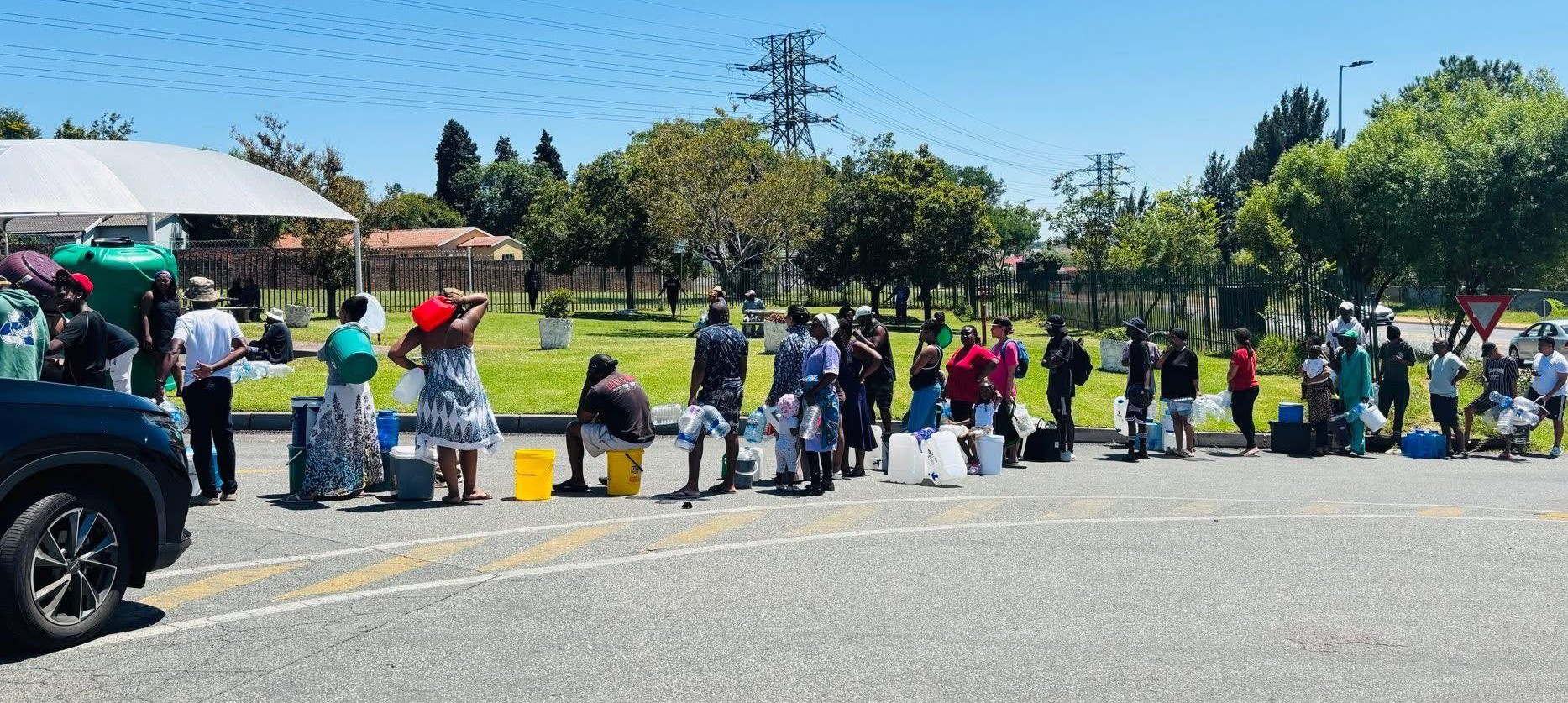
Yet recent incidents illustrate how fragile the system has become. Bulk pumping was constrained by electrical failures, and a significant reservoir leak further destabilised storage levels already under pressure. Across Johannesburg, Tshwane, and Ekurhuleni, residents endured days without a reliable supply while reservoirs struggled to recover even after repairs were completed and pumping returned to full capacity.
When routine operational disturbances result in widespread dry taps, the problem is not the disruption itself; it is the system’s inability to withstand it.
Operating too close to the edge
At the core of Gauteng’s vulnerability is a precarious balance between supply and demand. Metropolitan consumption has climbed steadily toward the absolute limits of what the bulk system can reliably treat and deliver. When a water network operates this close to capacity, flexibility disappears. There is no buffer, no redundancy, and no room for error.
Under these conditions, minor disturbances can trigger major consequences. A single power interruption can halt pumping long enough to drain reservoirs, while a leaking storage facility accelerates depletion. Once levels drop below critical thresholds, network pressure collapses, leaving entire suburbs without water until the system slowly rebuilds itself. This is not how a well-managed metropolitan water system should function; it is the signature of infrastructure pushed beyond prudent operational limits.
Compounding the challenge is persistently high consumption. Per capita water use in Gauteng remains elevated, reflecting both consumer behaviour and structural inefficiencies. Municipal withdrawals have at times exceeded sustainable thresholds, forcing bulk infrastructure to operate under continuous strain.
Rand Water has repeatedly cautioned that storage levels have declined because of excessive withdrawals, raising fears of system collapse if consumption is not reduced. Yet demand pressures tell only part of the story.
Losing water faster than we can supply it
Gauteng’s three metros collectively consume roughly 77 percent of the water produced by Rand Water, placing extraordinary pressure on bulk infrastructure. A more troubling indicator lies within municipal networks themselves. Non-revenue water, treated water lost due to leaks, theft, or metering failures, remains alarmingly high. Ageing pipes leak, illegal connections proliferate, and metering failures distort accountability. In some municipalities, a substantial share of potable water disappears before serving any economic or social purpose.
These losses create a destructive feedback loop. Water that never reaches consumers must be replaced, compelling municipalities to draw more aggressively from the bulk system. Higher withdrawals strain infrastructure, reduce strategic reserves, and erode the buffers needed to withstand operational shocks. In effect, already fragile municipal networks are forced to sprint a marathon, leaving little operational breathing room. Put differently, Gauteng is attempting to meet 21st century urban demand with an infrastructure discipline that too often resembles a system in managed decline.
Why buffering capacity matters
One of the clearest lessons from recent outages is the critical importance of storage buffering capacity. Globally, resilient metropolitan regions maintain strategic reserves capable of sustaining supply for 48 hours during temporary disruptions. Storage is the shock absorber of urban water security.
Where adequate reserves exist, residents may experience little more than reduced pressure. Where they do not, taps run dry. Evidence increasingly suggests that parts of Johannesburg’s network are operating with a dangerously thin margin for error. When reservoirs cannot sustain supply through routine pumping interruptions, technical disturbances quickly escalate into major social and economic disruptions.
Water exists within the system. The challenge lies in the infrastructure and governance required to move, store, and manage it reliably within one of Africa’s largest urban economies.
Not just a bulk supplier problem
It is tempting to assign blame solely to Rand Water whenever outages occur. But the reality is more complex. Rand Water is already abstracting water at the limits set by national authorities and cannot supply significantly more until future augmentation projects come online.
Resilience is distributed across the entire water value chain, from abstraction and treatment to storage and reticulation. The primary cause of recurring disruptions is the extremely tight relationship between demand and available treated supply. Even if the bulk system performs perfectly, downstream weaknesses, ageing pipes, leaking reservoirs, insufficient storage, and deferred maintenance can still push communities into crisis.
Encouragingly, the pathway toward resilience is clear: aggressive leak reduction, disciplined demand management, expanded storage buffers, infrastructure renewal, and capital investment aligned with population growth. Equally important is institutional accountability and technical governance capable of sustaining complex utility systems. What has been less evident is the continued urgency with which these interventions are being pursued.
The resilience test Gauteng is failing
Infrastructure resilience is not measured when systems function normally. It is revealed when something goes wrong. Power failures will occur again. Pumps will fail. Maintenance, whether planned or emergency, is inevitable.
The defining question is whether residents will experience these events as minor inconveniences or as days without water. Currently, Gauteng metros are providing a troubling answer.
Continue operating near system limits, and outages will become normalised. Rebuild resilience, and disruptions can be transformed from episodic crises into manageable operational events.
The lesson from the latest crisis is unmistakable: when taps run dry, resilience has already failed, but governance has failed first. The greatest risk facing Gauteng is no longer the next outage, but municipal systems that have quietly lost the capacity to withstand one.
Get your news on the go. Click here to follow the Conviction WhatsApp channel.
