


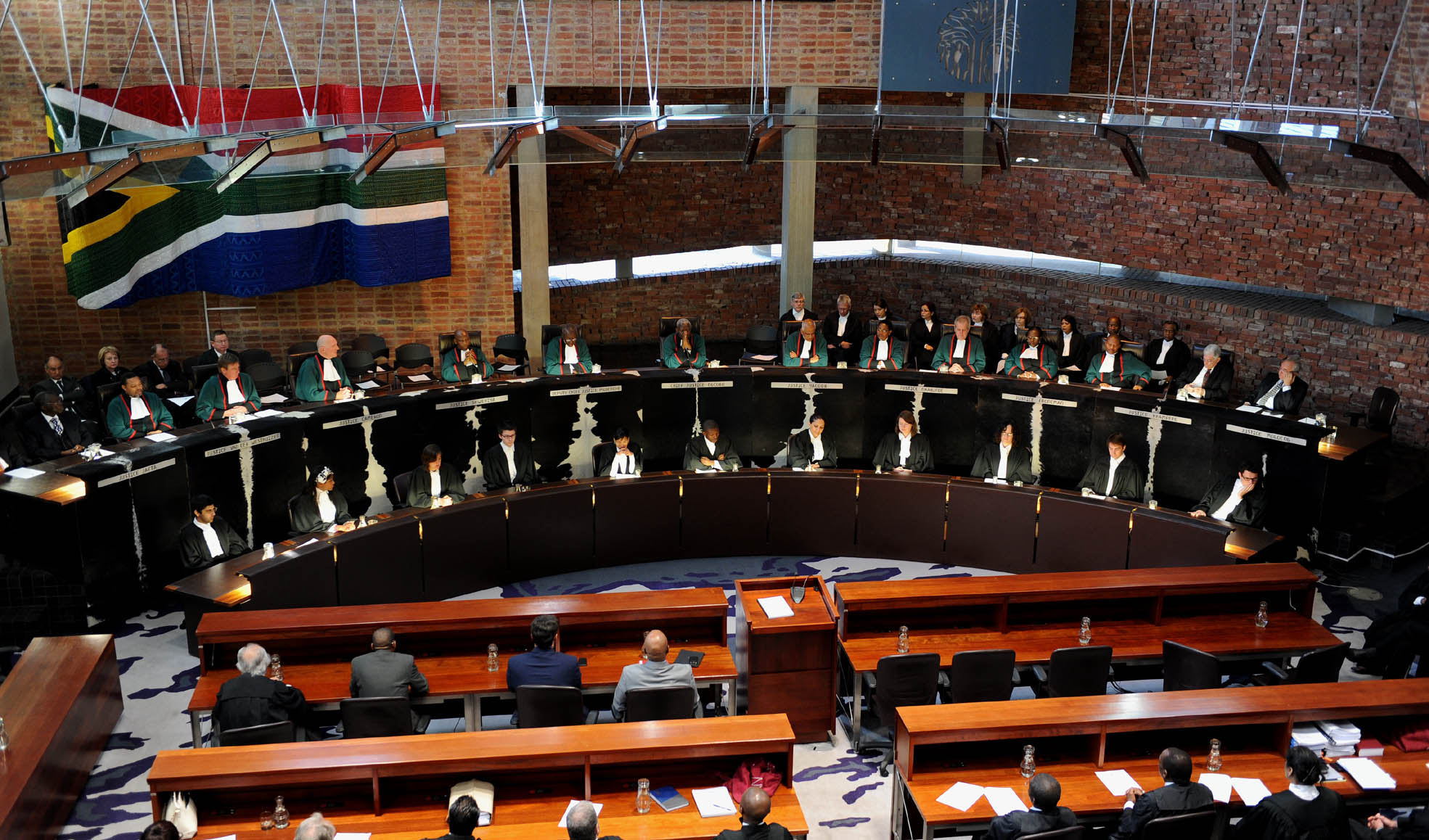
- The Constitutional Court confirmed that innocent contractors may recover payment, including profit, for work actually performed.
- The judgment identified six factors courts will consider before preserving contractual payment rights.
- Contractors should keep detailed records to support claims if a State contract is later declared invalid.
State contracts are frequently set aside by courts because proper procurement procedures were not followed. What happens to the contractor who has already done the work in good faith? Can it recover payment, including a profit margin? These questions came before the Constitutional Court in a judgment delivered on 27 May 2026.
The Zeal Health judgment
In January 2015, the Department of Military Veterans advertised a tender for the provision of healthcare and wellness services to approximately 16,000 military veterans over three years. Zeal Health Innovations (Pty) Ltd (ZHI) was awarded the tender on 21 May 2015. The contract value was approximately R198 million over three years. ZHI would receive a fixed monthly fee per registered veteran, regardless of whether each veteran actually sought treatment.
ZHI commenced providing services on 1 June 2015. It established a managed healthcare network comprising general practitioners, specialists, pharmacies and other healthcare providers. ZHI submitted its first invoice in July 2015 for approximately R5.2 million.
However, the department failed to pay. The evidence revealed that there had been a change of leadership at the department, and the Minister instructed that ZHI should not be paid because she considered the contract too expensive. On 11 August 2015, the department informed ZHI that it intended to seek judicial review of the procurement process. ZHI suspended its services the following day. Three invoices totalling R15.7 million were never paid.
From the High Court to the Supreme Court of Appeal and the Constitutional Court
The High Court declared both the interim and main contracts unlawful and invalid from the outset. The court found that the contract price far exceeded the available budget, in breach of public finance legislation.
Importantly, the High Court found that there was no evidence that ZHI was complicit in any irregularities. However, having declared the contracts invalid, the High Court did not go on to consider what remedy would be fair to compensate ZHI for services it had already rendered as an innocent contractor.
The Supreme Court of Appeal agreed that the contracts were invalid but found that ZHI, as an innocent party that had rendered services, should not simply walk away empty-handed. It made an order preserving ZHI’s contractual rights, meaning that despite the contract being set aside, ZHI could still pursue payment for work done.
The department took the matter to the Constitutional Court, arguing that ZHI should be limited to recovering its actual expenses without any profit. The department relied on what it termed the “no profit, no loss” principle.
The Constitutional Court (Mathopo J, with eight justices concurring) upheld the appeal in part. Kollapen J wrote a separate dissenting judgment.
Can a contractor claim profit on an invalid contract?
The department contended that the “no profit, no loss” principle flowing from the AllPay judgment meant that an innocent contractor should not be out of pocket but equally should not profit from an unlawful arrangement.
The Constitutional Court rejected this as a blanket rule. While there is no automatic right to profit from an invalid contract, that does not mean a court cannot allow a contractor to keep the benefit of the contract, including profit, where the circumstances justify it.
The court drew on the Supreme Court of Appeal’s recent decision in Mafoko, which confirmed that the “no profit, no loss” principle was developed for a very specific situation. It does not apply across the board to all cases where a State contract is set aside.
What must the contractor prove?
The Constitutional Court identified six factors that will weigh in favour of a contractor seeking to be paid at the agreed contract rate, including a profit margin.
First, that the contractor was an entirely innocent party and was not complicit in any procurement irregularities. Second, that the contractor actually rendered services and the organ of State obtained the benefit of those services.
Third, the contractor incurred costs in performing, including costs of setting up the necessary infrastructure to deliver the services. Fourth, that the conduct of the organ of State was not exemplary, for example, where it approved the contract and allowed performance to continue before seeking to have it set aside.
Fifth, the organ of State created a reasonable expectation of payment by allowing the contractor to continue performing. Sixth, the alternative arrangements the organ of State made to replace the contractor’s services proved more expensive or less effective.
Distinguishing between work performed and not performed
The Constitutional Court drew a critical distinction between the period when ZHI actually did the work and the period when it did not.
For the period during which ZHI actually rendered services, from 1 June to 12 August 2015, the court found it fair to preserve ZHI’s right to be paid at the agreed contract rate, including the profit margin. For the period after 12 August 2015, when ZHI was no longer providing the full range of services, the court refused to preserve its contractual rights. Allowing ZHI to claim lost profits for 33 months of non-performance would be a windfall, not compensation.
However, the court left the door open for ZHI to claim its actual expenses incurred in maintaining limited emergency capacity during a brief transitional period, without any profit margin, to be determined in separate proceedings. The August 2015 invoice was prorated to cover only the 12 days during which full services were provided.
Expect your claim to be scrutinised
Kollapen J, in a dissenting judgment, agreed that the Supreme Court of Appeal’s order should be set aside but disagreed with the majority on the question of remedy. He cautioned that simply allowing the contractor to keep its full contractual benefits without properly examining whether those benefits were reasonable amounted to treating the matter as an ordinary contract dispute, when in fact it involved public money and required a higher level of scrutiny.
In his view, the court did not have enough evidence to carry out that scrutiny and the matter should have been sent back to the High Court for a proper enquiry.
While Kollapen J was in the minority, contractors should be aware that a court may well interrogate the reasonableness of the contract price, the profit margin and the relationship between the services invoiced and the services actually delivered. The stronger the evidence a contractor can produce on these points, the better.
Practical steps for contractors
The judgment confirms that an innocent contractor is not automatically limited to recovering only its expenses when a State contract is set aside. A court may permit the contractor to be paid at the agreed contract rate, including a profit margin, for work actually done. There is no automatic right to such a benefit, but equally, there is no blanket exclusion. Each case will be assessed on its own facts.
Contractors working on State projects should keep detailed records of all work done, costs incurred and communications with the State entity. Document the services delivered, the resources deployed, and the expenses paid to subcontractors and suppliers. Record all correspondence with the organ of State, particularly any approvals, instructions to proceed and confirmations of the work performed.
If a contract is challenged, the contractor’s claim will turn on its ability to demonstrate that it was innocent of any irregularity, that it actually performed, that the organ of State accepted and benefited from the performance, and that it incurred real costs in doing so.
The distinction between the period of actual performance and the period of non-performance is important. A contractor who can prove what it did, that it acted in good faith and what it cost, will be in the strongest position to recover at the contract rate.
Get your news on the go. Click here to follow the Conviction WhatsApp channel.
