


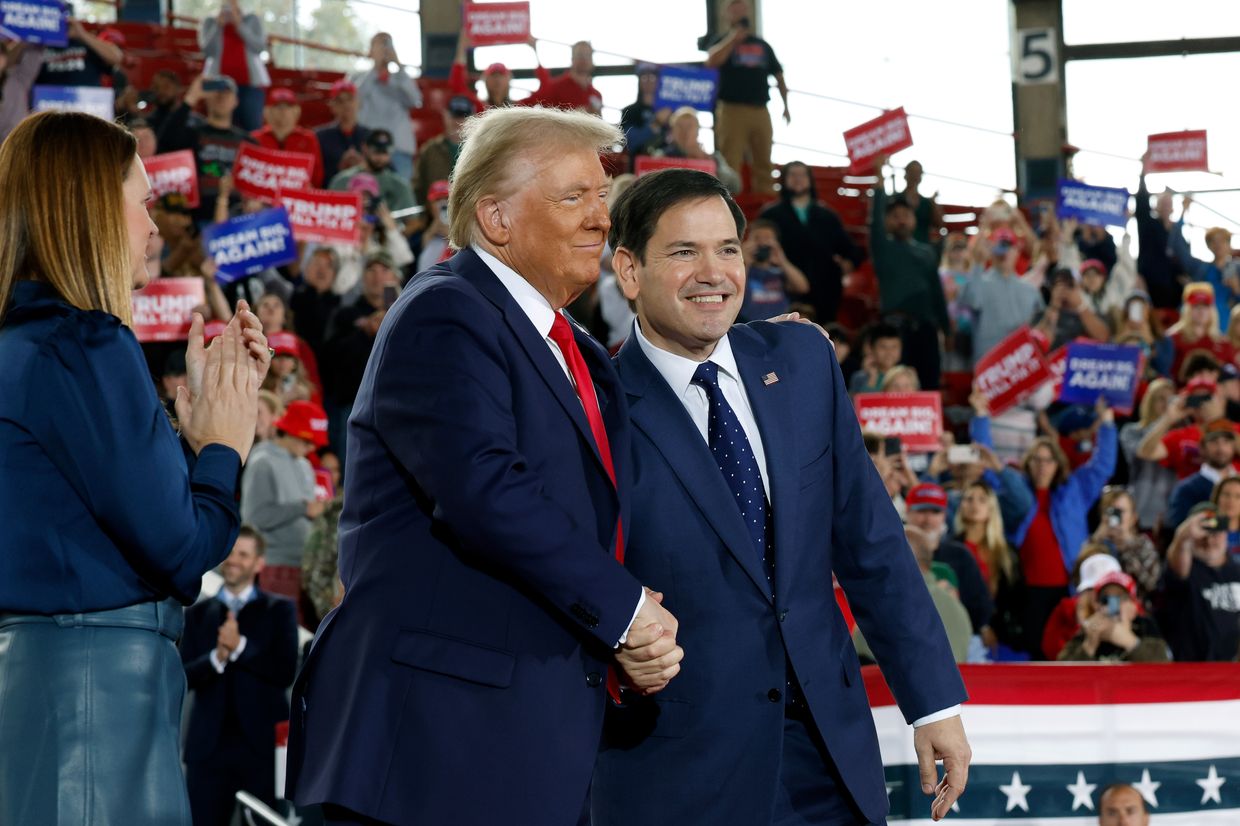
US Secretary of State Marco Rubio’s recent refusal to attend the G20 Foreign Ministers’ meeting in South Africa, citing South Africa’s Expropriation Bill, has reignited the debate about US foreign policy and its global implications.
This move, widely seen as another instance of US isolationism, raises crucial questions about the future of international cooperation and the evolving roles of major powers.
The US has increasingly pursued a foreign policy characterised by unilateralism and a reluctance to fully engage with the international community. This trend is evident in a pattern of withdrawing from international agreements, including the Paris Agreement, the Iran nuclear deal, the WHO and UNESCO. The US often acts with the belief that it can influence other countries through sanctions and pressure.
However, this approach has frequently proven counterproductive, leading even its US allies to express concern. The EU’s pursuit of “strategic autonomy,” the expansion of BRICS and the search for alternative partnerships all suggest a growing desire among nations to find solutions outside of US influence.
South Africa’s Expropriation Bill is a domestic matter, and like all nations, South Africa has the right to formulate policies that align with its specific circumstances. Washington’s decision to link its participation in international forums to South Africa’s internal policies raises questions about the appropriate boundaries of international engagement. While concerns about issues like property rights may be valid, the US approach risks being perceived as an attempt to influence South Africa’s internal affairs. This instance, where the US appears to be conditioning its international engagement on changes to a nation’s internal policies, reinforces the perception of US unilateralism and a reluctance to engage with the world on equal terms.
This approach contrasts sharply with the emphasis on respecting sovereign equality that is often highlighted in discussions of international relations. South Africa’s firm defence of its sovereignty in the face of external pressure has garnered support from many in the international community, further highlighting the growing divergence between the US approach and the views of other nations. This incident contributes to the broader narrative of US isolationism and its potential implications for the future of global cooperation.
While the US has pursued a more unilateral path, China has presented a contrasting vision of international engagement, emphasizing the principles of joint consultation, joint construction, and shared benefits. China actively promotes global cooperation through various initiatives and platforms.

On international platforms like the G20, China advocates for inclusive and interconnected development, aiming to achieve outcomes that benefit a wider range of countries. Beijing has also launched several significant initiatives, including the Global Development Initiative, the Global Security Initiative, and the Global Civilization Initiative, which present solutions to global development, security, and governance challenges. Through these initiatives, China has provided development assistance to many countries and has become a major player in global development finance.
The Belt and Road Initiative, a massive infrastructure project connecting Asia with Europe and Africa, has become a flagship of China’s global engagement. China has also established funds like the Global Development and South-South Cooperation Fund to support its development agenda. Furthermore, China has actively participated in addressing global issues like climate change and food security, portraying itself as a responsible major power.
Despite challenges, including instances of US disengagement, international cooperation remains a powerful force. The recent G20 Foreign Ministers’ meeting in South Africa, which proceeded despite the US absence, illustrates this resilience. South Africa and other participating nations demonstrated their continued commitment to promoting development and international cooperation, underscoring the growing importance of multilateral engagement.
The international landscape is undeniably shifting. The US’s approach to foreign policy, marked by selective engagement and a tendency toward unilateral action, is a contributing factor in this transformation, even if not the sole cause. Such an approach risks undermining US influence and alienating potential partners.
Meanwhile, China is playing an increasingly prominent role in global cooperation, offering a contrasting vision of multilateralism and shared prosperity. Through initiatives like the Belt and Road and its active participation in global forums, China is fostering economic connections and demonstrating a commitment to addressing global challenges. China’s actions suggest a vision of a shared future, where nations work together.
Looking ahead, China is likely to continue its significant role in international affairs. By promoting multilateral solutions and fostering sustainable development, Beijing can contribute to a more equitable and cooperative world. The need for open communication and genuine cooperation between all nations, especially the US and China, is now more critical than ever to ensure a peaceful and prosperous future for all.
#Conviction
