


- A medical expert told the High Court in Gqeberha that Joe Mamasela’s cognitive impairment prevents him from participating adequately as a witness.
- Assessments showed difficulties with memory, concentration, processing speed and adapting to unfamiliar situations, even though he can recall some personal and historical information.
- Mamasela needed repeated prompting and redirection during assessments, and his accounts of what happened to the three missing activists reportedly changed.
Joe Mamasela, the former askari and the only surviving person of interest in the disappearance of anti-apartheid activists Sipho Hashe, Twasile Galela, and Qaqawuli Godolozi, has been assessed as clinically unable to participate meaningfully as a witness in the inquiry into their disappearance.
A medical expert told the High Court in Gqeberha that Mamasela’s cognitive impairment affects his ability to concentrate, remember and process information, follow questions, and provide relevant and reasoned answers. He is 73.
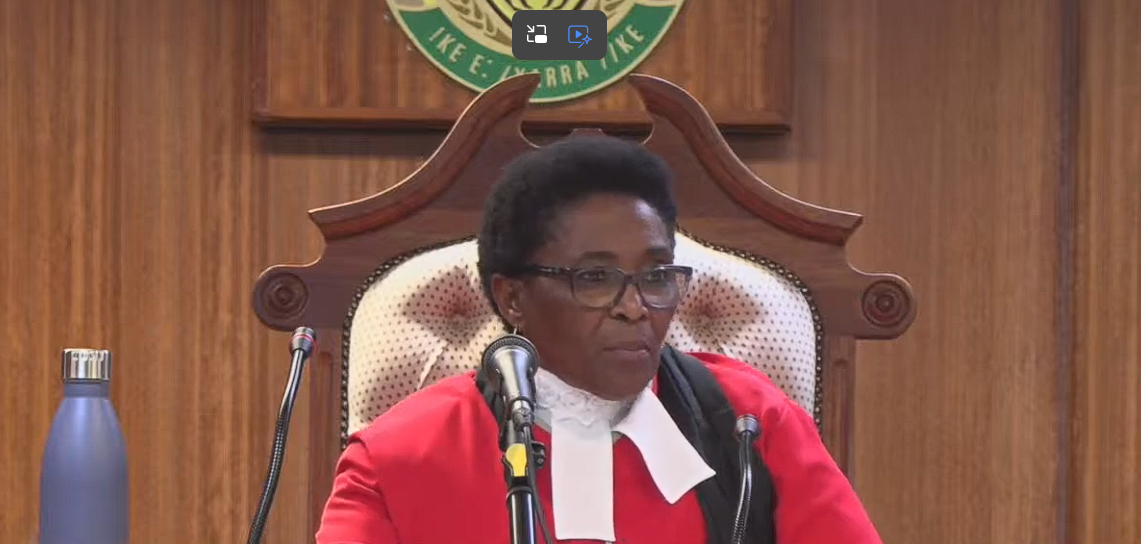
This evidence was presented during proceedings before Judge Bulelwa Pakati as the court considers what happened to the three activists more than 40 years ago. The medical expert confirmed the accuracy of the assessment report submitted to the court and explained that the assessment involved interviewing Mamasela about problems that could affect his ability to participate in the inquiry.
This conclusion was based on psychiatric, neuropsychological, and occupational therapy assessments that looked at his cognitive abilities and how he manages everyday activities. A report signed by two medical professionals on 7 October 2026 found that Mamasela’s impairments would prevent him from understanding the proceedings or participating fully and meaningfully as a witness.
Mamasela struggled to recall details without prompting
The medical expert testified that Mamasela could give some information about the PEBCO 3 incident but struggled to recall specific details on his own. When the assessment team explained that the evaluation was about the PEBCO 3, Mamasela first identified 1976 as the year of the events but did not mention any names. The assessors had to tell him the names before he could remember them.
He also found it difficult to tell apart events from 1976 and those from about 1985. The assessors had to guide him back to the right period and events in the Eastern Cape. Mamasela reportedly described how detainees were tortured for information and explained his alleged role in the incident. However, the medical expert said the assessment team did not have enough independent information to say whether his account was complete or accurate in every detail.
When asked if Mamasela could share the same information in court, the expert said it might be possible to some extent. However, getting his account required prolonged questioning, breaks, and repeated redirection.
The assessors had to break the information into smaller pieces and remind Mamasela of the topic when he lost track. The expert explained that this approach would not work as well under the pressure of formal court proceedings involving the court and various parties.
Conflicting accounts raise concerns about recall
The court also learned that Mamasela gave different accounts about what happened to the three individuals after they were presumed dead. According to the medical expert, Mamasela once said they had been buried on the same farm, while at another time he said they had been put somewhere in the sea.
The expert said Mamasela’s information changed depending on who questioned him. Some details given during the assessment also did not match other information available to the team.
The medical expert said that giving Mamasela more factual information about the case would not necessarily help him remember what he had forgotten. Extra details might help the assessors understand the facts, but would not help Mamasela recover missing memories.
The clinical assessment was not intended to determine whether Mamasela had deliberately provided false information in the past.
Cognitive tests reveal significant impairment
Mamasela scored 23 out of 30 on the Mini-Mental State Examination and 16 out of 30 on the Montreal Cognitive Assessment.
The medical expert explained that Mamasela lost marks in areas such as attention, concentration, registration, recall and abstract thinking. The second screening test showed that his cognitive functioning was more impaired than first thought.
Since screening tests alone could not show the full extent of the impairment, Mamasela underwent further neuropsychological tests. The findings showed difficulties with memory, processing speed, attention, verbal retrieval, visuospatial skills and constructional skills.
The occupational therapy assessment also found that Mamasela struggled to follow instructions with several steps, remember important details, solve unfamiliar problems and fix mistakes without help. He became anxious and frustrated during timed tasks, which also affected his performance.
The assessment team looked at the findings of several professionals, including a neuropsychologist and an occupational therapist.
A stable mental state does not mean fitness to testify
The medical expert made a distinction between Mamasela’s general mental health and his cognitive abilities. Even though the examination did not find any psychotic symptoms, this did not mean his thinking and memory were unaffected.
The report diagnosed Mamasela with a major neurocognitive disorder due to vascular disease, without behavioural disturbance. It also noted major depressive disorder in full remission, hypertension and dyslipidaemia.
The assessment noted that Mamasela still has basic social skills, can communicate clearly in ordinary conversations and can recall some details from his personal history. However, these abilities do not necessarily mean he can handle the demands of giving evidence about complex events from the past.
The report concluded that his combined impairments would prevent him from concentrating on questions, holding and processing information, following changes in questioning, and giving reasoned responses throughout examination and cross-examination.
Mamasela was therefore assessed as clinically unable to take part adequately as a witness. The court’s decision on what this evidence means for the inquiry will be made separately from the medical assessment.
The inquiry is expected to continue until 16 October 2026, with further proceedings set to examine the evidence surrounding the disappearance of the three anti-apartheid activists.
Watch the livestreamed proceedings of the first day here: https://lnkd.in/dU2ue8c6
Get your news on the go. Click here to follow the Conviction WhatsApp channel.
