

Skip to content
Close Menu
ConvictionConviction
  • Home
  • Law & Justice
  • Special Reports
  • Opinion
  • Ask The Expert
  • Get In Touch

Subscribe to Updates

Get the latest creative news from FooBar about art, design and business.

What's Hot

Another perspective on the pushback against BEE and equity policies: Who is BEE working for?

May 21, 2026

Landlord loses urgent bid to remove family from Sandton home after lease termination

May 21, 2026

FSCA sounds alarm on fake Telegram investment scams targeting South Africans

May 21, 2026
Facebook X (Twitter) Instagram
Trending
  • Another perspective on the pushback against BEE and equity policies: Who is BEE working for?
  • Landlord loses urgent bid to remove family from Sandton home after lease termination
  • FSCA sounds alarm on fake Telegram investment scams targeting South Africans
  • New eviction ruling says people living in tents can have protection against eviction
  • Unpaid RAF funds spark legal battle as advocate seeks payment from attorneys
  • South Africa plans extradition law overhaul to target fugitives and organised crime
  • The condemned house: The perfect storm and the structural demolition of the SAPS
  • Human rights groups condemn recent wave of xenophobic violence and intimidation
Facebook X (Twitter) Instagram
ConvictionConviction
Sonneblom
  • Home
  • Law & Justice
  • Special Reports
  • Opinion
  • Ask The Expert
  • Get In Touch
ConvictionConviction
Home » Khayalethu’s fight for formalisation: A struggle for home, dignity, and recognition
Human Rights

Khayalethu’s fight for formalisation: A struggle for home, dignity, and recognition

Residents of Khayalethu have fought for over two decades for formal recognition, basic services, and the right to remain on the land they call home, despite legal, bureaucratic, and infrastructural obstacles. Khayalethu’s fight for formalisation has become emblematic of wider issues facing informal settlements.
Kennedy MudzuliBy Kennedy MudzuliOctober 13, 2025Updated:October 13, 20254 Comments
Facebook Twitter Pinterest LinkedIn WhatsApp Reddit Tumblr Email
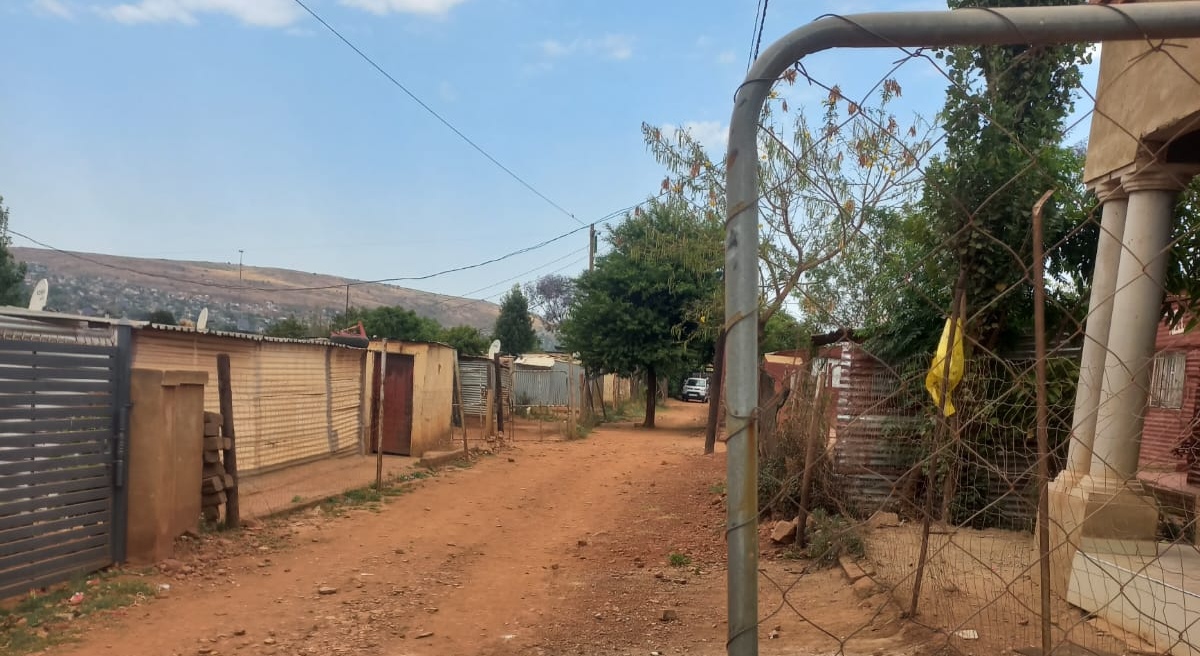
A street view of Khayalethu, where residents continue their fight for formal recognition, improved services, and secure tenure. Picture: Supplied
Share
Facebook Twitter LinkedIn Pinterest Email
  • Khayalethu’s residents, mostly former backyard dwellers, won a legal battle to stay but still face ongoing struggles for formalisation and services. Khayalethu’s fight for formalisation remains at the heart of the community’s story.
  • The community suffers from inadequate infrastructure, with legal status withheld due to city claims about road reserves.
  • Residents call on the City of Tshwane to recognise their rights and urgently provide essential services and safety.

In 2013, Lawyers for Human Rights won a landmark legal challenge against the City of Tshwane in the North Gauteng High Court, securing the right for former backyard dwellers at Khayalethu in Atteridgeville to rebuild their homes.

The City of Tshwane had excluded backyard dwellers from its relocation of area residents to Elandsfontein in Danville. “But as residents, we felt that you cannot relocate the owners and leave behind the backyard dwellers,” recalled Zweli Magubane, a community leader.

Magubane is part of a community forum that includes Sello Malaka, Ronny Khomola, Makoma Malaka, and Segapi Matlou. The forum was established after the court victory to bridge the gap between Khayalethu residents and the City of Tshwane.

After the relocation, former backyard dwellers tried to rebuild their homes, but the City of Tshwane demolished their shacks. With support from Lawyers for Human Rights, residents took their case to the High Court, which ordered the City to return seized building materials. The residents resettled, and today Khayalethu is home to more than 600 households, mostly former backyard dwellers.

Origins and legal struggle

Khayalethu, Xhosa for “Our Home,” was established in 2003 by residents relocated from Lapologa under an ANC-led administration, then headed by mayor Kgosientso Ramokgopa. “When we came here, they promised us residential stands, but that did not happen. Several mayors have taken office since then, but we are still in limbo,” Magubane said.

“We have basic services here, including flushing toilets. We appeal to Tshwane to formalise the area; we are part of the broader community. We have named this area Khayalethu, and it forms part of Atteridgeville Extension 16. Our children receive government-subsidised transport to schools. Yet, after all these years, Khayalethu’s fight for formalisation continues, as Tshwane claims it is classified as a road reserve.”

Infrastructure and Daily Realities

Sello Malaka described growing desperation among residents, who have lived in Khayalethu for over 20 years. “This area is our home. We don’t want to leave. We want this area to be formalised so we can benefit from the same services as other areas. This is our home; this is Khayalethu,” he said.

“We have been here for a long time. We have Wi-Fi connectivity, but without electricity. City officials need to visit and see the conditions in which we live. This is a proper township, but without official status,” said Malaka.

Matlou emphasised the need for development, noting that progress is stalled as long as the area remains classified as a road reserve. “People are prepared to pay for services. Even electricity is illegally connected,” added Malaka.

“We know it is not right to illegally connect electricity, but we cannot stay in the dark. The infrastructure here, including ablution blocks, is incomplete. Money has been spent on infrastructure that does not serve the whole area. Why not just come back and finish what they started?”

Malaka argued that development should not take long, as much of the necessary infrastructure already exists. “Why not complete instead of destroying what has been started? To relocate us would be a disaster. We have been here too long. Our children go to schools in the vicinity. It would take years for us to settle elsewhere.”

Khomola echoed these concerns, highlighting electricity as a major issue. “We are ready to pay, but we need services. When it comes to electricity, we do what we must, hence the illegal connections. We cannot be without electricity,” Khomola said.

“How do you install Wi-Fi in an area you plan to relocate? We have been here for years. We have built houses here. How can you relocate us and expect us to start over?”

The call for formalisation and safety

Makoma Malaka said the government is failing residents. She insisted the matter cannot wait for the 2026 local government election. “There is no guarantee the next administration will do the right thing.”

“We want this resolved now. We have been voting for years, hoping things would improve, but nothing has changed. I am fighting for women’s rights here, especially in a country where gender-based violence is rife. When a crime occurs, we can’t see at night because of the lack of electricity. Illegal connections can be removed at any time. Give us a safety net by formalising this area so we can have reliable electricity and other essential services,” she said.

On Tuesday, 7 October 2025, Conviction.co.za contacted the City of Tshwane to ask why Khayalethu remains classified as a road reserve and what is preventing formalisation. We also raised residents’ concerns about relocation, the impact on schooling and community cohesion, the fate of self-built homes, and measures to improve gender-based safety.

The City of Tshwane indicated it would respond once the relevant department had provided feedback, but this has yet to happen. Conviction.co.za will update this article as soon as a response is received.
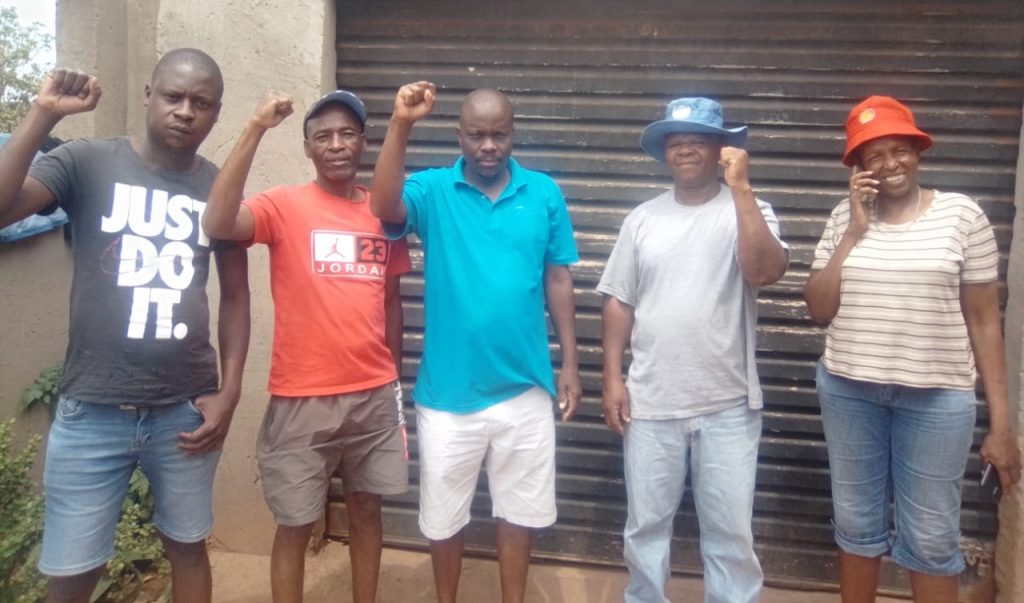
Ronny Khomola, Sello Malaka, Zweli Magubane, Segapi Matlou and Makoma Malaka are leading the fight for the formalisation of Khayalethu. Picture: Supplied

Conviction.co.za

Get your news on the go. Click here to follow the Conviction WhatsApp channel.


Atteridgeville City of Tshwane community activism formalisation housing rights Khayalethu Land Reform
Share. Facebook Twitter Pinterest LinkedIn Tumblr Telegram Email
Kennedy Mudzuli

Multiple award-winner with passion for news and training young journalists. Founder and editor of Conviction.co.za

Related Posts

Landlord loses urgent bid to remove family from Sandton home after lease termination

May 21, 2026

New eviction ruling says people living in tents can have protection against eviction

May 21, 2026

Human rights groups condemn recent wave of xenophobic violence and intimidation

May 20, 2026

4 Comments

  1. Motjei Samuel Makgopa on October 14, 2025 12:11 pm

    Rele bagi renyaka ditirelo dirifihlelle. We don’t want to be relocated. We’re happy here khayalethu. It’s been more than 20years staying khayalethu. We ask for services

    Reply
    • Sizwe makubane on October 14, 2025 3:46 pm

      We are pleading with our municipality city of Tshwane to do what’s rite for khayalami resident we need development in our place of stay we need electricity proper road I personally have stayed there for many years

      Reply
  2. Tsakane dzungeni on October 14, 2025 6:15 pm

    As a resident of khayalethu I have been here for more than 20 years we need development at our community such as electricity

    Reply
  3. PilotM on October 17, 2025 6:07 am

    Khayalethu.The area must just be formalized and get services just like Others.It’s so easy to develop than other laces.

    Reply
Leave A Reply Cancel Reply

Prove your humanity: 5   +   5   =  

Subscribe to our newsletter:
Top Posts

Making sectional title rules that work: A practical guide

January 17, 2025

Protection order among the consequences of trespassing in an ‘Exclusive Use Area’

December 31, 2024

Between a rock and a foul-smelling place

November 27, 2024

Irregular levy increases, mismanagement, and legal threats in a sectional title scheme

June 2, 2025
Don't Miss
Opinion
4 Mins Read

Another perspective on the pushback against BEE and equity policies: Who is BEE working for?

By Siyabonga HadebeMay 21, 20264 Mins Read

Siyabonga Hadebe argues that Black Economic Empowerment has drifted away from community upliftment and become a system that rewards elite accumulation, flashy lifestyles and political self interest while millions remain economically excluded.

Landlord loses urgent bid to remove family from Sandton home after lease termination

May 21, 2026

FSCA sounds alarm on fake Telegram investment scams targeting South Africans

May 21, 2026

New eviction ruling says people living in tents can have protection against eviction

May 21, 2026
Stay In Touch
  • Facebook
  • Twitter
  • WhatsApp
Demo
About Us
About Us

Helping South Africans to navigate the legal landscape; providing accessible legal information; and giving a voice to those seeking justice.

Facebook X (Twitter) YouTube WhatsApp Twitch RSS
Latest posts

Making sectional title rules that work: A practical guide

January 17, 2025

Protection order among the consequences of trespassing in an ‘Exclusive Use Area’

December 31, 2024

Between a rock and a foul-smelling place

November 27, 2024
OUR PICKS

Three-year waiting period for attorneys to appear in higher courts declared unconstitutional

May 15, 2026

Judge warns body corporate levy lawsuits may be abuse of court process

March 16, 2026

ICU doctor must face medical negligence lawsuit over patient’s death

May 14, 2026
© 2026 Conviction.
  • Home
  • Law & Justice
  • Special Reports
  • Opinion
  • Ask The Expert
  • Get In Touch

Type above and press Enter to search. Press Esc to cancel.

Powered by
►
Necessary cookies enable essential site features like secure log-ins and consent preference adjustments. They do not store personal data.
None
►
Functional cookies support features like content sharing on social media, collecting feedback, and enabling third-party tools.
None
►
Analytical cookies track visitor interactions, providing insights on metrics like visitor count, bounce rate, and traffic sources.
None
►
Advertisement cookies deliver personalized ads based on your previous visits and analyze the effectiveness of ad campaigns.
None
►
Unclassified cookies are cookies that we are in the process of classifying, together with the providers of individual cookies.
None
Powered by