


- The court finds it cannot determine unlawful occupation while disputes over shareholding and directorship remain unresolved, saying its hands are tied until another court decides who lawfully controls the property-owning company.
- Judge rules that granting eviction now could create an untenable situation if the Johannesburg court later finds that the impugned appointments and removals were unlawful.
- Applicants ordered to pay party and party costs after launching eviction proceedings despite known material disputes about authority and corporate control.
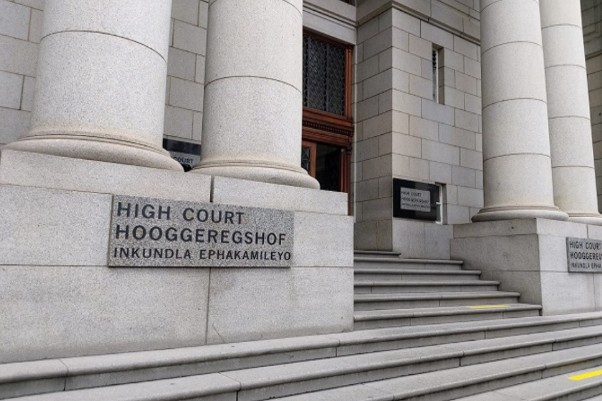
The High Court in the Western Cape has halted an eviction attempt over a luxury Knysna property, ruling that it cannot decide whether the occupants are unlawful while a separate High Court battle over company control remains unresolved.
Acting Judge T Mphego stayed the application brought by Bold Moves 147 (Pty) Ltd and others against Lerato Refilwe Matitoane, Mmatjanyana Gladys Mahlangu and other alleged unlawful occupiers of a Thesen Island property. The court found that the heart of the dispute is not merely occupation, but who lawfully controls the company that owns the property.
The applicants had approached the court under the Prevention of Illegal Eviction from Unlawful Occupation of Land Act, arguing that the respondents had no lease, no consent and no legal right to remain on the property. They contended that the property is a holiday home and that the respondents have alternative accommodation in Gauteng.
But the respondents countered that there are live and entrenched disputes about shareholding, directorship and authority in the company that owns the property, disputes already pending before the Gauteng Division of the High Court in Johannesburg.
Corporate war behind the eviction
At the centre of the case is Bold Moves 147 (Pty) Ltd, the registered owner of the Knysna property. The fourth applicant, Southern Palace Group of Companies (Pty) Ltd, is under business rescue, and its practitioners assert that it is the sole shareholder of Bold Moves and therefore entitled to appoint directors and institute proceedings.
The respondents dispute that claim. They argue that the estate of the late Mr Sello Mahlangu is the true shareholder and that the business rescue practitioners unlawfully installed themselves as directors and removed the first respondent as director without following the Companies Act.
The applicants insisted that this was “an out and out eviction application” and not a corporate law dispute. They maintained that the court needed only decide whether the requirements for eviction under the PIE Act were satisfied. Judge Mphego was not persuaded.
“A court seized with an eviction application under the PIE Act must satisfy itself that the statutory requirements have been met, that ownership and unlawful occupation have been established, and that no valid defence has been raised,” the judge stated.
While ownership of the property was common cause, the judge emphasised that the identity of the lawful shareholders and directors of the owner company is squarely before another court.
“Those issues are squarely before another court in the Pending Application,” the judge noted, adding that the Johannesburg court must determine “the lawful shareholder(s) of the first applicant; the lawful director(s) of the first applicant and the authority of the BRPs to act on behalf of the first applicant.”
Hands tied until the authority clarified
The applicants argued that the Western Cape court should ignore the pending corporate disputes and focus purely on occupation. The court declined. “This court is not persuaded that it is appropriate to determine this eviction application as though the pending disputes do not exist,” Judge Mphego held.
The judge went further, warning of the practical consequences of moving ahead prematurely. “If this court grants an eviction order at this stage, an untenable situation would arise if the court in the Pending Application were to subsequently find that the impugned appointments, shareholding claims, or the removal of the first respondent were unlawful.”
In a telling line, the judge concluded: “Accordingly, this court’s hands are tied until the disputes relating to who lawfully represents the owner of the property and who has authority to bring this application are resolved by the court in the Pending Application.”
No dismissal, but a stay
The respondents had asked the court to dismiss the eviction outright, invoking the Plascon Evans rule on disputes of fact in motion proceedings. The court declined to dismiss the matter but found that a stay was the appropriate remedy.
“This court is not persuaded that this eviction application should be outright dismissed,” the judge said, opting instead to pause proceedings until the Johannesburg court determines the corporate control dispute.
On costs, the court was clear that the applicants proceeded at their own risk. Having launched the eviction application “notwithstanding the existence of material disputes”, they were ordered to pay the party and party costs up to the date of judgment.
For now, the Thesen Island property remains occupied, and the decisive battle will shift to Johannesburg, where the fate of the shareholding and directorship dispute will determine who truly holds the keys.
Get your news on the go. Click here to follow the Conviction WhatsApp channel.
