

Skip to content
Close Menu
ConvictionConviction
  • Home
  • Law & Justice
  • Special Reports
  • Opinion
  • Ask The Expert
  • Get In Touch

Subscribe to Updates

Get the latest creative news from FooBar about art, design and business.

What's Hot

South Africa cannot afford to lag while youth nicotine addiction escalates

June 2, 2026

Evicted Durban tenants win urgent court order pending eviction challenge

June 2, 2026

Pension fund withdrawal benefits are determined by rules, not contributions

June 2, 2026
Facebook X (Twitter) Instagram
Trending
  • South Africa cannot afford to lag while youth nicotine addiction escalates
  • Evicted Durban tenants win urgent court order pending eviction challenge
  • Pension fund withdrawal benefits are determined by rules, not contributions
  • Teachers win compensation after decade of rolling contracts ruled unlawful
  • Tshwane loses land expropriation battle, ordered to relocate Kanana Village residents
  • Sportscene lawyers ordered to pay costs after appeal delayed by flawed court record
  • Do South Africa’s archives serve justice or preserve historical injustice?
  • Turning your home into student accommodation could cost landlords dearly
Facebook X (Twitter) Instagram
ConvictionConviction
Sonneblom
  • Home
  • Law & Justice
  • Special Reports
  • Opinion
  • Ask The Expert
  • Get In Touch
ConvictionConviction
Home » NHI public participation challenge tests Parliament’s lawmaking process
Constitutional Law

NHI public participation challenge tests Parliament’s lawmaking process

Parliament maintains it met constitutional requirements with extensive hearings and submissions.
Kennedy MudzuliBy Kennedy MudzuliApril 16, 2026No Comments
Facebook Twitter Pinterest LinkedIn WhatsApp Reddit Tumblr Email
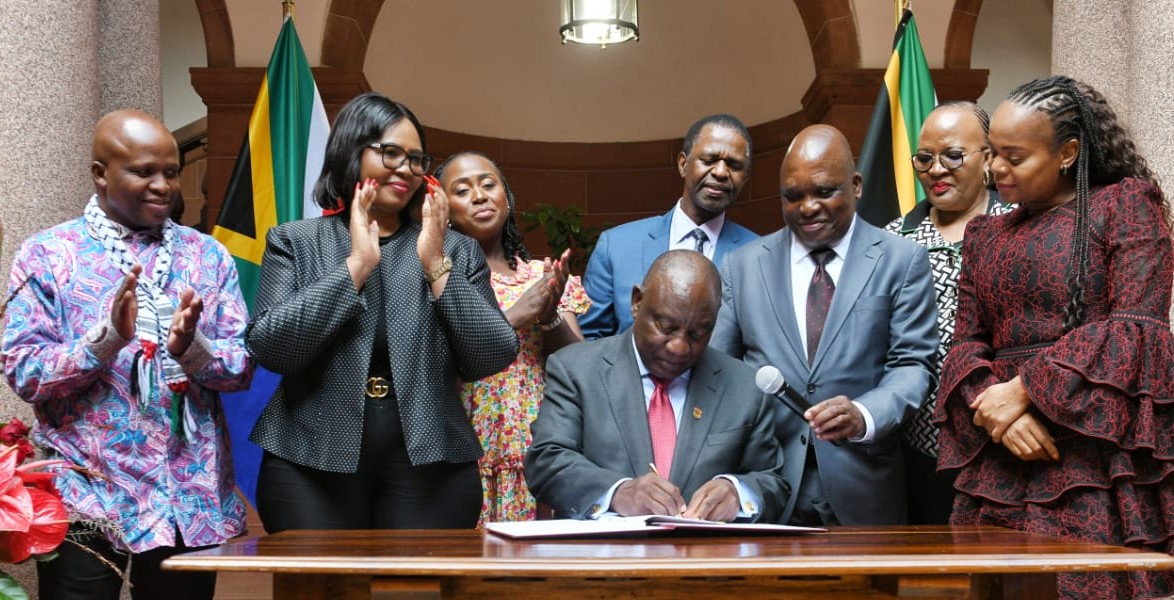
President Cyril Ramaphosa signs the National Health Insurance Bill into law on 15 May 2024. Picture: Department of Health
Share
Facebook Twitter LinkedIn Pinterest Email
  • The Board of Healthcare Funders is challenging the validity of the NHI Act, citing inadequate public participation by Parliament.
  • Parliament argues it followed constitutional requirements by holding extensive hearings and receiving numerous submissions.
  • The Constitutional Court will hear the case from 5 to 7 May 2026, determining the legitimacy of the NHI Act and future public participation standards.

The Constitutional Court is preparing to hear an important case regarding the validity of the National Health Insurance (NHI) Act.

In this case, the Board of Healthcare Funders is challenging the law, claiming that Parliament did not ensure meaningful public participation throughout its legislative journey. In contrast, Parliament and the government maintain that they followed constitutional requirements by conducting extensive hearings and gathering public input.

From 5 to 7 May 2026, the apex court will evaluate whether Parliament acted in accordance with the Constitution when it passed the NHI Act. This case has been brought by Dr Joseph Katlego Mothudi, the Managing Director of the Board of Healthcare Funders NPC, with several respondents, including the Speaker of the National Assembly, the Chairperson of the National Council of Provinces, and various health political leaders, along with provincial executives.

A related application has also been filed by the Premier of the Western Cape Government, who is questioning the legislative process that led to the NHI Act’s adoption.

How the NHI Act was passed

The National Health Insurance Bill passed through Parliament, receiving approval from the National Assembly in June 2023 and the National Council of Provinces in December 2023, before finally being signed into law in May 2024. This legislation aims to establish a single national fund designed to provide healthcare services for all residents, advancing towards universal access to healthcare.

This challenge has been directed to the Constitutional Court under Section 167(4)(e) of the Constitution, which grants the court exclusive jurisdiction to decide on disputes concerning Parliament's fulfilment of its constitutional obligations.

Why the Board of Healthcare Funders says the process failed

The Board of Healthcare Funders argues that the validity of the NHI Act is compromised because Parliament failed to meet its constitutional duty for public participation as outlined in Sections 59 and 72.

In its written submissions, the NPC clarifies that its challenge does not oppose the idea of universal healthcare but instead focuses on how Parliament executed the process. It elaborates, “This case is not about whether the State bears a constitutional obligation to take reasonable measures to progressively realise access to healthcare services. The State does, and it must.”

The crux of the matter is whether Parliament fulfilled its responsibility to ensure meaningful participation. The Board asserts that critical information, such as funding details, covered services, and operational aspects, was not made available to the public during the legislative process. It argues, "Without answers to those questions, the public was left to comment on draft legislation whose most basic and structural features remained undefined."

Furthermore, the applicant contends that Parliament failed to adequately address the concerns raised by various stakeholders. Despite numerous submissions from the healthcare sector, it claims lawmakers did not seriously consider whether those concerns warranted adjustments to the Bill. It suggests, "The only reasonable inference is that, for a majority of lawmakers, the answers did not matter to the outcome."

The Board also criticises what it describes as a procedural approach to public participation, arguing that merely following formal steps such as hearings and written submissions is insufficient if the process lacks genuine engagement. It contends, "This case is about whether, by paying lip service to the formal mechanics of public participation, Parliament discharged its substantive obligations. It did not."

Why Parliament says the process was constitutionally sound

In its defence, Parliament and the Executive argue that the legislative process adhered to the constitutional standard of reasonableness. They emphasise that extensive public hearings were held across all provinces and a significant number of written submissions were received and taken into account.

They maintain that while the Constitution guarantees a reasonable opportunity for public participation, it does not ensure agreement with or adoption of all expressed views. They state, “The uncontested facts demonstrate that all interested parties were afforded a reasonable and meaningful opportunity to actively participate in and potentially influence the legislative process.”

The respondents further contend that the applicant’s case is misdirected, suggesting it effectively criticises the outcome of the legislation rather than the process itself.

Conviction.co.za

Get your news on the go. Click here to follow the Conviction WhatsApp channel.

Constitutional Court Healthcare law NHI Act Parliament Public Participation
Share. Facebook Twitter Pinterest LinkedIn Tumblr Telegram Email
Kennedy Mudzuli

Multiple award-winner with passion for news and training young journalists. Founder and editor of Conviction.co.za

Related Posts

Constitutional Court clears path for retrenched workers to approach Labour Court directly

June 1, 2026

Mbeki and Mabandla accuse TRC Commission of sidestepping court challenge

May 29, 2026

Anti-money laundering Bill proposes lifestyle audits and tougher penalties

May 29, 2026
Leave A Reply Cancel Reply

Prove your humanity: 4   +   7   =  

Subscribe to our newsletter:
Top Posts

Making sectional title rules that work: A practical guide

January 17, 2025

Protection order among the consequences of trespassing in an ‘Exclusive Use Area’

December 31, 2024

Between a rock and a foul-smelling place

November 27, 2024

Irregular levy increases, mismanagement, and legal threats in a sectional title scheme

June 2, 2025
Don't Miss
Opinion
5 Mins Read

South Africa cannot afford to lag while youth nicotine addiction escalates

By Professor Lekan Ayo-YusufJune 2, 20265 Mins Read

Smoking and vaping among young South Africans have risen sharply over the past 15 years, raising concerns about nicotine addiction and delayed regulation.

Evicted Durban tenants win urgent court order pending eviction challenge

June 2, 2026

Pension fund withdrawal benefits are determined by rules, not contributions

June 2, 2026

Teachers win compensation after decade of rolling contracts ruled unlawful

June 2, 2026
Stay In Touch
  • Facebook
  • Twitter
  • WhatsApp
Demo
About Us
About Us

Helping South Africans to navigate the legal landscape; providing accessible legal information; and giving a voice to those seeking justice.

Facebook X (Twitter) YouTube WhatsApp Twitch RSS
Latest posts

Making sectional title rules that work: A practical guide

January 17, 2025

Protection order among the consequences of trespassing in an ‘Exclusive Use Area’

December 31, 2024

Between a rock and a foul-smelling place

November 27, 2024
OUR PICKS

R13,914 debt triggers sale of R380 000 home, transfer halted amid execution flaws

April 20, 2026

Understanding employee rights, workplace protections and grievance resolution in South Africa

June 8, 2025

Dead wife contradiction forces Nedbank to return repossessed Nissan Navara

May 29, 2026
© 2026 Conviction.
  • Home
  • Law & Justice
  • Special Reports
  • Opinion
  • Ask The Expert
  • Get In Touch

Type above and press Enter to search. Press Esc to cancel.

Powered by
►
Necessary cookies enable essential site features like secure log-ins and consent preference adjustments. They do not store personal data.
None
►
Functional cookies support features like content sharing on social media, collecting feedback, and enabling third-party tools.
None
►
Analytical cookies track visitor interactions, providing insights on metrics like visitor count, bounce rate, and traffic sources.
None
►
Advertisement cookies deliver personalized ads based on your previous visits and analyze the effectiveness of ad campaigns.
None
►
Unclassified cookies are cookies that we are in the process of classifying, together with the providers of individual cookies.
None
Powered by