Skip to content
Close Menu
ConvictionConviction
  • Home
  • Law & Justice
  • Special Reports
  • Opinion
  • Ask The Expert
  • Get In Touch

Subscribe to Updates

Get the latest creative news from FooBar about art, design and business.

What's Hot

Africa Day celebrations and the enduring gendered contradictions of African unity

June 4, 2026

Businesses urged to make only provable advertising claims

June 4, 2026

Women travel up to 300km as abortion services fail in Eastern Cape and Limpopo

June 4, 2026
Facebook X (Twitter) Instagram
Trending
  • Africa Day celebrations and the enduring gendered contradictions of African unity
  • Businesses urged to make only provable advertising claims
  • Women travel up to 300km as abortion services fail in Eastern Cape and Limpopo
  • Senior manager loses dismissal case before company could address CEO complaint
  • Toddler’s future forever changed after an accident just before his third birthday
  • Matric results publication stays public after High Court dismisses appeal by Information Regulator
  • More than maintenance: Rand Water building trust through action
  • Farm for sale advert slammed for misleading jacuzzi, workshop and three-phase power claims
Facebook X (Twitter) Instagram
ConvictionConviction
Sonneblom
  • Home
  • Law & Justice
  • Special Reports
  • Opinion
  • Ask The Expert
  • Get In Touch
ConvictionConviction
Home » Constitutional Court to decide if province can remove Inkosi without royal family
Constitutional Law

Constitutional Court to decide if province can remove Inkosi without royal family

Confirmation application tests whether statutory removal process violates constitutional protection of customary authority.
Kennedy MudzuliBy Kennedy MudzuliFebruary 19, 2026No Comments
Facebook Twitter Pinterest LinkedIn WhatsApp Reddit Tumblr Email
Share
Facebook Twitter LinkedIn Pinterest Email
  • The Constitutional Court will hear a confirmation application after the High Court in Pietermaritzburg declared sections 21(4), 22, 23 and 24(1) of the KwaZulu-Natal Traditional Leadership and Governance Act 5 of 2005 unconstitutional and invalid.
  • The Umndeni Wenkosi of Inkosi Luthuli and Inkosi Bhekizizwe Nivard Luthuli argue that the Act permits provincial authorities to remove an Inkosi without decisive involvement of the royal family, contrary to customary law and sections 30, 31 and 211 of the Constitution.
  • The matter, enrolled under case number CCT 116/25 and set down for 24 February 2026, will determine the constitutional limits of executive power over traditional leadership.

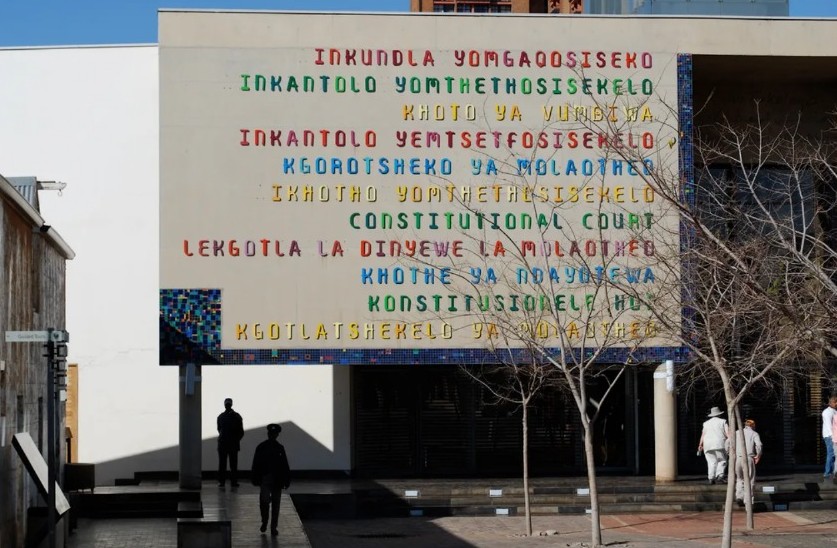
The Constitutional Court will, on 24 February 2026, hear a matter that goes to the heart of who has the final say in the removal of a traditional leader.

The applicants are the Umndeni Wenkosi of Inkosi Luthuli and Inkosi Bhekizizwe Nivard Luthuli. They challenge Sections 21(4), 22, 23 and 24(1) of the KwaZulu-Natal Traditional Leadership and Governance Act 5 of 2005. These provisions empower the MEC to institute an inquiry into alleged misconduct by a traditional leader, and after receiving findings, to suspend or remove that leader from office.

Background

The dispute follows a Section 23 inquiry into alleged misconduct by Inkosi Bhekizizwe Nivard Luthuli. The inquiry, conducted under the Act, resulted in findings and a recommendation that his recognition as Inkosi be withdrawn. Provincial authorities acted on those findings and removed him from office.

The applicants contend that this statutory framework allows government officials to sit in judgment over customary practices without the meaningful participation of the Umndeni Wenkosi, the royal family recognised under customary law as the custodian of succession, appointment and removal of an Inkosi. They argue that under the customary law of the Mathulini community, the Umndeni Wenkosi is the decisive authority in both appointing and removing a traditional leader.

They further contend that by excluding or marginalising the royal family in removal proceedings, the Act violates Sections 30 and 31 of the Constitution, which protect cultural rights, and Section 211, which recognises the institution, status and role of traditional leadership in accordance with customary law.

High Court findings

In October 2023, the High Court in Pietermaritzburg declared Sections 21(4), 22, 23 and 24(1) unconstitutional and invalid. The court found that the provisions failed to give adequate recognition to the constitutional protection of customary law and the entrenched role of the umndeni wenkosi in matters concerning the status of an Inkosi.

The High Court held that the impugned sections permit provincial authorities to remove a traditional leader on the basis of their own assessment of customary practices, even where those officials are not members of the affected community. It concluded that this framework undermines the constitutional recognition of traditional leadership structures.

Because a declaration of constitutional invalidity by a High Court has no force unless confirmed by the Constitutional Court, the matter now comes before the apex court for confirmation.

Conviction.co.za

Get your news on the go. Click here to follow the Conviction WhatsApp channel.

Constitutional Court customary law governance KwaZulu-Natal Traditional Leadership
Share. Facebook Twitter Pinterest LinkedIn Tumblr Telegram Email
Kennedy Mudzuli

Multiple award-winner with passion for news and training young journalists. Founder and editor of Conviction.co.za

Related Posts

Judge calls for investigation into claims of body corporate capture in Maboneng

June 3, 2026

Constitutional Court clears path for retrenched workers to approach Labour Court directly

June 1, 2026

Mbeki and Mabandla accuse TRC Commission of sidestepping court challenge

May 29, 2026
Leave A Reply Cancel Reply

Prove your humanity: 4   +   10   =  

Subscribe to our newsletter:
Top Posts

Making sectional title rules that work: A practical guide

January 17, 2025

Protection order among the consequences of trespassing in an ‘Exclusive Use Area’

December 31, 2024

Between a rock and a foul-smelling place

November 27, 2024

Irregular levy increases, mismanagement, and legal threats in a sectional title scheme

June 2, 2025
Don't Miss
Opinion
4 Mins Read

Africa Day celebrations and the enduring gendered contradictions of African unity

By Professor Grace KhunouJune 4, 20264 Mins Read

Professor Grace Khunou argues that Africa’s unity project will remain incomplete unless the voices, experiences, and interests of women are placed at the centre of the continent’s development agenda.

Businesses urged to make only provable advertising claims

June 4, 2026

Women travel up to 300km as abortion services fail in Eastern Cape and Limpopo

June 4, 2026

Senior manager loses dismissal case before company could address CEO complaint

June 4, 2026
Stay In Touch
  • Facebook
  • Twitter
  • WhatsApp
Demo
About Us
About Us

Helping South Africans to navigate the legal landscape; providing accessible legal information; and giving a voice to those seeking justice.

Facebook X (Twitter) YouTube WhatsApp Twitch RSS
Latest posts

Making sectional title rules that work: A practical guide

January 17, 2025

Protection order among the consequences of trespassing in an ‘Exclusive Use Area’

December 31, 2024

Between a rock and a foul-smelling place

November 27, 2024
OUR PICKS

Agricultural advisors declared scientists in landmark Labour Court ruling

February 17, 2026

R13,914 debt triggers sale of R380 000 home, transfer halted amid execution flaws

April 20, 2026

Understanding employee rights, workplace protections and grievance resolution in South Africa

June 8, 2025
© 2026 Conviction.
  • Home
  • Law & Justice
  • Special Reports
  • Opinion
  • Ask The Expert
  • Get In Touch

Type above and press Enter to search. Press Esc to cancel.

Powered by
►
Necessary cookies enable essential site features like secure log-ins and consent preference adjustments. They do not store personal data.
None
►
Functional cookies support features like content sharing on social media, collecting feedback, and enabling third-party tools.
None
►
Analytical cookies track visitor interactions, providing insights on metrics like visitor count, bounce rate, and traffic sources.
None
►
Advertisement cookies deliver personalized ads based on your previous visits and analyze the effectiveness of ad campaigns.
None
►
Unclassified cookies are cookies that we are in the process of classifying, together with the providers of individual cookies.
None
Powered by