


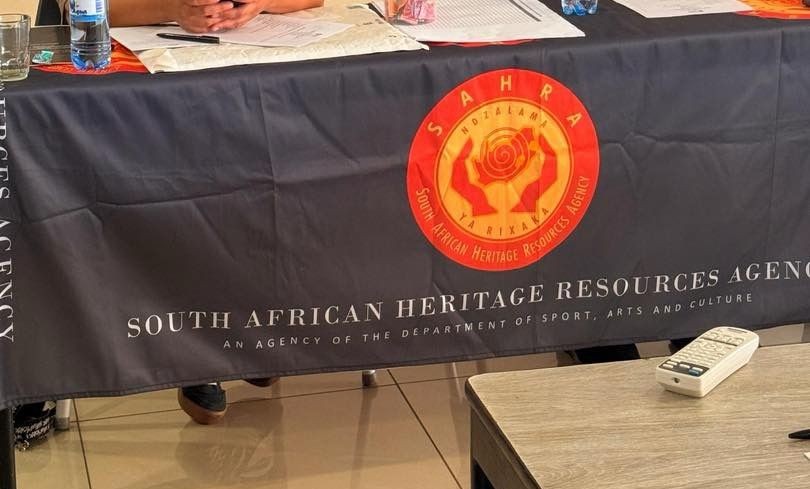
- The Labour Court in Cape Town has dismissed former SAHRA CFO Kgomotso Sekhabisa's attempt to challenge his dismissal.
- The court found that Sekhabisa unlawfully received R389,742.79 in acting allowances beyond the six-month limit, and failed to secure the necessary approval.
- The judge ruled that his repeated failure to submit procurement plans, along with ignoring several emails, amounted to gross negligence and justified his dismissal.
Kgomotso Sekhabisa, the former chief financial officer of the South African Heritage Resources Agency (SAHRA), has failed to persuade the Labour Court in Cape Town to overturn his dismissal.
Acting Judge JMJ MacRobert found that the Commission for Conciliation, Mediation and Arbitration (CCMA) was right to uphold Sekhabisa's dismissal for serious misconduct and gross negligence.
Sekhabisa had asked the court to review and overturn a CCMA arbitration award, which found his dismissal by SAHRA to be both procedurally and substantively fair. He also wanted compensation equal to what he would have earned for the rest of his fixed-term contract.
Acting allowance exceeded policy limits
Sekhabisa was appointed as SAHRA's chief financial officer on a five-year fixed-term contract starting 1 August 2017. In June 2019, he was also asked to act as Executive: Corporate Services while keeping his CFO position, and was reminded to familiarise himself with all relevant policies and delegations. The disciplinary charges focused on the acting allowances he received for the extra role.
According to the charges, Sekhabisa received R19,198.07 per month from June to July 2019, and R23,423.11 per month from August 2019 to October 2020. This added up to acting allowances totalling R389,742.79. SAHRA said these payments were irregular because its remuneration policy allows a maximum of six consecutive months for acting allowances.
Although the CCMA commissioner was not convinced that SAHRA had shown the two positions were not "lateral", he still found Sekhabisa guilty of breaking the remuneration policy by receiving the allowance well beyond the six-month limit. Judge MacRobert agreed with this finding.
"The policy is clear and unambiguous," the judge said, rejecting Sekhabisa's argument that the six-month limit did not apply to lateral appointments. The court explained that the phrase "The same applies" clearly extends the six-month cap to lateral roles. It would make no sense, the judge added, to have a six-month cap in some cases and none in others.
No approval sought for continued payments
Evidence showed that Sekhabisa never asked for the required policy deviation to keep receiving the acting allowance after six months, even though he knew other employees had obtained similar approvals.
"Sekhabisa did not ask the CEO for approval, and no such approval was given. This was a serious breach of policy and led to unauthorised and irregular spending," Judge MacRobert said.
The judge also mentioned a document from the human resources manager adjusting acting allowance calculations. While Sekhabisa approved this document as both CFO and acting Executive: Corporate Services, his own acting allowance was missing from it, even though he was receiving the payments. "This omission is more than questionable," the judgment stated.
The court rejected Sekhabisa's defence that other officials had approved the payments, finding instead that "he was the one who started the process." The court also found no convincing evidence that SAHRA had inconsistently allowed others to get acting allowances beyond six months without approval.
Judge MacRobert pointed out that Sekhabisa knew the rule and even admitted that being found guilty of this charge amounted to serious misconduct.
Procurement failures
The second disciplinary charge involved Sekhabisa's failure to submit mandatory procurement plans to the Department of Sport, Arts and Culture. The court described the relationship between SAHRA and the department as crucial, saying it was essential to comply with procurement reporting obligations.
Judge MacRobert found that Sekhabisa repeatedly ignored urgent emails. "Sekhabisa simply did not respond to urgent emails from Ms Apies of DCAS reminding him about the submission deadline, or from his own line manager, the CEO. This showed great disregard," the judge said, noting that the failures ultimately forced the CEO to submit the procurement plans herself.
The judgment notes that Sekhabisa failed to answer five emails from a departmental official between 15 and 27 August 2020, including a final reminder that threatened escalation. He also ignored four emails from the CEO between 30 August and 2 September 2020.
Judge MacRobert rejected Sekhabisa's explanations, calling them "woefully inadequate and unacceptable," and concluded that his actions amounted to gross dereliction of duty, gross negligence, and financial misconduct under the Public Finance Management Act.
The judge further noted that senior employees are expected to know and follow the standards required of them because of their position and experience.
No procedural unfairness
Sekhabisa also argued that the disciplinary process was unfair because he was not given a forensic investigation report before the hearing and did not have enough time to prepare.
The court rejected both complaints, noting that these issues had not been raised by his legal representative at the start of the hearing. The court also pointed out that SAHRA did not rely on the forensic report during arbitration. Judge MacRobert found there was no procedural unfairness.
Review dismissed
In dismissing the review application, Judge MacRobert said that the CCMA commissioner had thoroughly analysed the evidence and reached a fair outcome.
The judge said that given Sekhabisa's senior role, the trust that was placed in him, his responsibilities under SAHRA's policies, and his lack of remorse, the findings of misconduct and the decision to dismiss him were justified.
Concluding the matter, Judge MacRobert said the arbitration award was "fully deserved and well-reasoned," and that there was no irregularity. The application for review was dismissed, with no order for costs.
Get your news on the go. Click here to follow the Conviction WhatsApp channel.
