


- Court finds no prima facie right, appeal does not suspend demolition, wall deemed unlawful.
- Urgency is self-created after the applicant obstructs demolition and delays legal remedies.
- HOA authorised to demolish the wall, recover costs, and enlist SAPS if interference continues.
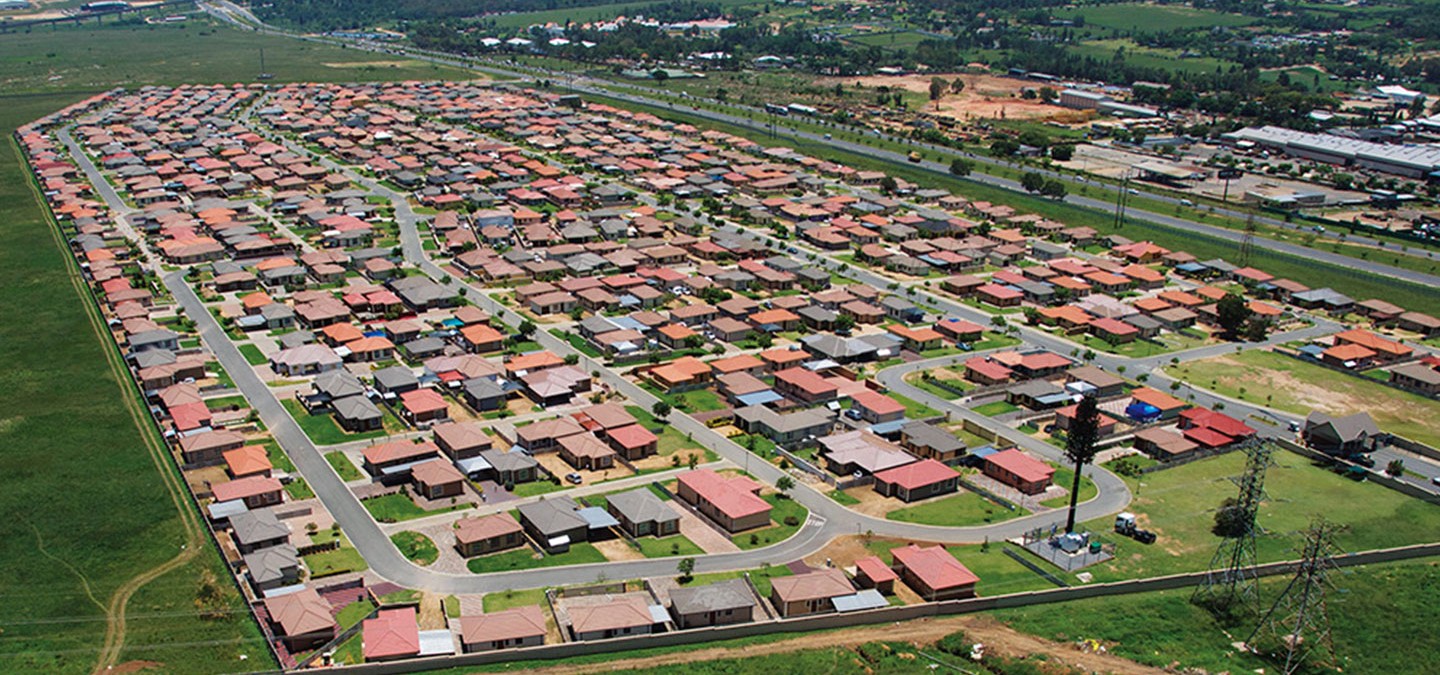
The High Court in Johannesburg has dismissed an urgent application by Thabo Samuel Makhorole to stop the demolition of a boundary wall at his Waterfall View estate property.
The ruling cleared the way for the Jukskei View Extension 17 and 18 Residents Association NPC to proceed with demolition and recover all related costs from him.
Makhorole approached the court seeking an interim interdict to prevent the demolition pending appeals he had lodged against decisions of the Community Schemes Ombud Service (CSOS). Those CSOS rulings had already rejected his attempts to have the wall declared lawful.
The residents’ association, supported by its managing agent, Elgaru Pty Limited, opposed the application and brought a counter-application seeking authority to demolish the structure.
Judge LR Adams found that the wall was unlawful and that Makhorole had failed to meet every requirement necessary for interim interdictory relief. The court held that simply noting an appeal does not suspend enforcement of a decision, especially where a litigant has failed to apply for a stay as expressly provided for in law.
Background and parties
Makhorole, acting in person, constructed a boundary wall at his property in Waterfall View Estate in Midrand during September 2023. The estate is governed by the Jukskei View Extension 17 and 18 Residents Association NPC, which enforces architectural guidelines applicable to all residents. Elgaru Pty Limited acts as the managing agent of the association, while Ramasimong Simon Ramotsoela and Rabelani Lusunzi were cited as neighbouring interested parties.
The dispute arose after Makhorole failed to obtain the required neighbour consent and deviated from approved building plans. Two separate CSOS applications followed, both unsuccessful. Despite lodging appeals to the High Court, Makhorole took no meaningful steps to advance them until the day demolition was due to begin.
On 5 March 2026, contractors arrived to demolish the wall but were physically obstructed. The court accepted evidence that Makhorole sprayed contractors with chemicals and threw bricks at them. Later that same day, he launched the urgent application.
No prima facie right and no irreparable harm
Judge Adams emphasised that the requirements for an interim interdict are well established and cumulative. The applicant must demonstrate a prima facie right, irreparable harm, a favourable balance of convenience, and the absence of an alternative remedy.
On the central issue, the court stated, “The applicant has failed to establish any of the requirements for an interim interdict.”
The judge rejected Makhorole’s reliance on ownership and pending appeals as a basis for relief. The court held, “The applicant’s ownership of the property does not entitle him to maintain an unlawful structure upon it.”
The approvals relied upon were found to be invalid due to the applicant’s own procedural failures. The court further noted that deviations from approved plans and the absence of neighbour consent rendered the construction unlawful.
On irreparable harm, the court was equally direct. It held, “If the wall is unlawful, its demolition is not harm; it is the lawful consequence of the applicant’s own conduct.”
The judge also dismissed the argument that demolition would render the appeals academic, noting that other remedies could still be pursued if the appeals succeeded.
Self-created urgency and failed legal strategy
A critical feature of the case was the finding that urgency had been self-created. Judge Adams found that Makhorole had delayed pursuing available remedies and only approached the court when demolition was imminent. The court stated, “A litigant cannot create his own urgency and then rely on it to obtain relief.”
Makhorole had been explicitly informed of his right to apply for a stay of the CSOS orders, but failed to do so. The court held that this omission was fatal to his application, reinforcing that an interdict is a remedy of last resort.
The balance of convenience also weighed heavily against him. The court found that allowing the wall to remain would undermine estate governance and perpetuate an unlawful structure, while any harm suffered by Makhorole was of his own making.
Counter-application succeeds, and demolition authorised
Having dismissed the urgent application, the court granted the counter-application brought by the residents’ association. The association is now authorised to demolish the wall after giving at least 20 days’ written notice.
Importantly, the court granted enforcement powers in anticipation of further obstruction. Judge Adams held that the circumstances justified intervention by authorities, stating that the sheriff and the South African Police Service may assist in carrying out the demolition and restraining Makhorole if necessary.
All costs related to the demolition, including previously incurred costs, will be borne by Makhorole and may be recovered through his levy account.
In conclusion, the court found that the association had made out what it described as “an unassailable case” for demolition, while Makhorole’s application failed on every legal requirement.
Get your news on the go. Click here to follow the Conviction WhatsApp channel.
