


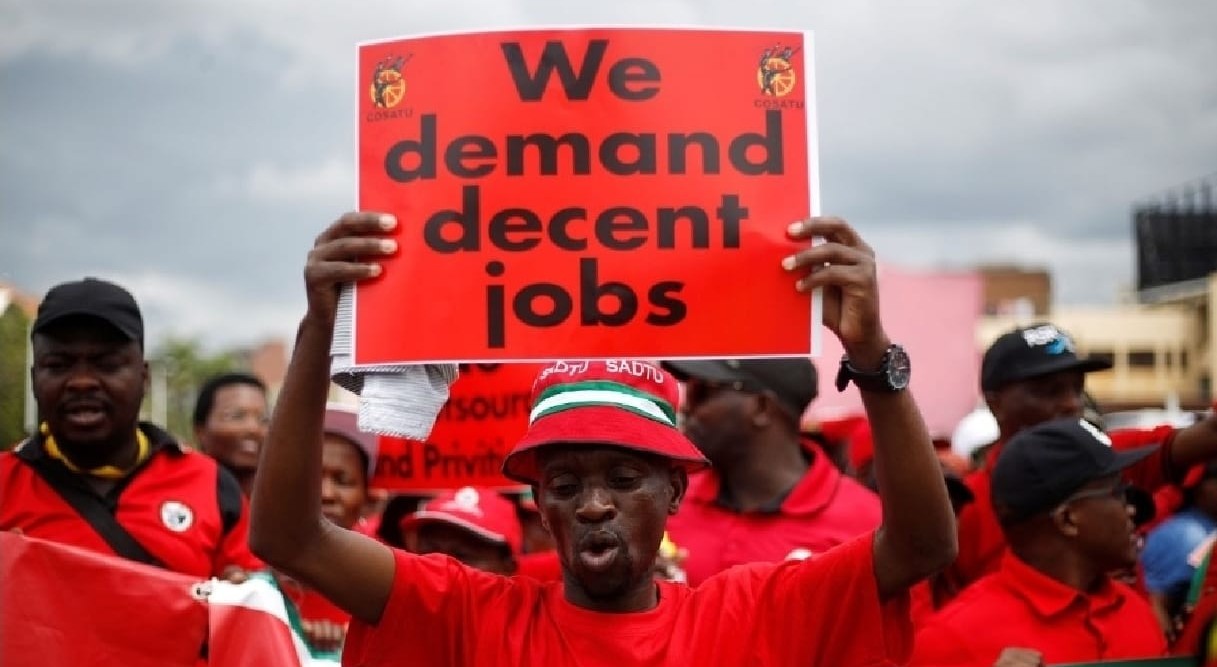
- Apartheid’s legacy persists through elite-dominated governance, technocracy and public exclusion.
- Elections and democratic institutions mask authoritarian structures and preserve inequality.
- Voter disillusionment grows amid rising poverty, debt and disempowerment of the black majority.
Despite the much celebrated 'third wave' of democratic transitions that swept through Africa in the early 1990s, many post-colonial states across the continent remain what scholars like Larry Diamond and Richard Sklar describe as “hybrid regimes.” These are political systems that combine the formal structures of democracy with the underlying realities of authoritarianism.
Notwithstanding the hype and self-proclaimed exceptionalism, South Africa is not significantly different from countries like Nigeria, Zambia and Mozambique. The myth of South African exceptionalism obscures the country’s deep structural continuities with other post-colonial African states, particularly the failure to dismantle the legacies of colonial capitalism and authoritarian rule.
While the collapse of one-party states and the relegalisation of opposition parties initially suggested a shift toward pluralism and liberal democracy, the outcomes have primarily been limited to partial political openings rather than deep, structural transformations.
The illusion of participation and elite control
In most cases, these changes produced superficial reforms rather than the institutionalisation of democratic norms. In this regard, elections have become more frequent, and the rhetoric of democratic governance has also become widespread. However, the substance of democracy, accountability, transparency, genuine citizen participation and equitable policymaking, has remained elusive.
In South Africa, this democratic deficit is most evident in the realm of policymaking, which remains highly technocratic and insulated from public input. Critical economic and social decisions are taken behind closed doors, shielded from public scrutiny and deliberation. Instead of participatory governance, citizens are routinely bombarded with sensationalist media reports of corruption scandals, state capture and elite infighting, diverting attention from the systemic exclusion of ordinary people from decision-making processes.
ANC fiascos have defined the 30 years of democracy and less is said about the thriving apartheid in their shadows. For the better part of a decade, Jacob Zuma, the Gupta brothers and the Zondo Commission dominated public discourse. Today, the cycle continues with recycled scandals involving figures like Nhlanhla Mkhwanazi. While these issues are not trivial, they function as a political smokescreen that distracts citizens. It is a great pity that these stories get more airtime than the unfulfilled promise by elites to end apartheid and its vestiges.
While ‘white’ South Africa continues to flourish, the ‘black’ side, an enlarged Bantustan, moves into a bottomless abyss. Each time politicians and party leaders appear on television, the discussion tends to gravitate toward personality politics and scandal, rather than addressing the country's deeper crises: persistent poverty, debt, unemployment, absent infrastructure and the growing alienation of youth.
Meanwhile, millions of South Africans drown in personal debt, while corporations and banks post record profits. Young people are trapped in cycles of marginality, beset by alcohol and drug abuse, an education system that fails to prepare them for a precarious labour market, and seemingly insurmountable barriers to financial independence and “starting life” as adults.
This disconnect highlights the illusion at the heart of South Africa’s democracy: while the forms of democratic life are preserved (elections, courts, and parliamentary debates), the substance of democracy, defined by accountability, equity, and popular agency, is largely absent. As a result, democratic institutions increasingly serve to legitimise elite continuity rather than disrupt it.
Mechanisms of masked authoritarianism
In Manufacturing Consent, Noam Chomsky and Edward Herman argue that mass media plays a powerful role in legitimising dominant interests by narrowing public debate. In South Africa, this dynamic reinforces a culture where procedural democracy exists, but substantive democratic control, especially in economic governance, remains elusive.
What becomes clearer over time is that courts and civil society actors wield more influence over policy than the general population. This aligns with the concept of ‘assisted democracy,’ where formal democratic processes exist, but are functionally controlled by unelected elites and institutions.
Richard Joseph calls this model a “virtual democracy”, where outward appearances of democratic governance exist (elections, parliaments, civil liberties), but without genuine redistribution of power or participation.
Thabo Mbeki’s presidency, often remembered for stability and economic growth, entrenched a technocratic and elite-aligned governance style. Public participation in policymaking was limited. While democratic rituals persisted, real power remained concentrated, and this trend has continued unchecked.
Political parties — ANC, DA, MKP, EFF — may differ rhetorically, but all operate within the same elite-controlled system. They preserve democratic form while undermining democratic substance. Rather than disrupting the status quo, they legitimise it.
Sabelo J Ndlovu-Gatsheni refers to this as the myth of decolonisation: democratic rituals create the illusion of “the will of the people,” while the postcolonial state retains colonial logics of exclusion.
Crucially, economic policymaking, liberalisation, privatisation, fiscal rules, is shielded from public debate. Policy is made for markets and elites, not people. Governments, even elected ones, operate within narrow constraints designed to please international financial institutions and domestic capital interests.
Ritualised voting and the crisis of agency
Larry Diamond and Juan Linz argue that hybrid regimes use democratic institutions to mask authoritarian control. Elections become ritualised, predictable events with no real choice or consequences. These systems are not in transition toward full democracy; they are stable, self-reinforcing regimes.
This helps explain the growing disillusionment with voting. Without economic sovereignty, responsive governance, and meaningful public input, elections become consent-manufacturing exercises. Citizens are asked to authorise their continued marginalisation under the false promise of transformation.
Democracy becomes a spectacle: a tasteless and dull performance of inclusion masking the reality of exclusion.
Now you understand why I may never vote again. But have you ever asked yourself what will happen if none of us votes in all 55 countries (yes, 55)?
Siya yi banga le economy!
Conviction.co.za
Get your news on the go. Click here to follow the Conviction WhatsApp channel.
