


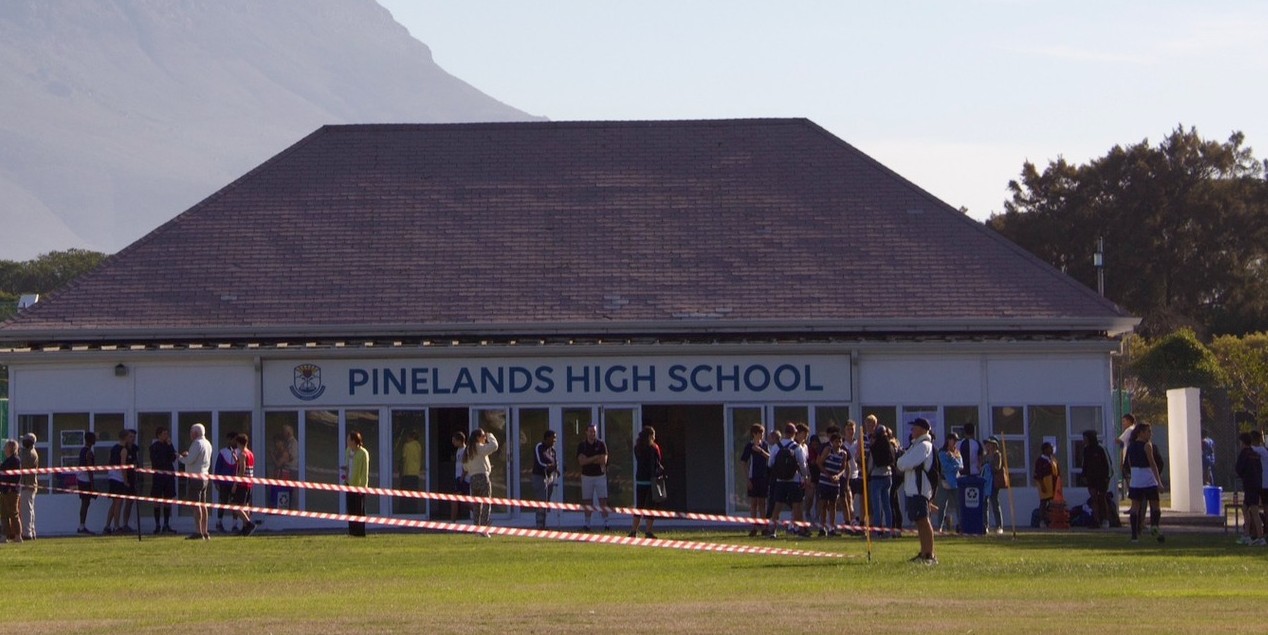
- The SA Human Rights Commission found that a simulated slave auction at Pinelands High School violated learners’ rights to dignity, equality, and psychological security.
- The Commission held that the learners’ conduct, not that of the school or WCED, caused the constitutional infringements.
- The school and WCED implemented extensive restorative, disciplinary, and preventative measures following the incident.
A detailed investigation by the South African Human Rights Commission (SAHRC) has found that a simulated slave auction carried out by Grade 8 learners at Pinelands High School resulted in multiple constitutional rights violations, including infringements of dignity, equality, and psychological security.
The incident took place on 26 July 2024 and came to public attention through widely circulated video footage, triggering national concern about racism and learner safety in schools.
The SAHRC initiated the investigation of its own accord, citing its constitutional mandate to promote, protect, and monitor human rights. It examined not only the conduct of the learners but also the response of the school and the Western Cape Education Department (WCED), along with the broader legal and historical context.
Background and full account of the incident
The incident occurred on a morning before the official start of the school day, in an area designated for Grade 8 learners. A group of learners staged what was described as a “slave auction” simulation involving their peers, placing some learners in a confined space while others called out bids and enacted behaviours that mimicked domination and the transfer of control.
The SAHRC found that the conduct included physical gestures and role-playing that replicated patterns associated with slavery. Although the learners reportedly intended it as a prank, the simulation carried clear racial implications and reflected historical patterns of dehumanisation.
The video of the incident spread rapidly across social media platforms and news outlets, prompting widespread condemnation. The SAHRC recorded that the incident raised serious concerns about racial dynamics in schools and the adequacy of existing safeguards against discriminatory behaviour.
The SAHRC also emphasised that the incident cannot be viewed in isolation from South Africa’s history, noting that slavery entrenched racial hierarchies and produced long-lasting psychological and social consequences that continue to shape interactions in contemporary society.
Immediate response and investigation process
Following the emergence of the video, the WCED responded the same day, dispatching senior officials, including district leadership, to the school to help manage the situation and ensure that the rights and well-being of learners were protected.
The school initiated an internal investigation in line with its disciplinary framework. It interviewed 24 learners, including those who participated directly and those who witnessed the incident. The process was designed to account for the age of the learners and to balance accountability with developmental considerations.
Four learners identified as primary perpetrators were issued precautionary suspensions for a period of seven days. This step was taken to allow further investigation before final disciplinary decisions were made.
The school governing body subsequently convened formal disciplinary hearings. Rather than relying solely on punitive sanctions, the school adopted a restorative justice approach aimed at education, reflection, and behavioural change.
Disciplinary outcomes and restorative measures
The disciplinary process resulted in a range of consequences designed to address the harm caused and to educate those involved. These included mandatory sensitivity training, structured educational assignments, and community service.
Learners were also required to visit historically significant sites, including the Slave Lodge and the District Six Museum, to deepen their understanding of South Africa’s history and the impact of racial oppression. Written reflections formed part of this process, encouraging them to engage critically with their own conduct.
The Commission noted that these interventions were intended to foster empathy, accountability, and awareness, rather than simply to punish.
Psychological support and school community response
Recognising the emotional toll of the incident, the WCED deployed counsellors and a social worker to the school. Support was provided not only to learners directly involved but also to those affected by the wider social and media attention.
Counselling was delivered through both individual sessions and group debriefings, giving learners space to process their experiences and concerns. The Commission noted that some families chose private counselling, reflecting how deeply the incident had affected them.
The school and the department also engaged with parents and the wider school community, holding information sessions to explain the steps being taken and to address concerns.
Preventative measures and institutional reform
Following the incident, the school implemented a comprehensive programme of reforms aimed at preventing a recurrence. These included staff development workshops focused on diversity, racial literacy, and social justice, as well as curriculum changes that wove these themes into Life Orientation across all grades.
Orientation programmes for new learners were strengthened to include dedicated sessions on values, inclusion, and human rights. Leadership initiatives, including prefect training and learner-driven campaigns, were introduced to reinforce positive conduct.
Cultural and educational activities, including museum visits, lectures, and community engagement events, were expanded to promote inclusivity and shared understanding. A transformation committee was tasked with driving these ongoing initiatives within the school.
Legal framework and constitutional analysis
The SAHRC assessed the incident within the framework of the Constitution of the Republic of South Africa, 1996, the South African Schools Act 84 of 1996, and the Promotion of Equality and Prevention of Unfair Discrimination Act 4 of 2000.
It found that the learners’ conduct constituted racial discrimination and violated multiple constitutional rights.
On equality, the SAHRC stated, “The Commission finds that the perpetrator learners infringed the affected learners’ right to equality by creating an environment in which racialised discriminatory conduct took place, thus undermining their sense of equal status within the school community.”
On dignity, it stated, “The Commission finds that the dignity of these learners was infringed by the perpetrator learners as they were subjected to demeaning treatment that conflicts with their right to personal respect and self-worth.”
On psychological safety, it stated, “The Commission finds that this incident violated the learners’ right to psychological security, as they were subjected to a racially hostile environment that could impact their emotional stability.”
In the best interests of the child, the SAHRC stated, “The Commission finds that the School took reasonable steps to act in the best interests of all children or learners affected by the incident and children in the broader school community.”
On education, it confirmed, “Based on the written report submitted by the School and the WCED and the subsequent meeting with them, the Commission is satisfied that there was no interruption in providing education to all learners and thus in this respect, the right to a basic education was upheld for the learners of the School.”
Findings on responsibility and liability
A central question in the investigation was whether the school or the WCED could be held liable for the incident.
The SAHRC rejected this, stating, “The learners involved in the simulation are not employees or agents of the School or the WCED, and there is thus no legal basis to hold either the School or the WCED vicariously liable for the actions of those learners.”
It also noted that the incident occurred outside formal school hours, reinforcing the absence of institutional fault.
Assessment of the institutional response
The SAHRC found that both the school and the WCED acted promptly and appropriately once the incident came to light.
It stated, “Both the School and the WCED responded promptly and decisively once they became aware of the incident.” It added, “A full investigation was conducted, and appropriate restorative steps were initiated.”
The SAHRC concluded, “The actions taken to date reflect a sincere commitment to learning from the incident, addressing the harm caused, and preventing its recurrence.”
Conclusion and recommendations
The SAHRC concluded that the simulated slave auction resulted in serious violations of learners’ constitutional rights, particularly equality, dignity, and psychological security. However, it found that responsibility lay with the learners involved, not with the school or the WCED.
The report recognises the seriousness of the incident while affirming that the institutional response was appropriate, comprehensive, and aligned with constitutional and educational obligations.
The Recommendations recommended that the school compile a reflective report documenting the lessons learned and challenges encountered. It also advised the WCED to develop a provincial case study to inform policy development and training across the education sector.
Ongoing monitoring and a continued emphasis on inclusivity, psychological safety, and racial awareness were identified as essential to sustaining progress.
Get your news on the go. Click here to follow the Conviction WhatsApp channel.
