



- Baby Savers SA says it followed all protocols, but Department of Social Development directives blocked urgent medical intervention for abandoned baby Nandi.
- The Gauteng Department accuses Baby Savers of negligence and insists the group be held accountable for Nandi’s suffering.
- The case exposes systemic failures in South Africa’s child protection system, with statutory intervention blocked by departmental directives.
The Gauteng Department of Social Development has strongly criticised Baby Savers South Africa, accusing the group of negligence and warning that it will be held responsible if anything happens to baby Nandi, a 20-month-old who was left in a saver late last month.
In its statement, the department said Baby Savers SA was operating outside the law, claiming the group bypassed the official child protection system and put the baby at risk. The department said only government and registered agencies should handle safe relinquishment of infants, and warned that unsanctioned actions could cause confusion and danger.
But Baby Savers has hit back, calling the department’s claims false and profoundly misleading. Instead of acknowledging its own failure to secure urgent medical intervention, Baby Savers says the department has chosen to vilify the very volunteers, paramedics, and care workers who tried to save a child’s life when the state system would not, according to Baby Savers SA.
At the heart of this dispute lies not only the fate of one little girl, but also the future of safe relinquishment in South Africa. The battle between civil society and government reveals a child protection system paralysed by bureaucracy, legal uncertainty, and political defensiveness, with abandoned infants paying the ultimate price.
The day baby Nandi entered the saver
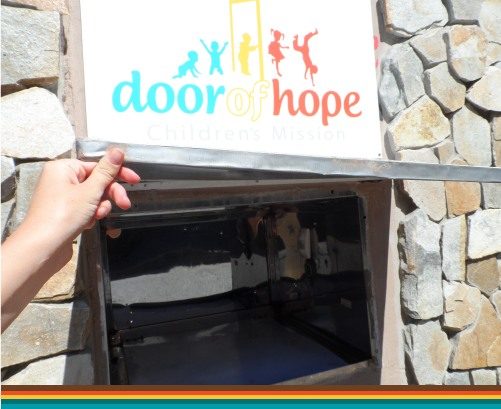
On 26 August 2025, baby Nandi was placed in a saver operated by Tree of Hope. From the moment the alarm was triggered, volunteers followed established protocols; emergency services were called immediately, and Edenvale Child Welfare was notified. Paramedics responded and attempted to admit the child to Edenvale Hospital, but the hospital refused to take her in.
This refusal was critical. With a serious pre-existing medical condition, Nandi required urgent hospitalisation. Yet instead of being admitted through the emergency pathway routinely used when police recover abandoned babies, she was left without the immediate care her condition demanded. According to Baby Savers, this was not a failure of their system but of the state’s.
Department blocks statutory services
What happened next turned an already desperate situation into a bureaucratic nightmare. Edenvale Child Welfare later confirmed in writing that they would not provide statutory services for baby Nandi, citing a directive from Department of Social Development. The department was copied on a subsequent correspondence but did not intervene to reverse the decision, Baby Savers said.
Without statutory services, there was no way to obtain the urgent Children’s Court order required for surgery. For Baby Savers, this was proof that government directives, not volunteer negligence, created the life-threatening delay. “Protocols were followed from the outset,” Baby Savers said. “It was the department’s own system that failed to act.”
A mother’s desperate letter
Lost in the official accusations is the voice of Nandi’s mother. Far from simply abandoning her child, she left a handwritten letter explaining that she had been turned away by multiple hospitals and was now seeking help through the safety net system.
For Baby Savers, the letter is heartbreaking evidence of a parent who tried every avenue before making the painful decision to use a baby box.
“This was not a mother dumping her child,” an advocate explained. “This was an act of desperation, a last resort to save her baby’s life.”
Vilifying those who tried to help
Instead of intervening to ensure care, the Gauteng department has publicly accused Baby Savers of lacking authority, expertise, and protocols. In its statement, it called baby boxes illegal under the Children’s Act, described the Nandi case as a failure, and pledged to hold Baby Savers accountable.
The department doubled down, arguing that Baby Savers SA should be “held accountable” for what happened to Nandi, saying that the tragedy “was the result of private actors interfering in processes that belong under state authority.” Officials insisted that the law provides mechanisms for mothers in crisis and that Baby Savers SA’s model undermines those structures.
But advocates argue the department is deflecting from its own constitutional obligations. When police recover abandoned babies, the system allows for immediate hospital admission. That same pathway was denied to Nandi, leaving volunteers with their hands tied.
“To suggest that volunteers, paramedics, and care facilities who responded in good faith should now be ‘held accountable’ is not only untrue, but also cruel,” Baby Savers said.
Child rights experts point out that Section 28 of the Constitution guarantees every child the right to basic nutrition, shelter, health care, and protection. When an infant’s life hangs in the balance, the state carries the ultimate duty of care.
“The department cannot outsource its constitutional obligations and then attack those who step into the gap,” a legal practition told Conviction.co.za. “If government is serious about preventing abandonment, it must create safe relinquishment pathways, not punish the organisations trying to fill the void.”
Baby Savers SA maintains that its protocols are transparent and developed in consultation with doctors, social workers, SAPS officers and legal experts. Its network exists, they argue, precisely because the department has failed to provide safe, accessible alternatives for desperate mothers.
South Africa’s abandonment crisis
Baby Nandi’s case comes amid a broader crisis of infant abandonment. With poverty, social stigma, lack of support for mothers, and hospital refusals compounding the problem, dozens of babies are abandoned every month, many in life-threatening places like rubbish dumps, pit latrines, or the streets.
Civil society organisations argue that baby boxes offer a safe alternative, preventing certain death for children whose mothers feel they have no other option. Government, however, insists the practice is unlawful, choosing instead to pursue court action against Baby Savers.
The result is a policy vacuum in which desperate mothers are left without safe, legal options, while infants like Nandi are caught between bureaucracy and survival.
“This is not a question of paperwork or politics. It is a question of whether a baby in crisis receives care, or is left to die.” – Baby Savers SA
The road ahead
Baby Nandi is currently in a registered health facility. Yet her case has become a symbol of a broken system.
For many, the dispute between department and Baby Savers is not just about legality. It is about life and death. Whether the government chooses to reform child protection protocols, recognise safe relinquishment options, or continue waging legal battles against civil society will determine the fate of countless vulnerable infants.
For now, the department insists it will investigate Baby Savers, while Baby Savers insists it will continue saving lives in the absence of state support. And baby Nandi’s fragile survival stands as a test of South Africa’s willingness to put children above politics.
Conviction.co.za
Get your news on the go. Click here to follow the Conviction WhatsApp channel.
