


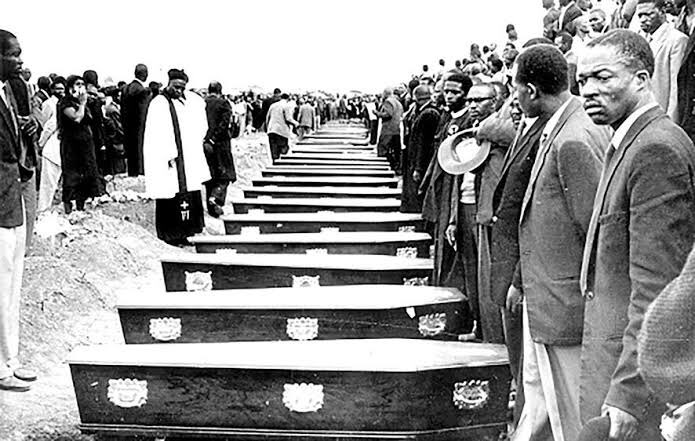
- Survivors and families of Sharpeville victims are taking legal action against the South African government, with a class action set to begin on 3 September.
- The lawsuit challenges apartheid-era laws that, according to the plaintiffs, blocked them from seeking civil claims and were never officially removed.
- Before the legal proceedings begin, a Walk of Witness will retrace the original route taken by Sharpeville protesters.
More than 60 years after one of apartheid’s darkest days, survivors of the Sharpeville Massacre and the families of those killed are bringing a historic class action against the South African government, hoping to finally achieve justice.
Lawyers for Human Rights (LHR) will represent lead plaintiffs who survived the massacre. The class action also includes the dependants of those who lost their lives. They argue that laws passed by the apartheid government unfairly stopped them from seeking civil claims and remained in place even after the country became a democracy.
According to LHR, this lawsuit directly challenges a legal obstacle that has kept victims and their families from justice for generations. The UK-based human rights law firm Leigh Day is consulting with the South African legal team, and a detailed legal briefing will be made public before the proceedings begin.
Walk of Witness retraces history
Before the court case gets underway, survivors and relatives will take part in a silent Walk of Witness on Thursday 3 September 2026. They will follow the same path peaceful protesters took on 21 March 1960.
The programme starts at 8am at the Sharpeville Crossroads. Marchers will stop at the Sharpeville police station, where a community elder will ring a bell to mark the end of decades of silence. The procession will continue to the Memorial Garden for a stone-laying ceremony.
LHR says the walk is meant to honour those who took a stand against the pass laws, as well as those who lost their lives on that day.
Challenging an apartheid law
The legal action focuses on apartheid-era laws that plaintiffs say blocked survivors and the families of victims from bringing legal claims against the state. Lawyers for Human Rights argues that because these laws were never removed, families have been denied real access to justice, even though the Constitution promises equality before the law.
The organisation says this class action could finally give survivors and families the chance to seek accountability and compensation through the courts.
Remembering Sharpeville
The Sharpeville Massacre took place on 21 March 1960. On that day, about 5,000 black South Africans gathered peacefully at the Sharpeville police station to protest against the apartheid pass laws, following a call for civil disobedience from the PAC.
Party leader Robert Sobukwe told supporters, “Our people must be taught now and continuously that in this campaign we are going to observe absolute non-violence.” However, police later opened fire on the unarmed crowd, killing at least 91 people and injuring 238 others.
The massacre became a turning point in South Africa’s fight for freedom, drawing condemnation from around the world and exposing the cruelty of apartheid. More than 60 years later, survivors and their families say their fight for justice is not yet over.
Get your news on the go. Click here to follow the Conviction WhatsApp channel.
