

Skip to content
Close Menu
ConvictionConviction
  • Home
  • Law & Justice
  • Special Reports
  • Opinion
  • Ask The Expert
  • Get In Touch

Subscribe to Updates

Get the latest creative news from FooBar about art, design and business.

What's Hot

Politics must be about human dignity, not just service delivery and voting

November 5, 2026

Police record 85 incidents during local government elections with 27 suspects arrested

November 5, 2026

Justice Mokgoro’s partner gets suspended sentence for car crash that killed her

November 5, 2026
Facebook X (Twitter) Instagram
Trending
  • Politics must be about human dignity, not just service delivery and voting
  • Police record 85 incidents during local government elections with 27 suspects arrested
  • Justice Mokgoro’s partner gets suspended sentence for car crash that killed her
  • Mahikeng municipality fails to block Barolong community’s land restitution claim
  • Festive chicken workers secure protection against dismissal in Labour Court strike dispute
  • Parent’s contact with children reinstated pending further investigation into their care
  • LPC challenges order compelling it to issue attorney with Fidelity Fund Certificate
  • Jailed for three life terms and a further 653 years for 119 sexual offences against three children
Facebook X (Twitter) Instagram
ConvictionConviction
Sonneblom
  • Home
  • Law & Justice
  • Special Reports
  • Opinion
  • Ask The Expert
  • Get In Touch
ConvictionConviction
Home » shelter eviction
Human Rights

Eviction law does not protect temporary homeless shelters from court-ordered eviction

High Court in the Western Cape clarifies that emergency shelter accommodation is legally different from a home protected by South Africa’s eviction law.
Kennedy MudzuliBy Kennedy MudzuliSeptember 11, 2026No Comments
Facebook Twitter Pinterest LinkedIn WhatsApp Reddit Tumblr Email
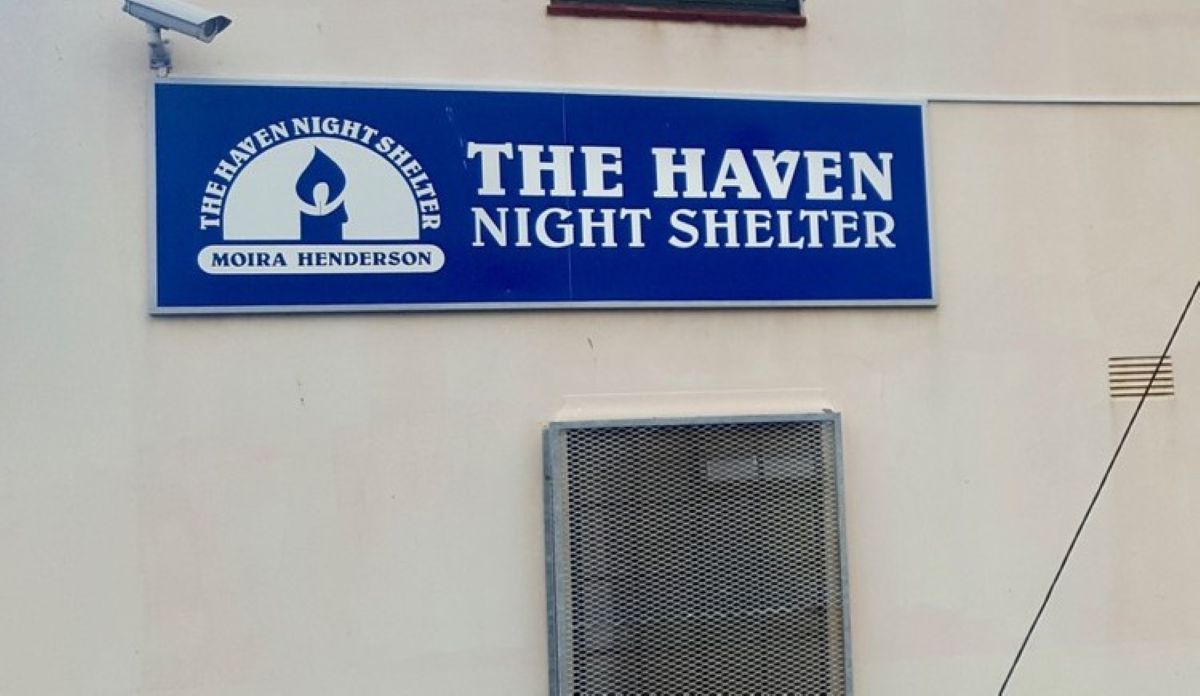
The Haven Night Shelter in Malmesbury, the temporary homeless shelter at the centre of a High Court judgment on South Africa’s eviction law.
The Haven Night Shelter in Malmesbury was at the centre of a High Court in the Western Cape judgment clarifying how South Africa’s eviction law applies to temporary homeless shelters.
Share
Facebook Twitter LinkedIn Pinterest Email
  • Full bench distinguishes temporary homeless shelters from homes protected by eviction law.
  • Judgment defines when emergency shelter falls outside the PIE Act’s protection.
  • Court rejects claims that government funding transfers the State’s housing obligations to a private shelter.

People staying in temporary homeless shelters are not protected by South Africa’s eviction law in the same way as people living in a home, the High Court in the Western Cape has clarified.

A full bench comprising Judge A Le Grange, Judge D Holderness and Judge N Ralarala heard the matter, with Judge Holderness writing the judgment and the other judges concurring.

The case was brought by 70-year-old Sheree Foggitt, who challenged her removal from The Haven Night Shelter’s Malmesbury facility after arguing that the facility had become her home and that she could not legally be removed without a court order under the Prevention of Illegal Eviction from and Unlawful Occupation of Land Act.

A dispute over temporary shelter

Foggitt had lived within The Haven’s shelter system since 2020 before being admitted to its Malmesbury shelter in April 2024. Like all residents, she signed the organisation’s admissions policy, which provides for a six-month placement, a review after three months and a maximum stay of nine months.

The Haven told the court its shelters operate as transitional facilities rather than permanent housing. Residents are supported through social work programmes aimed at helping them reunite with family, secure employment or move into longer-term accommodation, while limited shelter beds are continually rotated to accommodate other people experiencing homelessness.

The organisation later terminated Foggitt’s accommodation, citing repeated non-payment of shelter fees despite her SASSA pension, breaches of shelter rules and a refusal to participate in social work interventions.

On 23 January 2025, she was transported to Cape Town after declining alternative accommodation offered by The Haven. She was not admitted to the alternative shelters and spent about two weeks sleeping on the streets, where she was robbed and assaulted before obtaining temporary accommodation elsewhere.

What makes a place a home

The central issue before the court was whether a temporary homeless shelter can legally become a home under the PIE Act.

Judge Holderness said the ordinary meaning of a home requires more than simply occupying a building. “The ordinary meaning connotes a place of regular occupation coupled with some degree of permanence,” Judge Holderness wrote.

The judgment explains that permanence, stability and security of tenure distinguish a home from emergency accommodation. Living in a shelter for several months, the court held, does not by itself transform temporary accommodation into a legally protected home.

Judge Holderness added, “Temporary shelter provided for a defined social welfare purpose does not become a home merely through the passage of time.”

Emergency accommodation serves a different purpose

The court accepted The Haven’s evidence that its shelters exist to provide immediate relief to homeless adults rather than indefinite residential housing.

The judges found that the admissions policy, fixed placement periods and continual turnover of beds demonstrate a welfare model designed to maximise access to scarce emergency accommodation. The policy therefore created no enforceable right to remain indefinitely.

That distinction meant ending Foggitt’s stay did not amount to an eviction requiring judicial authorisation under the PIE Act.

Older Persons Act argument rejected

Foggitt also argued that The Haven should be regarded as a residential facility regulated under the Older Persons Act because of her age and the nature of the accommodation.

The full bench rejected that argument, finding that The Haven’s shelters are neither old-age homes nor residential care facilities contemplated by the Act. They remain temporary homeless shelters providing emergency accommodation and social support.

Government funding does not shift constitutional duties

Another important question was whether The Haven assumes the State’s constitutional housing obligations because it receives funding from the Western Cape Department of Social Development and grant-in-aid funding from the City of Cape Town.

Judge Holderness held that public funding does not transform a private non-profit organisation into the State. “The Constitution does not impose upon the Haven the positive obligations resting on the State to provide housing,” Judge Holderness wrote.

The court found that while The Haven must respect constitutional rights in the way it operates, receiving public funding does not convert it into the State or transfer the government’s duty to provide housing.

Police removal policy upheld

Foggitt further challenged The Haven’s policy allowing police or security personnel to assist in removing residents whose accommodation has been lawfully terminated.

The judges dismissed that challenge, finding that the policy itself did not establish an unlawful eviction procedure and there was no legal basis for declaring it invalid.

Conviction.co.za

Get your news on the go. Click here to follow the Conviction WhatsApp channel.

Eviction law homeless shelters PIE Act The Haven Western Cape
Share. Facebook Twitter Pinterest LinkedIn Tumblr Telegram Email
Kennedy Mudzuli

Multiple award-winner with passion for news and training young journalists. Founder and editor of Conviction.co.za

Related Posts

Somali refugee faces deportation after going home and using fraudulent residency certificate

November 3, 2026

Sebokeng grandmother secures title deed after years of dispute with brother-in-law

October 24, 2026

Blind SA challenges minister’s refusal to advance access to international libraries for blind people

October 20, 2026
Leave A Reply Cancel Reply

Prove your humanity: 10   +   9   =  

Subscribe to our newsletter:
Top Posts

Your driving licence at the gate: What estates can actually legally scan

Sponsor: My Estate LifeSeptember 6, 2026

Making sectional title rules that work: A practical guide

January 17, 2025

Protection order among the consequences of trespassing in an ‘Exclusive Use Area’

December 31, 2024

Between a rock and a foul-smelling place

November 27, 2024
Don't Miss
Opinion
4 Mins Read

Politics must be about human dignity, not just service delivery and voting

By Siyabonga HadebeNovember 5, 20264 Mins Read

A reflection on how liberal democracy, electoral politics and service delivery have overshadowed human dignity, social responsibility and collective cooperation.

Police record 85 incidents during local government elections with 27 suspects arrested

November 5, 2026

Justice Mokgoro’s partner gets suspended sentence for car crash that killed her

November 5, 2026

Mahikeng municipality fails to block Barolong community’s land restitution claim

November 5, 2026
Stay In Touch
  • Facebook
  • Twitter
  • WhatsApp
Demo
About Us
About Us

Helping South Africans to navigate the legal landscape; providing accessible legal information; and giving a voice to those seeking justice.

Facebook X (Twitter) YouTube WhatsApp Twitch RSS
Latest posts

Your driving licence at the gate: What estates can actually legally scan

Sponsor: My Estate LifeSeptember 6, 2026

Making sectional title rules that work: A practical guide

January 17, 2025

Protection order among the consequences of trespassing in an ‘Exclusive Use Area’

December 31, 2024
OUR PICKS

Legal battle erupts over disputed agreement allowing mining at Vlakfontein

August 20, 2026

Legal crackdown sees attorney struck off, another suspended, and fees pursued

April 30, 2026

Municipality cannot escape wage increases by blaming past mismanagement

November 2, 2026
© 2026 Conviction.
  • Home
  • Buy Now
  • Law & Justice

Type above and press Enter to search. Press Esc to cancel.

Powered by
Necessary cookies enable essential site features like secure log-ins and consent preference adjustments. They do not store personal data.
None
Functional cookies support features like content sharing on social media, collecting feedback, and enabling third-party tools.
None
Analytical cookies track visitor interactions, providing insights on metrics like visitor count, bounce rate, and traffic sources.
None
Advertisement cookies deliver personalized ads based on your previous visits and analyze the effectiveness of ad campaigns.
None
Unclassified cookies are cookies that we are in the process of classifying, together with the providers of individual cookies.
None
Powered by