


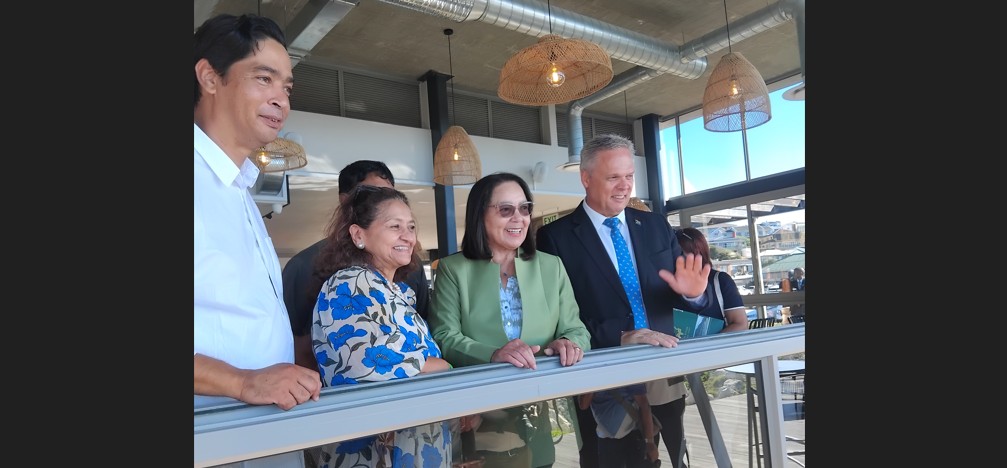
- The upgraded Cape Agulhas Lighthouse precinct is designed to attract more domestic and international visitors while creating local economic opportunities.
- Tourism Minister Patricia de Lille described the development as a first step toward unlocking the area’s broader economic potential.
- The project is part of a national effort to diversify tourism options beyond traditional locations.
The wind was fierce and the sea a moody mix of indigo and grey, but the southernmost tip of Africa was filled with celebration.
With the Indian and Atlantic Oceans crashing together behind her, Tourism Minister Patricia de Lille officially opened the upgraded Cape Agulhas Lighthouse precinct. She referred to it as “a first step toward unlocking the area’s economic potential.”
The R82 million development, with some reports putting the final cost at R84 million, is more than just a facelift for a 178-year-old landmark. It shows South Africa's commitment to ensuring tourism growth spreads beyond Table Mountain and the Big Five. Coastal towns can also be a base for inclusive economic development.
De Lille told a crowd of local officials, SANParks rangers, and small business owners who braved the Cape wind for the event, “Standing here today, at the southernmost tip of Africa, we are reminded that South Africa is more than just a destination. It is an experience.”
A precinct built on story and experience
The precinct combines stone, glass, and storytelling. The Cape Agulhas Lighthouse, the second oldest working lighthouse in the country, still projects its beam across a coastline known for shipwrecks.
Now, it stands beside a new restaurant and an interpretation centre designed to immerse visitors in the area’s maritime history, culture, and biodiversity. De Lille noted, “At the heart of this commitment is diversifying our tourism offerings beyond Table Mountain and traditional safari experiences.”
The project reflects the Cabinet-approved Tourism Growth Partnership Plan, which focuses on product development, job creation, and coordinated destination marketing. For Cape Agulhas National Park manager Dhiraj Nariandas, the precinct transforms how the park communicates with its visitors.
He said, “We now have a restaurant that will showcase local flavours and traditions. We want this precinct to be a place that tells a story visitors can take with them.”
He added, “It’s about experiencing the coastline and making memories. That is what makes this development exciting. It brings together storytelling and visitor experience.”
Led by the Department of Tourism in collaboration with South African National Parks and the Department of Forestry, Fisheries and the Environment, the project demonstrates that infrastructure spending can create immediate community benefits.
Construction alone provided jobs and skills transfer in the Overberg region, involving local contractors and workers in the build. De Lille pointed to the Kgodumodumo Dinosaur Interpretation Centre in the Free State as a model.
Opened less than a year ago, it has attracted thousands of visitors and generated over R1 million in revenue. The Agulhas precinct is expected to follow a similar path, attracting domestic travellers and international tourists who want to stand at the meeting point of two oceans.
The Minister stated, “This project reflects efforts to build destinations that are accessible, inclusive, and appealing to both local and international tourists.”
Why it matters for SA tourism
The launch comes as the government focuses on tourism as an economic engine. In his State of the Nation Address, President Cyril Ramaphosa urged the sector to promote unique cultural, historical, and natural attractions. The Agulhas precinct responds to that invitation with a site that is geographically significant and environmentally rich.
South Africa’s coastline is home to many tourism icons, but Cape Agulhas has often remained in the shadow of Cape Point. The new infrastructure changes that. Improved access roads, better visitor facilities, and the interpretation centre increase dwell time, the measure that transforms a quick photo stop into an overnight visit.
Local guesthouse owner Marlene Visser, who attended the handover, was already calculating the potential benefits. She said, “When people come for lunch, they often stay for the afternoon. When they stay for the afternoon, they book a night. This is the kind of development we’ve needed for 20 years.”
The precinct also arrives at a time when South Africa’s tourism sector is working to rebuild with an emphasis on resilience. Load shedding, infrastructure vandalism, and connectivity gaps continue to be issues, but De Lille used this occasion to call for greater collaboration between the public and private sectors.
She stated, “These partnerships are vital for speeding up the deployment of renewable and alternative energy solutions at network sites, as well as safeguarding critical infrastructure from vandalism and theft.”
Nariandas echoed this sentiment, pointing out that national parks face pressure to be financially sustainable while also protecting biodiversity.
He mentioned, “If we can tell our story better and host visitors more effectively, we can fund conservation more effectively. Everything is connected.” The lighthouse continues to do its job, warning ships away from the jagged rocks of the Agulhas Bank.
The new precinct aims to do the opposite for people, drawing them in. With hiking trails, fynbos plains, and the famous marker where the oceans meet, the area now has the infrastructure to turn curiosity into commerce.
For South Africa, the Agulhas handover represents another milestone in the broader effort to decentralise tourism value. From dinosaur fossils in the Free State to shipwreck narratives at the continent's edge, the message is clear. The country’s next chapter is about depth, not just postcards.
De Lille concluded, “This is not the end of the work. It’s the first step. But it’s a strong one.”
Get your news on the go. Click here to follow the Conviction WhatsApp channel.
