


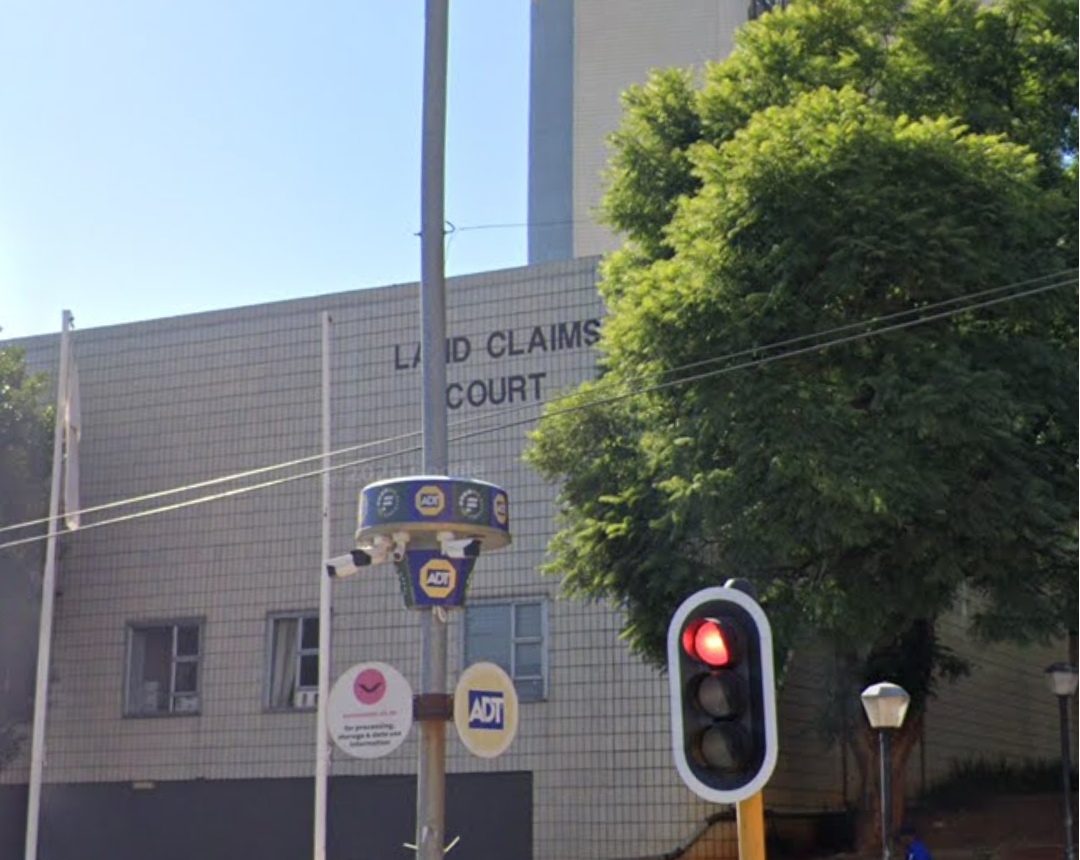
- Communities win ownership after the Land Claims Court finds apartheid-era proclamation unlawfully stripped them of control over ancestral land.
- Government Notice 69 of 1990 was declared unconstitutional for undermining dignity, culture and property rights.
- Court orders transfer of Zandfontein 31 JR and Bultfontein 174 JR to Maubane and Maloka communities with no costs awarded.
For more than three decades, the Bakgatla Ba Mocha Ba Maubane and Bakgatla Ba Mocha Ba Maloka communities lived under a legal regime that stripped them of control over land they had occupied for generations.
That regime has now been dismantled by the Land Claims Court in the land restitution judgment of Bakgatla Ba Mocha Ba Maubane and Others v Government of Bophuthatswana and Others, which restores ownership of Zandfontein 31 JR and most of Bultfontein 174 JR to the rightful communities.
In a judgment, Deputy Judge President S Cowen declared that Government Notice 69 of 1990, issued under the former Bophuthatswana homeland government, was unconstitutional insofar as it authorised another traditional authority, Bakgatla Ba Mmakau Ba Mokgoko, to control and manage land belonging to the Maubane and Maloka.
The court found that the proclamation continued to do harm long after the end of apartheid, operating as an ongoing deprivation of property, dignity and cultural autonomy.
Judge Cowen wrote unequivocally that, “The continued operation in the democratic era violates the right to dignity and cultural rights,” and added that the proclamation “continues to deprive the Maubane and the Maloka of their customary rights to manage and control the land on which they reside. This is in breach of Section 25(1) of the Constitution.”
How authority over land was taken without consent
The power struggle dates back to a series of proclamations issued under colonial and apartheid laws, which placed the Bakgatla communities under the territorial authority of Bakgatla Ba Mmakau Ba Mokgoko, regardless of long-established occupancy and governance structures. Those proclamations were made without consultation, consent, or participation by the affected communities.
The Land Claims Court found that the impact on daily life was devastating and enduring. One witness told the court that institutions such as schools had been built in another authority’s territory, describing forced labour and restrictions on farming. Another recounted how the community could not even open a shop or access water without permission.
One witness described the seizure of authority in stark, human terms, saying, “It is as if you were to take my shoe and say, wear one shoe and then I will wear the other shoe.” The court noted how development happened on the land without the consent of the people, including police stations and hospitals, while families suffered demolition of homes and even arrests for trespass on land they had occupied all their lives.
Judge Cowen concluded that what occurred was not just administrative interference but a clear act of dispossession. “The powers under customary law to take decisions about the management and control of land vested with another authority. It is in this way that the dispossession of rights, which was coercive, occurred.”
Why the proclamation failed constitutional scrutiny
The judge found that the proclamation amounted to an unconstitutional deprivation of property under Section 25 of the Constitution. He applied the Constitutional Court’s definition of deprivation as “any interference with the use, enjoyment or exploitation of private property” and found that the interference here was ongoing.
Crucially, the Land Claims Court rejected the idea that historical injustice could be excused simply because it predated democracy. Judge Cowen made clear that the harm did not end in 1994. “It cannot be said that there is sufficient reason for the ongoing deprivation,” he wrote, pointing to the discriminatory origins of the law and the absence of consent.
The court also held that cultural rights had been violated, citing the communities’ spiritual and traditional relationship with the land. “The deprivation of control and management over their land under customary law limits these rights,” Judge Cowen said, referring to the constitutional right to participate in cultural life and enjoy culture.
Importantly, the first respondent, the Government of Bophuthatswana, did not attempt to justify the limitation of rights under Section 36 of the Constitution. The court noted this silence, stating plainly that “There was no attempt to justify any limitation of rights.”
Why the land is being returned, not compensated
After declaring the proclamation unconstitutional, the Land Claims Court ordered that the land itself be returned in what amounts to full restoration. Zandfontein 31 JR was restored to the Maubane, while Bultfontein 174 JR was restored to the Maloka, excluding a portion known as Portion A.
Restoring ownership, rather than ordering compensation, was a direct response to the lived realities of the communities, who have remained on the land for generations despite being gradually stripped of their legal authority over it.
Judge Cowen emphasised that justice required more than money. “Justice and equity demand that the dispossessed properties be fully restored in the form of ownership,” he ruled, noting that the communities had never been compensated and had endured indignity even after democracy.
The court was satisfied that there would be no social disruption arising from restoration, observing that the respondent had no presence on Zandfontein and only limited occupational interests on Bultfontein. The land is state-owned, removing further obstacles to transfer.
Where leases exist, the judge clarified that the principle of huur gaat voor koop would apply, meaning existing lawful leases would survive transfer and could be renegotiated in the ordinary course.
No referral to the Constitutional Court
Although the issues were described as weighty and of national importance, the Land Claims Court declined to refer the declaration of invalidity to the Constitutional Court. Judge Cowen ruled that Section 172(2) of the Constitution did not apply, as the proclamation was not an Act of Parliament, a provincial Act or an act of the President of South Africa.
Former homeland president Lucas Mangope’s actions, the judge said, were not actions of the President as contemplated in the Constitution. Authority over traditional leadership matters had long since passed to provincial governments. As a result, the declaration of invalidity stands unless overturned on appeal.
Get your news on the go. Click here to follow the Conviction WhatsApp channel.
