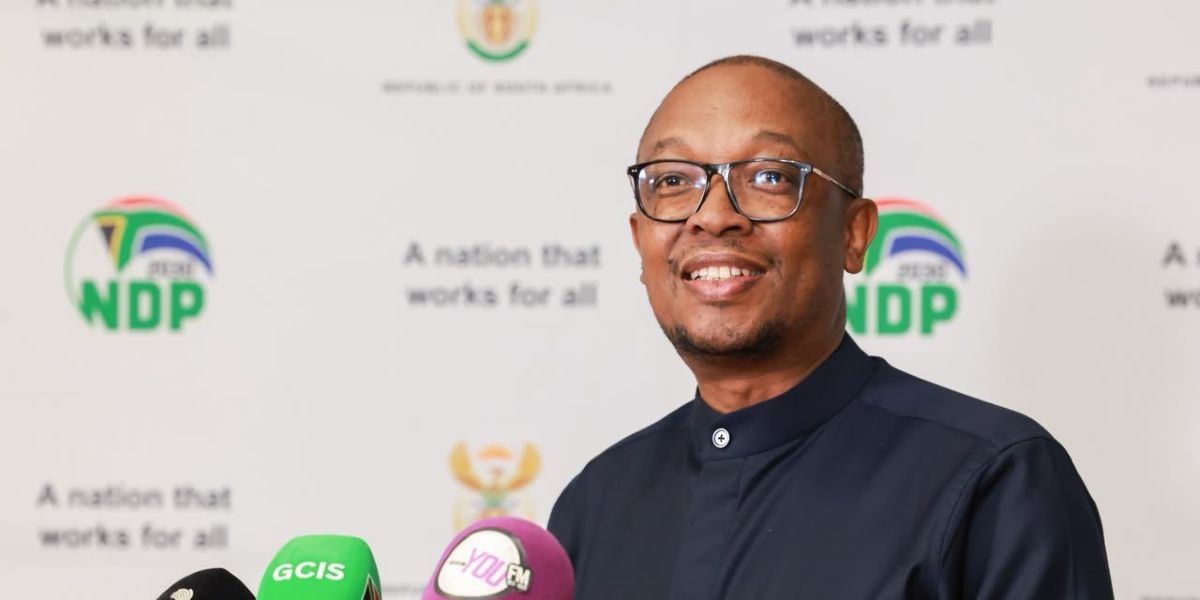
- Blind SA has started legal action against Trade, Industry and Competition Minister Mpho Parks Tau’s decision to delay South Africa’s joining of an international treaty that would help blind people access books.
- The organisation maintains that a Constitutional Court order already provides the needed copyright exceptions, so no further legislative changes are required before joining the treaty.
- The case aims to compel the minister to develop a plan to move the process forward and give regular updates on how it is being carried out.
Blind SA has challenged the government’s ongoing delay in expanding access to books and other published works for blind and visually impaired people. The organisation says the minister in charge of trade and industry is relying on an incorrect reading of the law.
With help from SECTION27, the organisation has taken the matter to the High Court in Pretoria. They are challenging Minister Parks Tau’s decision to put South Africa’s signing of the Marrakesh Treaty on hold until the Copyright Amendment Bill becomes law.
This delay means people with visual impairments cannot fully benefit from international digital libraries that could provide reading material in accessible formats.
Limited access to published works
The Marrakesh Treaty makes it easier to exchange published works across borders in accessible formats, such as braille and large print, for people who are blind or visually impaired.
Blind SA says only 1% to 7% of published works are available in accessible formats. Joining the treaty would let eligible readers in South Africa use digital libraries in other countries that have signed up.
Some of the world’s largest digital libraries are in the United States, which has already signed and ratified the treaty. South Africa still has not joined, even though it expressed its intention to do so back when the World Intellectual Property Organization adopted the agreement on 27 June 2013.
Cross-border access only works if both countries involved have signed the treaty, so South Africa joining is a key step towards giving people with visual impairments more reading options.
Constitutional Court order at centre of dispute
Tau says, based on advice from the Department of International Relations and Cooperation and the Department of Justice and Constitutional Development, that South Africa cannot legally join the treaty until new legislation amending the Copyright Act has been passed.
Blind SA disagrees and relies on the Constitutional Court’s decision in Blind SA v President of the Republic of South Africa, which was delivered on 7 May 2025.
The court order inserted Section 19D into the Copyright Act, laying out specific copyright exceptions to help people access published works in accessible formats and to allow these works to be shared across borders under the Marrakesh Treaty.
This provision also has safeguards to protect copyright holders from misuse, including rules about attribution and international transfers. The Constitutional Court said Section 19D will stay in place until the Copyright Amendment Bill comes into effect.
Blind SA argues that this order has already dealt with the legal barriers, so the minister’s decision to delay joining the treaty is based on a misunderstanding of the law.
Organisation seeks plan to advance accession
Blind SA wants the minister to create a practical plan to make sure the treaty gets to Parliament and to take real steps to put that plan in place within a reasonable time. The organisation also wants the court to order the minister to share a copy of the plan and give regular updates on progress.
The organisation says that ongoing delays leave people with visual impairments unable to access reading material that others have, which limits their ability to take part fully in society.
This court case aims to break down the barriers keeping people from international digital libraries and force the government to take the steps needed to join the treaty without any more delay.
Get your news on the go. Click here to follow the Conviction WhatsApp channel.