


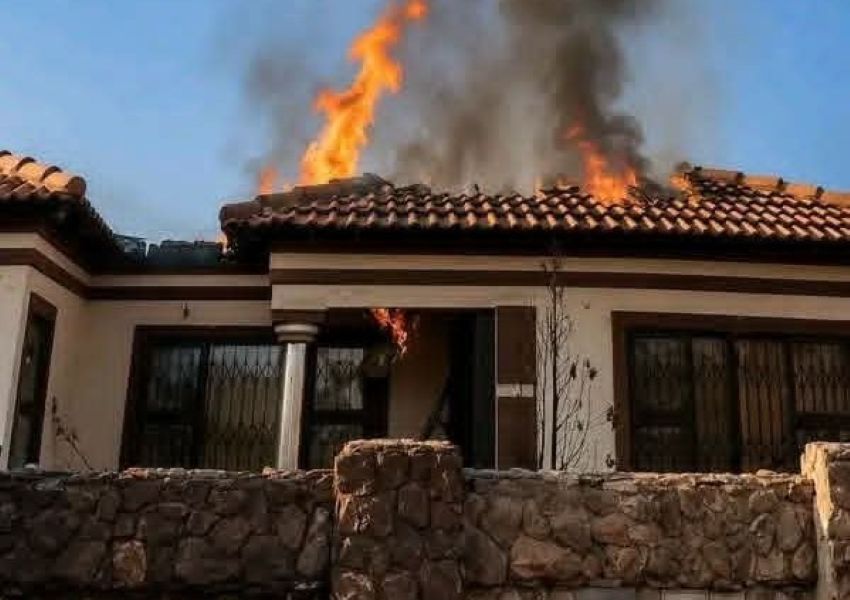
- Ratanda's recent protests followed prolonged water outages linked to Lesedi Municipality's growing debt to Rand Water.
- The crisis highlights persistent failures in municipal financial governance rather than water scarcity.
- Without stronger financial accountability, similar service delivery failures are likely to continue across South Africa.
Recent protests in Ratanda, within the Lesedi Local Municipality, have drawn national attention to a pattern that has been building for several years: communities responding to prolonged water outages with increasingly forceful demonstrations.
Residents experienced weeks of unreliable supply before the situation escalated into a protest. The underlying cause of the crisis was administrative rather than environmental.
The sequence of events is well documented. On 9 February, a formal letter of demand was issued by Rand Water, giving the municipality 14 business days to cure its defaults. A notice of intention to reduce bulk supply by 20% after 30 days was issued on 14 April, demonstrating overall legal compliance.
Lesedi Municipality submitted an appeal on 24 April requesting reconsideration of the proposed limitation, highlighting that current accounts were paid up to date and offering an additional payment of R500 000. Rand Water denied the request because the outstanding historical Debt Settlement Agreement (DSA) defaults remained unaddressed, and no credible or sustainable proposal had been provided.
Rand Water consequently issued a formal notice of its intention to restrict supply in April, giving the municipality more than two months' warning, and engaged extensively with Lesedi Local Municipality through formal correspondence, bilateral meetings and intergovernmental forums throughout the escalation period.
Rand Water reduced the bulk potable water supply to Lesedi Municipality by 20% on 17 June after the municipality failed to honour a series of payment arrangements on a debt exceeding R27.71 million. Although Lesedi Local Municipality generally maintained current account payments, its historical obligations were completely neglected. Lesedi Municipality is currently in breach of the DSA by failing to pay the current account of R14.6 million, including interest, as well as the agreed R500 000 towards the historical debt.
The finances of Lesedi Municipality are in a dire state. Outstanding debt escalated from R25 million in the 2021/2022 financial year to approximately R134 million to date. The municipality has regularly defaulted on its ring-fenced historical debt, failing to adhere to the DSA conditions. Rand Water has consequently set a structured pathway to lift the current restrictions.
Lesedi Municipality must meet the following prerequisites: (1) immediate payment of outstanding arrears of R52 million; (2) provide a formal, binding written plan to recover the remaining balance; and (3) settle the full outstanding amount upon receiving the July equitable share allocation.
The warning signs in Lesedi are not new. Debt to Rand Water has continued to accumulate year after year. This progression, infrastructural strain, unpaid municipal debt, acute service failure and then protest, has recurred across several South African municipalities in recent years.
Measuring the trend: 2024 to 2026
Ratanda should be read alongside recent data on water-related unrest, not as an isolated event. Municipal IQ recorded 122 service delivery protests in the first half of 2024 alone, although water and electricity issues accounted for only about a quarter of that total. By 2025, the strain was clearer in household data.
Statistics South Africa's General Household Survey found that 56.8% of households experienced water interruptions that year, with 37.6% facing interruptions of at least two days or exceeding 15 days in total, with the worst-affected provinces being Mpumalanga, Limpopo and KwaZulu-Natal. That year also brought sustained unrest in Johannesburg's Westbury and Coronationville, and a Human Rights Commission finding of systemic water failures across North West province.
Into 2026, the pattern has continued. Melville and Westdene in Johannesburg protested in February after 23 days without supply. Secunda and Bethal saw demonstrations in March over municipal debt to Rand Water that were strikingly similar to Ratanda's.
eThekwini residents held placard protests over recurring pipe bursts, and Free State communities reportedly burned water storage tanks. Ratanda, in July, is the most visible recent instance of the same dynamic: prolonged disruption followed by protest in a system where causes are identified but rarely resolved before the next crisis.
Diagnosis without consequence
What distinguishes the water crisis from a resource scarcity problem is that its causes are largely well-documented. Municipal debt to bulk suppliers, ageing infrastructure, weak billing and revenue collection, and limited consequence management for repeated non-payment have all been described in detail by Rand Water, the Auditor-General and provincial inquiries.
The measures required, such as ring-fencing infrastructure funding, stricter enforcement of payment agreements and clearer accountability for municipal financial management, are similarly well established. A municipality that is unable to manage and meet its payment obligations to, for example, a bulk supplier is, at its core, experiencing a failure of financial governance, even where the visible symptom is a dry tap.
Non-payment by municipalities severely undermines the water value chain, jeopardising Rand Water's financial sustainability while also directly reducing water access and supply for communities and industries. Municipalities that fail to meet their financial obligations trigger a cascade of consequences throughout the water supply network.
Without reliable revenue, Rand Water is unable to maintain, upgrade and build the infrastructure needed to meet its own service commitments, contributing further to system-wide decay. Bulk water supply reductions to heavily indebted municipalities, such as the one implemented in Lesedi, are consequently framed by the utility as a measure of last resort, necessary for its own financial survival rather than a punitive response to non-payment.
A temporary resolution
The emergency arrangement reached between Rand Water, the Gauteng provincial government and Lesedi Municipality, using the municipality's equitable share allocation as a bridging mechanism, is likely to restore fuller supply to Ratanda in the near term.
This is a reasonable short-term response, but it addresses the immediate liquidity problem rather than the pattern that produced it. Without more consistent enforcement of municipal financial obligations to bulk suppliers, similar sequences of debt, restricted supply, and protest are likely to recur elsewhere. Ratanda is best understood as one instance of a broader governance challenge, not an isolated event.
Get your news on the go. Click here to follow the Conviction WhatsApp channel.
