


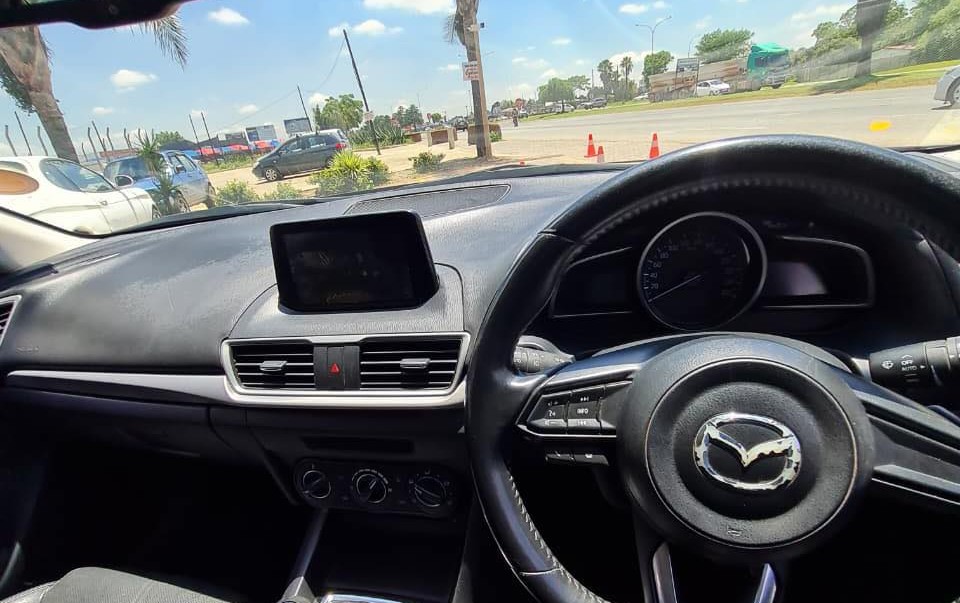
- A Johannesburg man will keep his financed Mazda for now after the High Court found he may not have known the bank had insured the vehicle and charged premiums to his account.
- The alleged arrears of more than R16 000 were largely made up of insurance premiums, placing the validity of the cancellation in dispute.
- Judge Modiba ruled that the issues are triable and must be resolved at trial, preventing immediate repossession.
A Johannesburg man will keep his 2018 Mazda 3 for now after the High Court found that his claim of being unaware of a bank-arranged insurance policy raises serious questions that must be tested at trial.
The matter stems from an instalment sale agreement concluded on 24 February 2021 between Phumlani Lucas Mbucane and ABSA Bank Limited for the purchase of a 2018 Mazda 3 1.6 Dynamic 5DR. The agreement was reduced to writing and governed the repayment of the purchase price through monthly instalments.
According to the bank, Mbucane fell behind on his monthly instalments. By 15 November 2023, he was allegedly in arrears in the amount of R16 603.14. As a result of what it described as a breach of the agreement, the bank cancelled the contract, accelerated the full outstanding balance as it was entitled to do under the terms of the agreement, and issued summons on 16 November 2023.
In its action, the bank sought confirmation of the cancellation of the agreement and an order compelling Mbucane to return the vehicle. Alternatively, it asked that the Sheriff be authorised to attach and return the vehicle to the bank, together with ancillary relief.
Mbucane entered a notice of intention to defend and filed a plea. In response, the bank contended that he had “failed to raise a bona fide defence or no defences at all” and that the plea had been filed “for the sole purpose of delaying the proceedings.” It therefore sought judgment without the matter proceeding to trial.
Insurance premiums at the centre of the dispute
Mbucane’s defence shifted the focus of the case. As recorded by Judge LT Modiba, “The defendant disputes that he breached the agreement. He pleaded that he honoured the monthly instalments.”
The crux of the dispute lies in the composition of the alleged arrears. The judgment states that “his main defence is that he did not know that he was obliged to insure the motor vehicle for the duration of the agreement.” He denied liability “for the amounts charged to his account in respect of the monthly premiums as they are not part of the agreement.”
Mbucane explained that this was the first time he had purchased a vehicle financed by a bank. He had previously bought three vehicles for cash. The finance application was handled by a sales consultant at the dealership, and he said he had no direct interaction with the bank itself. Although the consultant informed him that the vehicle had to be insured, he said he was told he could cancel the insurance if he could not afford it.
He admitted that he did not read the agreement in detail and understood it primarily to deal with the purchase of the vehicle and the instalments toward the purchase price. He requested that insurance premiums, if any, be debited on a different date from the instalments to avoid failed debit orders. He later cancelled the insurance because he could not afford it.
The court recorded that he contended the bank “failed to advise him when it insured the motor vehicle. It also did not give him the policy documents.” As a result, “on two occasions when the motor vehicle was involved in a collision, he did not claim from the insurance.”
The bank relied on clause 16(ii) of the agreement, which provides that a signed certificate of balance establishes the amount owing. Mbucane took issue with this, arguing that a certificate alone was insufficient in the absence of a statement of account. He also denied that the agreement had been duly cancelled and disputed the proper dispatch of the Section 129 notice.
Court finds triable issues
Judge Modiba restated the legal test applicable at this stage. The defendant, the court said, “is not required to show that his defence is likely to prevail.” Importantly, “the defendant’s prospects of success are irrelevant.”
The court held that if the defendant was unaware of the obligation to insure the vehicle, “he has a bona fide defence regarding his liability for the premiums charged to his account, particularly if the plaintiff failed to advise him that it has taken out insurance in respect of the motor vehicle and as a result of this omission, he suffered prejudice as he could not claim from the insurance when he could have done so.”
The judge further stated that this defence “also traverses the plaintiff’s reliance on the certificate of balance” and that “whether the agreement was duly cancelled hinges on the defendant’s liability for the amount claimed.”
He keeps the car for now
Because the dispute over the insurance premiums directly affects the alleged arrears and the validity of the cancellation, the court found that the matter cannot be resolved on an affidavit alone. Oral evidence will be required.
The application was dismissed with costs, and Mbucane was granted leave to defend the action.
Get your news on the go. Click here to follow the Conviction WhatsApp channel.
