


- Supreme Court of Appeal confirms that a late appeal under the Community Schemes Ombud Service Act may still be heard.
- The court finds that Park Avenue Body Corporate applied its conduct rules too rigidly and ignored the lived reality of a visually impaired homeowner.
- Judges rule that removing the outdoor washing setup “infringed his rights to dignity and equality” and declare that he “reasonably requires exclusive use rights” over the common area to keep the installation.
A visually impaired homeowner who was told to remove his washing machine from a shared outdoor area has won a significant victory after the Supreme Court of Appeal ruled that both fairness and the Constitution demanded a more humane approach.
Melusi Emmanuel Ncala lives on the ground floor of a sectional title complex run by Park Avenue Body Corporate. Because he is visually impaired, he cannot easily see water pooling on tiles. A small leak or spill from a washing machine inside his kitchen could cause a serious fall.
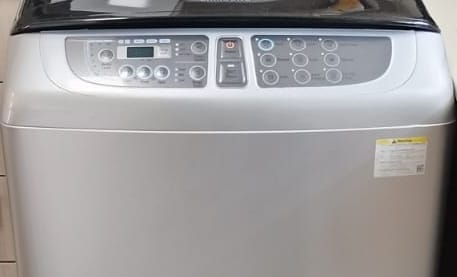
To reduce that risk, he moved the appliance into the small washing area directly outside his unit, installed piping and covered it with plastic sheeting to protect it from the weather.
The body corporate treated the changes as unauthorised alterations to common property and ordered everything removed. What followed became a drawn-out legal battle that moved from the Community Schemes Ombud Service to the High Court in Johannesburg and ultimately to the country’s second-highest court.
Background to the dispute
Before buying the unit, Ncala had been told by an estate agent that the outside washing area could be used for that purpose. After moving in, he set up the machine there so he would not have to navigate wet indoor floors.
When the body corporate objected, he asked for an exemption, explaining that the arrangement was a safety necessity linked to his disability. He said returning the washing machine to the kitchen would expose him to real danger.
The scheme refused and launched a complaint with the Ombud. After conciliation failed, an adjudicator largely sided with the body corporate and ordered Ncala to relocate the machine indoors and undo most of the alterations.
Ncala appealed on a question of law, arguing that the decision ignored his constitutional rights to dignity and equality. He said the decision failed to consider reasonable accommodation.
Late appeal nearly shut the door
But his appeal papers were filed 67 days outside the statutory 30-day period. The High Court dismissed the case outright, finding it had no power to condone the delay. On appeal, the Supreme Court of Appeal disagreed.
Writing for the majority, Judge YT Mbatha explained that the section governing appeals “is silent as to what happens if the appeal is brought after the 30-day period” and that the time limit “simply regulates the procedure that is to be followed” and is not a jurisdictional requirement that determines the right of appeal. In other words, the deadline was not meant to permanently lock residents out of court.
Judge Mbatha held that “the high court is entitled to grant such condonation” where the interests of justice require it. Given the explanation for the delay and the importance of the issues, condonation was granted, and the merits were heard.
Equality is not treating everyone the same
On the substance, the body corporate argued that its conduct rules applied equally to all residents and that allowing Ncala an exception would undermine uniform governance. The court rejected that approach as overly formal.
Judge Mbatha stressed that “substantive equality recognises that different groups of people may require different approaches or forms of accommodation to enable them to enjoy the same level of benefit in their participation in society”.
Applying rules identically, the judges said, can deepen disadvantage rather than cure it. The judgment records that the refusal to accommodate him was based on the idea that the rules applied “equally to everyone alike”, but that this “did not take into account that the modifications were necessary for a visually impaired person for safety reasons”.
Importantly, the court made clear that accommodation is not optional, stating that “the duty to reasonably accommodate people living with disabilities is proactive; failure to accommodate can be tantamount to unfair discrimination”.
A modest change with serious consequences
Evidence showed the alterations were small, localised and paid for by Ncala himself. They affected only the area immediately outside his unit and caused no meaningful prejudice to neighbours.
Yet the scheme insisted on removal. The judges said that the stance ignored the real-world consequences. Returning the washing machine indoors recreated the very hazard he was trying to avoid. In firm terms, the court concluded that “the removal of the modifications essential for Mr Ncala’s safety infringed his rights to dignity and equality”.
The order
The appeal was upheld. The earlier ruling was replaced with one declaring that Ncala “reasonably requires exclusive use rights” over the relevant portion of the common area and that those rights had been “unreasonably refused”.
He may now install the washing machine and protective covering at his own cost, maintain the space and restore it if he leaves.
Get your news on the go. Click here to follow the Conviction WhatsApp channel.
