Skip to content
Close Menu
ConvictionConviction
  • Home
  • Law & Justice
  • Special Reports
  • Opinion
  • Ask The Expert
  • Get In Touch

Subscribe to Updates

Get the latest creative news from FooBar about art, design and business.

What's Hot

A Pan Afrikan intellectual reflects on June 16, Africa’s youth and the future of education

June 16, 2026

From Soweto to 2076 — 50 years of reckoning, and 50 more of possibility

June 16, 2026

Defending our democracy against misinformation and disinformation in South Africa

June 15, 2026
Facebook X (Twitter) Instagram
Trending
  • A Pan Afrikan intellectual reflects on June 16, Africa’s youth and the future of education
  • From Soweto to 2076 — 50 years of reckoning, and 50 more of possibility
  • Defending our democracy against misinformation and disinformation in South Africa
  • Mothers considering adoption have rights to privacy, dignity and legal support
  • Father gets suspended jail sentence for prioritising business interests over maintenance
  • Ekurhuleni faces looming deadline to rebuild homes at N12 settlement
  • Homeowner’s challenge to FSCA decision fails as tribunal finds no direct benefit for him
  • Municipality worker says he was underpaid for three years, wins right to pursue claim
Facebook X (Twitter) Instagram
ConvictionConviction
Sonneblom
  • Home
  • Law & Justice
  • Special Reports
  • Opinion
  • Ask The Expert
  • Get In Touch
ConvictionConviction
Home » Sectional title owners ordered to properly follow the law on unit extensions
Property Law

Sectional title owners ordered to properly follow the law on unit extensions

The court confirms that only formal resolutions enable owners to extend sectional title units.
Kennedy MudzuliBy Kennedy MudzuliDecember 1, 2025Updated:December 1, 2025No Comments
Facebook Twitter Pinterest LinkedIn WhatsApp Reddit Tumblr Email
Share
Facebook Twitter LinkedIn Pinterest Email
  • The Supreme Court of Appeal confirmed that a flat owner may only extend a sectional title unit if a formal special resolution is properly passed in accordance with the law.
  • Informal meetings and adopted minutes do not constitute valid approval for alterations to common property.
  • Courts will not issue interdicts or declarations where statutory procedures have not been followed.

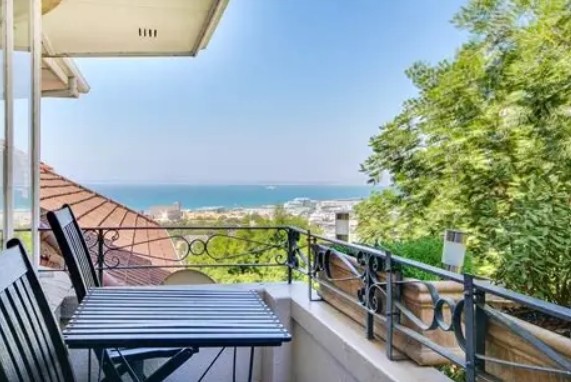
The dispute arose at Merriman Court, a small sectional title scheme in Green Point, Cape Town, comprising six residential units. Johannes Wessel Greeff owns the smallest unit, with exclusive use of an adjoining garden. He is the only owner who has not extended into common property.

Historically, owners managed alterations informally. Over time, other owners extended their sections into communal areas such as the roof, hallways, and voids beneath the building. Greeff argued he was treated unfairly by being denied the same opportunity.

In 2007, he received what he described as “in principle” approval to construct a garage. In 2013, a further agreement allegedly permitted him to extend his flat, but this was expressly subject to formal plan approval. In 2017, new building plans were discussed at an informal meeting after the scheduled AGM collapsed due to the resignation of the managing agent.

The minutes of the informal meeting recorded that the body corporate “formally accepts the plans,” and the chairperson offered to sign any necessary documents. These minutes were later adopted at the postponed AGM. Greeff treated this as final approval.

However, he subsequently submitted entirely new plans in 2019, proposing a large double-storey extension with a rooftop flatlet, almost doubling the size of his unit and significantly encroaching on the shared garden area. Several owners objected to the scale of the proposal and the lack of clarity regarding its impact on property values and communal space.

A special general meeting in October 2019 ended without a vote. Facing ongoing opposition, Greeff approached the High Court for an order compelling approval.

High Court ruling overturned

The Western Cape High Court initially found in Greeff’s favour, holding that approval had already been granted in 2017 and ordering the body corporate to permit construction.

However, the full bench overturned this decision. The matter was then taken to the Supreme Court of Appeal. The SCA’s central question was whether Greeff ever obtained valid legal approval to extend his unit under the sectional title law.

Judge ED Baartman delivered the judgment, with four judges concurring. The court stressed that extending a sectional unit is not a casual matter; statutory requirements must be met. The Sectional Titles Schemes Management Act mandates a special resolution before an owner may extend into common property, requiring formal notice, proper procedure, and the necessary voting thresholds.

The court rejected the argument that informal practices within a small body corporate could substitute for legal compliance. As the court observed, “The Body Corporate is obliged to act in terms of the law and in the interest of its members.”

The judgment clarified that merely adopting minutes does not transform informal discussions into legally binding decisions. “The adoption only signifies that the minutes reflected correctly the discussion that took place at the informal meeting,” it read.

No proper resolution had ever been passed. The 2013 “approval” was conditional, the 2017 meeting was informal, and the 2019 meeting ended without a vote. There was therefore no legal entitlement to build.

No legal right, no court order

Greeff sought both a declaratory order and a final interdict. The SCA refused both. A court, it held, cannot declare rights that do not exist in law, nor can it compel conduct where the applicant lacks legal entitlement.

As stated in the judgment, “Mr Greeff did not satisfy the requirements for a declaratory order. He did not have a claim. He has failed to demonstrate that he has a clear right to the interdictory relief sought.”

The court also criticised Greeff for failing to address the concerns raised by other owners and for resorting to litigation rather than negotiation. It ruled, “It is now incumbent on him to address the concerns raised by the owners and approach the Body Corporate to consider his responses.”

Greeff also challenged the authority of the body corporate’s lawyers, claiming that legal fees exceeded an internal authorisation limit. The SCA dismissed this argument. The owners had approved a special levy to cover legal costs, and the court held that the body corporate had acted lawfully and was duty-bound to defend its position. The appeal was dismissed with costs, including those of two counsel.

Conviction.co.za

Get your news on the go. Click here to follow the Conviction WhatsApp channel.

body corporate disputes Homeownership rights Property law Sectional title law Supreme Court of Appeal
Share. Facebook Twitter Pinterest LinkedIn Tumblr Telegram Email
Kennedy Mudzuli

Multiple award-winner with passion for news and training young journalists. Founder and editor of Conviction.co.za

Related Posts

Homeowners granted six months to settle bond arrears and halt home sale

June 9, 2026

Managing agents cannot ignore sectional title law and trustee authority

June 8, 2026

Farm sale did not give new owner right to lock out seller, High Court finds

June 8, 2026
Leave A Reply Cancel Reply

Prove your humanity: 1   +   7   =  

Subscribe to our newsletter:
Top Posts

Making sectional title rules that work: A practical guide

January 17, 2025

Protection order among the consequences of trespassing in an ‘Exclusive Use Area’

December 31, 2024

Between a rock and a foul-smelling place

November 27, 2024

Irregular levy increases, mismanagement, and legal threats in a sectional title scheme

June 2, 2025
Don't Miss
Opinion
5 Mins Read

A Pan Afrikan intellectual reflects on June 16, Africa’s youth and the future of education

By Ras Advocate Sipho MantulaJune 16, 20265 Mins Read

Ras Adv Sipho Mantula reflects on June 16, the Day of the African Child and the urgent need for African-centred education.

From Soweto to 2076 — 50 years of reckoning, and 50 more of possibility

June 16, 2026

Defending our democracy against misinformation and disinformation in South Africa

June 15, 2026

Mothers considering adoption have rights to privacy, dignity and legal support

June 15, 2026
Stay In Touch
  • Facebook
  • Twitter
  • WhatsApp
Demo
About Us
About Us

Helping South Africans to navigate the legal landscape; providing accessible legal information; and giving a voice to those seeking justice.

Facebook X (Twitter) YouTube WhatsApp Twitch RSS
Latest posts

Making sectional title rules that work: A practical guide

January 17, 2025

Protection order among the consequences of trespassing in an ‘Exclusive Use Area’

December 31, 2024

Between a rock and a foul-smelling place

November 27, 2024
OUR PICKS

Law enforcement officer keeps job after City of Cape Town fails in cannabis dismissal appeal

June 10, 2026

Phumeza Shoba loses maintenance claim after court finds distorted picture of her finances

June 12, 2026

Mother kept son in SA in breach of agreement with Australian father

June 11, 2026
© 2026 Conviction.
  • Home
  • Law & Justice
  • Special Reports
  • Opinion
  • Ask The Expert
  • Get In Touch

Type above and press Enter to search. Press Esc to cancel.

Powered by
►
Necessary cookies enable essential site features like secure log-ins and consent preference adjustments. They do not store personal data.
None
►
Functional cookies support features like content sharing on social media, collecting feedback, and enabling third-party tools.
None
►
Analytical cookies track visitor interactions, providing insights on metrics like visitor count, bounce rate, and traffic sources.
None
►
Advertisement cookies deliver personalized ads based on your previous visits and analyze the effectiveness of ad campaigns.
None
►
Unclassified cookies are cookies that we are in the process of classifying, together with the providers of individual cookies.
None
Powered by