


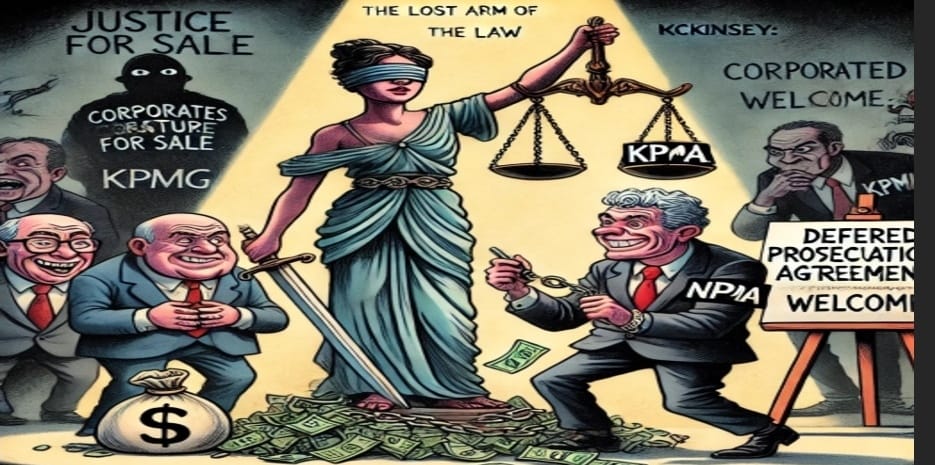
National Prosecuting Authority (NPA) head Shamila Batohi has announced that additional state capture cases will be enrolled in 2025.
She acknowledged the prevailing perception that the NPA’s success is judged solely by the imprisonment of a politician for state capture, stating, “a great deal of effort is being put into this matter, and I am highly confident that this year will bring significant progress with further case enrolments.”
South Africa’s legal landscape is riddled with contradictions, where, in the words of political analyst Aubrey Matshiqi, truth-seekers must decide between “angels with horns and devils with halos.” The state capture narrative exemplifies how numerous contradictions coexist unchallenged, possibly because ordinary South Africans struggle to see beyond the intentions of local and foreign truth-bearers.
The Zondo Commission demonstrated that state capture involves a complex interplay between public and private actors. However, mainstream interpretations criticise individuals disproportionately, while some companies and other economic players receive less attention.
This is because state capture is predominantly portrayed as an ANC issue rather than a systemic corporate problem. Black individuals and ANC leaders such as Jacob Zuma, Gwede Mantashe and others are highlighted as the faces of corruption, while figures like Markus Jooste, Brett Kebble and Arthur Brown avoid similar scrutiny.
Furthermore, companies like Bosasa and Bain have been vilified as egregious examples. In January of this year, President Cyril Ramaphosa called for Bain to be excluded from business transactions in South Africa. However, similar calls have not targeted other companies entrenched in “the network of private actors facilitating unethical, corrupt, and criminal economic activity.” As such, McKinsey, KPMG and prominent banks continue to secure lucrative government contracts.
This is unsurprising, given corporations’ privileged position within the modern political and economic landscape. Treated as humanity’s nobility, corporations often operate with deference that shields them from rigorous scrutiny. This dispensation allows them to navigate regulatory frameworks, including South Africa’s, with relative ease, creating an environment where accountability for misconduct is frequently circumvented. At some point, McKinsey, KPMG and banks must also “wear” orange overalls.
Are companies beyond legal prosecution?
It is noteworthy that companies derive their strength from the legal structure of corporations, thereby further reinforcing this culture of impunity. Dutch legal scholar Gritje Baars characterises the corporation as a “masterpiece of legal technology,” deliberately designed to evade liability. South African corporate law, including the Companies Act and legal doctrines of corporate personality, reinforces this legal fortress by making it difficult to hold businesses criminally accountable and deny justice to those affected by their actions and activities.
Also, the perception that corporations are indispensable to economic prosperity overrides concerns for ethical conduct and creates a system where profit maximisation takes precedence over social responsibility. This dynamic reinforces a cycle in which corporations can readily regain access to lucrative opportunities even after public condemnation, perpetuating a culture of impunity. In short, this arrangement results in a legal, regulatory and political environment in which corporations secure government contracts despite past misconduct.
In the South African context, companies are inherently and deliberately exempt from prosecution regarding state capture. If left unchallenged, this notion severely undermines the pursuit of justice. Therefore, Batohi must explicitly refute this assertion, particularly given that NPA investigations increasingly reveal corporate complicity in state capture involving financial transactions and procurement irregularities. These investigations reveal a pattern of systemic corporate involvement in facilitating and benefiting from corrupt practices, necessitating a robust and transparent response to dispel any notion of corporate immunity.
For this reason, Professor Patrick Bond rightly argues that state capture must be understood not as isolated individual acts but as “accumulation by dispossession” by corporations—a phenomenon exacerbated during the neoliberal era. The deceptive allure of neoliberal economics, which frames corporations and foreign direct investment (FDI) as infallible, blinds the public to agents of colonial exploitation and dispossession who operate with impunity while pledging goodwill to address unemployment and bolster South Africa’s economic standing.
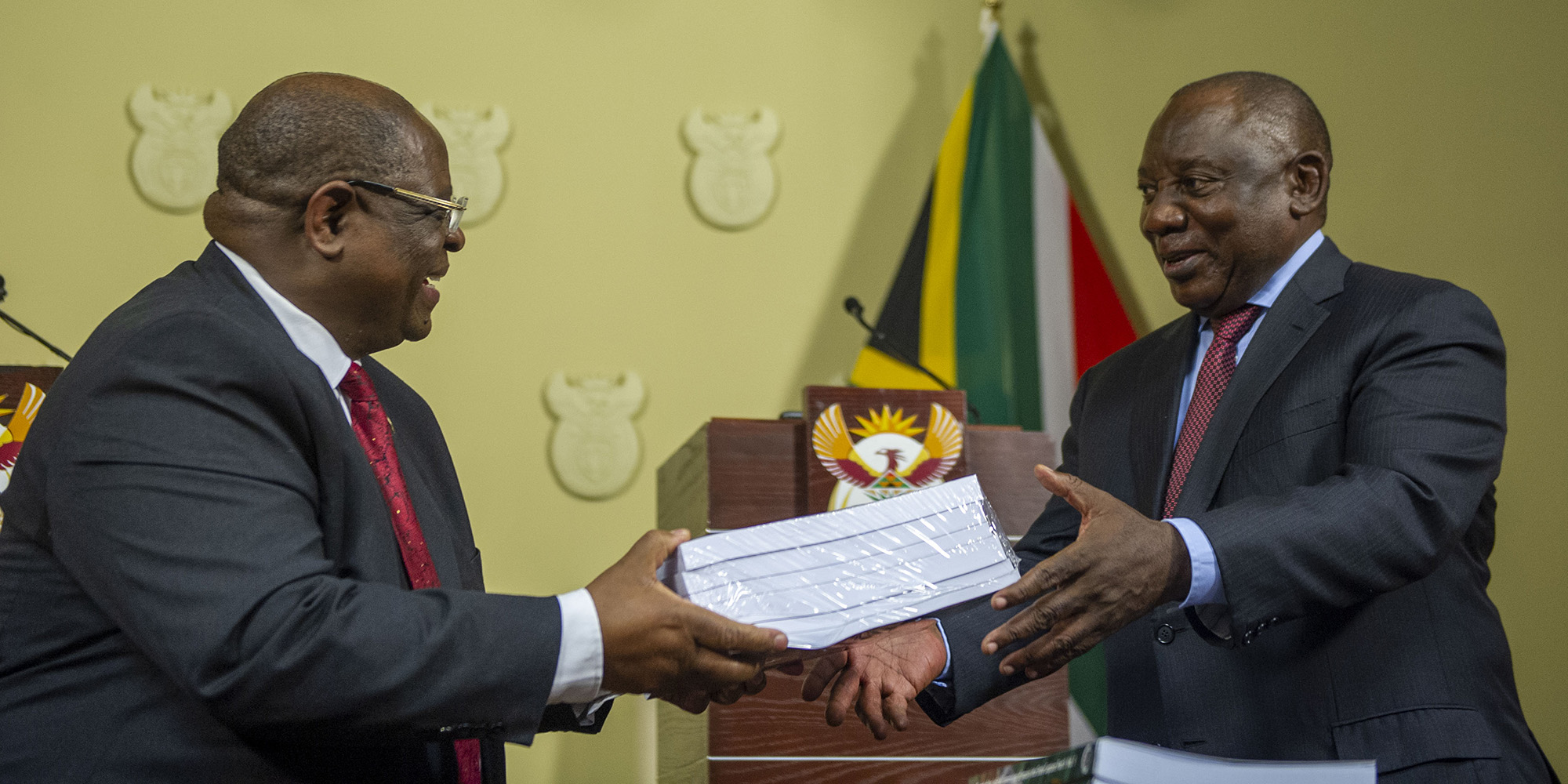
The Zondo Commission demonstrated that state capture involves a complex interplay between public and private actors. Picture: Facebook
NPA’s deferred prosecution agreements: Justice or legal evasion?
A government report released in November 2023 detailed progress in implementing the Zondo Commission’s recommendations. It cited increased collaboration between the Financial Intelligence Centre and the Special Investigating Unit, efforts to recover ZAR 64 billion in assets, and the introduction of the NPA Amendment Bill. A crucial aspect of the NPA’s evolving strategy is its growing reliance on non-trial resolutions and Deferred Prosecution Agreements (DPAs). Batohi’s deputy, Ouma Rabaji-Rasethaba, describes DPAs as a “new weapon that brings companies on board in the fight against corruption.”
DPAs were introduced into the English and Welsh legal systems, offering organisations facing financial offence charges a chance to avoid prosecution by complying with certain legal conditions. These agreements between prosecutors and organisations defer proceedings for a set period and require compliance with penalties, reforms, and cooperation. In certain instances, a judge must approve the DPA as fair and in the interest of justice. Theoretically, compliance leads to discontinued prosecution, but failure results in prosecution. It is well-known that companies, however, often use their deep pockets to avoid prosecution and protect their public image when facing the might of the law.
While DPAs are presented as an innovative way to expedite the resolution of state capture cases and recover funds, they raise significant concerns. By favouring these agreements, the NPA effectively removes corporate corruption cases from judicial oversight, ensuring that corporations escape accountability while the spotlight remains on public figures. Evidence from the US further suggests that DPAs do not deter misconduct and are usually followed by high levels of recidivism. Therefore, Batohi’s promise about increased case enrolments in 2025 is a smoke-screen and will concentrate on small fries and paltry loots.
NPA’s ‘new weapon’ to combat corruption
In South Africa, the opacity of DPAs raises concerns as the details of corporate settlements remain undisclosed to the public. For instance, the Black Business Council (BBC) has called for a total ban and blacklisting of McKinsey and other firms involved in state capture. This demand highlights widespread frustration with the double standards applied to corporate crime versus public-sector corruption. The NPA seems least concerned about general offences committed by corporations because the goal is to protect companies and executives.
Although the NPA’s use of DPAs is lauded in South Africa as part of a “new” anti-corruption strategy, it enables corporations to operate without meaningful oversight. Deals with companies have remained opaque without fully disclosing the evidence or misdeeds. The assumption that corporations will self-correct is naïve at best. Instead, these agreements allow businesses to continue as usual, shielded from meaningful consequences.

Black individuals and ANC leaders such as Jacob Zuma, Gwede Mantashe and others are highlighted as the faces of corruption, writes Siyabonga Hadebe. Picture: X
The broader legal crisis: A system of contradictions
This “new” development occurs against ongoing misinformation, suggesting that Jacob Zuma and his allies disbanded the Scorpions to enable corruption. Yet the actions of today’s legal experts and the NPA may represent a greater betrayal of justice. Last year, the NPA announced that over five million “cold cases” were discarded between 2018 and 2023 due to a lack of investigative capacity, underscoring the systemic failures at play. Furthermore, the NPA’s reliance on DPAs appears less like progress and more like a shortcut to nowhere.
NPA’s resolution with SAP, in which the company agreed to return over R2 billion for its role in corruption, is a critical example of the selective enforcement of corporate accountability. Despite this financial settlement, it is unlikely that SAP’s global executives will face significant legal consequences, reinforcing concerns that corporations can pay their way out of justice.
This contrasts sharply with US laws, which hold companies criminally liable, whereas South Africa’s antiquated 1977 Criminal Procedure Act primarily focuses on individual prosecution and urgently needs a revamp. According to academic Dorothy Farisani, corporate criminal liability has been a neglected area of South African law despite the growth of both corporations and corporate crime since 1977. The result is a system where corporations operate with impunity and beyond the scope of public attention. Hence, the NPA’s use of non-trial resolutions and DPAs ultimately fails to clamp down on corporate crimes and corruption.
South Africa’s legal contradictions extend beyond corporate impunity. The Nkandla judgment, which deemed the Public Protector’s remedial actions binding unless overturned by a court, set a precedent that blurred the separation of powers. While celebrated as a victory for accountability, subsequent cases, such as South African Reserve Bank v Public Protector and President v Public Protector, have exposed the constitutional tensions this ruling introduced.
Critics argue that the Nkandla judgment prioritised politically expedient outcomes over strict constitutional interpretation. Some have labelled it “liberal violence” or “Zuma Law,” describing a system that reshapes legal principles to deliver politically desirable results rather than uphold the Constitution’s original intent. The cumulative effect of these developments is an erosion of public trust in South Africa’s legal institutions.
The NPA’s inability or unwillingness to prosecute companies means legal mechanisms are manipulated to align with political narratives, and ordinary South Africans bear the brunt of institutionalised injustice. Without substantive legal reforms prioritising equal accountability for political and corporate actors, the South African legal landscape will remain, at best, a theatre of contradictions and, at worst, a mechanism for institutionalised injustice.
International comparisons: The case for reform
In contrast to South Africa’s approach, countries like the United States have developed legal frameworks that hold corporations criminally liable for misconduct. For example, the Foreign Corrupt Practices Act (FCPA) provides a robust mechanism for prosecuting corporations involved in bribery and corruption, with significant fines and criminal penalties. The UK has also developed an extensive legal framework for corporate criminal liability under the Corporate Manslaughter and Corporate Homicide Act. These jurisdictions generally prioritise accountability, holding corporations and executives to the same legal standards as individuals.
On the contrary, South Africa remains hesitant to apply such rigorous measures to corporate actors. This results in a skewed system of justice that disproportionately targets the criminal enables like political figures while leaving corporate offenders largely unscathed.
Conclusion
The NPA is complicit in shielding corporate criminals from true accountability, turning justice into a privilege for the powerful rather than a right for all. Its reliance on Deferred Prosecution Agreements entrenches this disparity, allowing corporations implicated in state capture to buy their way out of prosecution while politicians face the full force of the law.
This selective enforcement exposes the NPA’s failure to dismantle the deep-seated corruption embedded in South Africa’s corporate sector. Until the NPA and other South African legal system actors, as well as laws, treat corporate crime with the same urgency as political corruption, the legal system will remain an enabler of institutionalised injustice rather than a guardian of the rule of law.
Siya yi banga le economy!
#Conviction
