


- Brian Theodore April was dismissed after being found with toilet paper that his employer said belonged to the company and was not available for public purchase.
- Versapak argued the toilet paper was unique to the workplace and that the arbitrator’s decision was incorrect.
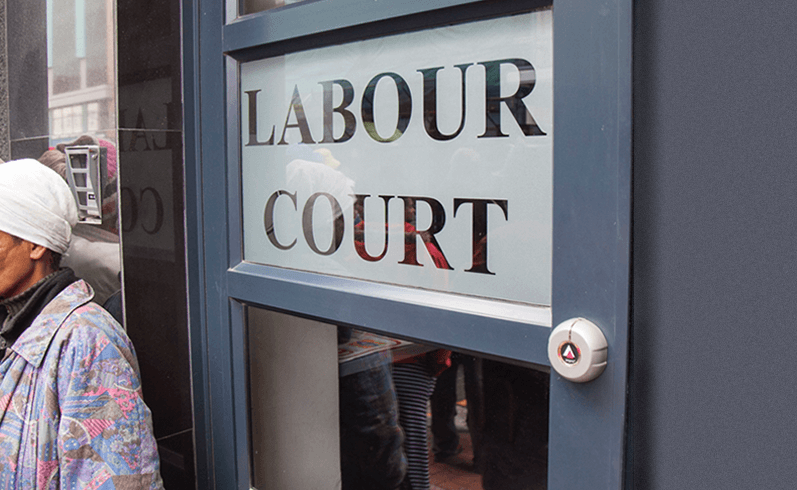
- The Labour Court found no reasonable chance that another court would overturn the ruling, and dismissed the appeal.
A company that sought to overturn an arbitration award in favour of an employee accused of possessing company toilet paper has failed in its attempt to secure an appeal.
Versapak (Pty) Ltd, which took over the business of Mpact Operations (Pty) Ltd, unsuccessfully applied for leave to appeal a Labour Court judgment involving Brian Theodore April, a worker represented by the National Union of Metalworkers of South Africa (NUMSA).
ALSO READ: Toilet paper theft allegation backfires as employer ordered to reinstate worker
The dispute arose after April was found in possession of toilet paper on 21 October 2022 that the employer claimed was company property and unavailable for purchase by the general public.
Acting Judge M Mkhatshwa dismissed the application, finding that the proposed appeal had no reasonable prospects of success.
The toilet paper dispute
The case originated from disciplinary action taken against April after toilet paper was allegedly discovered in his possession. The employer maintained that the toilet paper belonged to the company and that April was not authorised to have it.
The dispute was referred to the Metal and Engineering Bargaining Council, where arbitrator A Singh Bhoopchand considered the evidence and ruled in favour of April.
Mpact Operations subsequently took the matter on review to the Labour Court, seeking to overturn the arbitration award. The court dismissed that challenge in a judgment delivered on 15 January 2026.
After taking over Mpact Operations, Versapak continued the litigation and sought leave to appeal that judgment to the Labour Appeal Court.
Employer says toilet paper was unique
Versapak argued that the Labour Court had erred in finding that the arbitrator had not reached an unreasonable conclusion.
According to the employer, the court failed to properly consider evidence showing that the toilet paper found in April's possession was unique and not available in retail stores.
The company relied on evidence from Genene Barnard, who testified that the toilet paper was purchased directly from a supplier and could not be bought by members of the public. It also relied on an email from a service provider, which allegedly confirmed that the product was unavailable for public purchase.
Versapak further argued that NUMSA had failed to challenge allegations about the uniqueness of the toilet paper in the court papers.
The employer also pointed to evidence given by April during cross-examination. According to Versapak, April conceded that the toilet paper he brought to his disciplinary hearing differed from the toilet paper allegedly belonging to the employer and found in his possession on 21 October 2022.
On that basis, the company argued that the arbitrator's conclusions were unreasonable and that the review court should have reached a different outcome.
Court finds no prospects of success
Judge Mkhatshwa considered the legal principles governing applications for leave to appeal and noted that the threshold is a strict one.
Referring to Section 17 of the Superior Courts Act, the judge explained that leave to appeal may only be granted where there is a reasonable prospect that another court would reach a different conclusion.
The judge referred to previous decisions, emphasising that an applicant must show more than an arguable case. Quoting authority cited in the judgment, Judge Mkhatshwa noted, "A mere possibility of success, an arguable case or one that is not hopeless, is not enough."
The judgment also quoted a Supreme Court of Appeal decision which held, "There must be a sound, rational basis to conclude that there is a reasonable prospect of success on appeal."
After considering the grounds advanced by Versapak and the submissions filed on behalf of April by NUMSA, the court concluded that there was no basis for granting leave to appeal.
Judge Mkhatshwa said, "This court has concluded that the appeal has no reasonable prospects of success or that another court will come to a different conclusion."
The judge further found that there was no compelling reason for the appeal to be heard and that there were no conflicting judgments on the issue. Judge Mkhatshwa added, "Therefore, there is no basis on which this Court can grant the present application."
The application for leave to appeal was dismissed. The court made no order as to costs.
Get your news on the go. Click here to follow the Conviction WhatsApp channel.
