


- The High Court overturned a tribunal decision that had originally assessed truck driver Percival Pretorius as 21% permanently disabled.
- The court found that both medical and factual evidence showed Pretorius was unable to return to his job as a long-distance truck driver, and that he should be considered 100% permanently disabled.
- The court criticised the use of AMA Guides and internal Compensation Fund policies to mechanically calculate disability, rather than properly considering Pretorius's individual circumstances.
A truck driver who waited nearly 15 years for the outcome of his workplace injury claims has finally been declared 100% permanently disabled. Further, the High Court in the Western Cape overturned a Compensation Fund tribunal's finding that he was only 21% disabled.
Percival Pretorius successfully appealed a tribunal decision made under the Compensation for Occupational Injuries and Diseases Act (COIDA), which had confirmed the Compensation Fund's assessment of his permanent disablement.
In the judgment, the High Court found that the evidence overwhelmingly showed Pretorius could no longer do the work he had been trained for and employed to do.
Judge HM Slingers and Acting Judge R Mphego ruled that Pretorius was entitled to be found 100% permanently disabled and ordered the respondents to pay punitive legal costs.
Three accidents changed everything
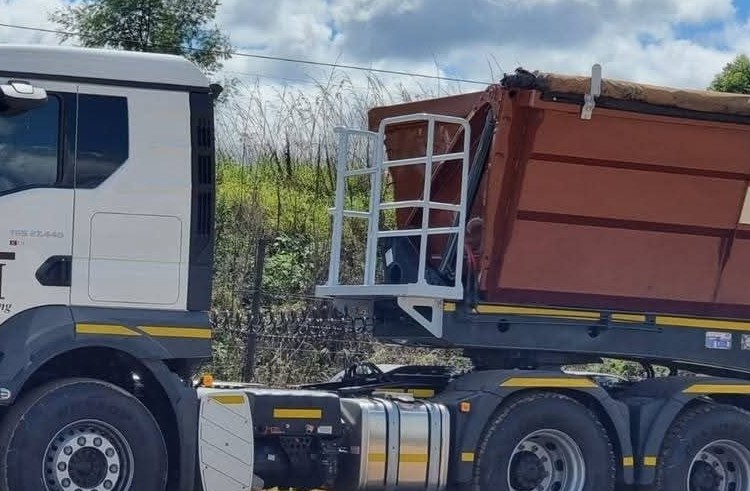
Pretorius worked as a long-distance truck driver, operating 18-wheeler trucks with double trailers. His job took him between Cape Town, Johannesburg, Durban and Gqeberha, and involved securing cargo with ropes, ratchets, belts and tarpaulins.
He suffered three separate workplace accidents, each time falling while on duty, in May 2010, March 2012 and April 2014. Each accident led to serious back injuries and surgery.
The first operation was a laminectomy and discectomy, followed by a second procedure after another disc prolapse. The third operation required further spinal surgery and fusion of vertebrae in his lower back.
Pretorius lodged three compensation claims, but testified that he heard nothing meaningful for years. It was only in 2025 that he found out the Compensation Fund had assessed his permanent disablement at 21% and approved compensation of R95,185.76.
The court noted there was no explanation for the delay, which lasted almost 15 years from the date of the first accident.
Driver could not work again
Pretorius told the tribunal he tried to return to truck driving after his last operation, but could not continue because sitting for long periods caused severe pain.
He explained that he would have to stop for long stretches during trips to manage the pain and was eventually dismissed. He also testified that his left leg was about 80% numb and dead, with a loss of sensation.
Pretorius said the condition affected his balance and made it extremely difficult to find work. He survived by taking occasional casual work, like farm labour and helping a panel beater, earning about R3,500 a month. However, he could not work a full week and lived with constant pain. The court noted that none of this evidence was ever challenged.
Medical evidence showed full disablement
Orthopaedic surgeon Dr Oelofse testified on Pretorius' behalf. The specialist explained that Pretorius suffered severe degeneration in his spine and continued to experience significant pain and physical limitations. He told the tribunal that Pretorius struggled to get dressed, climb stairs, get on and off an examination table, and rise from a chair.
Oelofse also testified that Pretorius had reduced sensation in his left leg and foot, putting him at risk of burns or other injuries without realising it.
The doctor found that Pretorius was physically unable to return to his previous work as a truck driver. During examination, Pretorius could only bend to mid-calf level and could extend his back by just 10 degrees before severe pain stopped him.
Although Oelofse assessed his anatomical impairment at 23% using the American Medical Association Guides, he concluded that Pretorius was 100% functionally incapacitated from doing his previous job. The court highlighted that none of this medical evidence was challenged by the respondents.
Tribunal approach rejected
A central issue in the appeal was the tribunal's reliance on the American Medical Association Guides to the Diagnosis and Classification of Mental Disorders and Circular Instruction 157, an internal Compensation Fund policy used to assess disability claims.
The court found that these tools were applied mechanically, without any real regard for Pretorius's actual circumstances.
Judge Slingers and Acting Judge Mphego pointed out that the tribunal awarded no compensation for the loss of sensation in Pretorius's leg, despite unchallenged evidence about its severity and impact.
The judges found the tribunal had failed to explain why it rejected that evidence. The court also criticised the use of rigid formulas to decide disability.
Quoting earlier authority, the judges noted that the extent of an employee's disability must be decided based on the facts of the specific case and the available medical evidence.
The judgment reads, in part, "The application of the guidelines contained in the Circular Instruction 157 is arbitrary and contrary to the mechanisms set in place by and for the determinations intended in the provisions of COIDA.”
The court also found that the tribunal's award for pain was inconsistent with the uncontested evidence that Pretorius suffered constant, severe pain.
Meaning of permanent disablement
The appeal also required the court to decide what is meant by 'any work' in COIDA's definition of permanent disablement. The respondents argued that Pretorius was not 100% permanently disabled because he remained capable of performing some forms of casual work. The court rejected this interpretation.
Judge Slingers and Acting Judge Mphego held that the assessment should consider the employee's occupation and their ability to keep doing the work they were doing when injured.
The judges wrote that the tribunal's finding confused desperation with employability. They found that Pretorius took occasional casual work because he needed income to survive, not because he was employable in any real sense.
The court concluded that the evidence showed Pretorius could no longer work as a long-distance truck driver and was therefore entitled to a finding of 100% permanent disablement.
Costs order
The court held that the tribunal had seriously misdirected itself and that the compensation awarded could not reasonably have been justified.
In addition to declaring Pretorius 100% permanently disabled, the court ordered the respondents to pay the costs of both the appeal and the tribunal proceedings on a punitive scale, including the costs of two counsel where employed.
Get your news on the go. Click here to follow the Conviction WhatsApp channel.
