
Skip to content
Close Menu
ConvictionConviction
  • Home
  • Law & Justice
  • Special Reports
  • Opinion
  • Ask The Expert
  • Get In Touch

Subscribe to Updates

Get the latest creative news from FooBar about art, design and business.

What's Hot

JSC overrules tribunal and finds Judge President Mbenenge guilty of gross misconduct

April 16, 2026

Firearm laws and court processes explained through the Julius Malema case

April 16, 2026

Asylum seekers are paying bribes to stay free, and the system is letting it happen

April 16, 2026
Facebook X (Twitter) Instagram
Trending
  • JSC overrules tribunal and finds Judge President Mbenenge guilty of gross misconduct
  • Firearm laws and court processes explained through the Julius Malema case
  • Asylum seekers are paying bribes to stay free, and the system is letting it happen
  • Dignity SA asks Pretoria High Court to open a lawful path for assisted dying
  • NHI public participation challenge tests Parliament’s lawmaking process
  • South African-led HIV vaccine trial marks a significant moment for science and public health
  • Municipal billing errors leave homeowners paying for the wrong property
  • Conviction collapses as rape complainant, 14, admits she has no memory of the night
Facebook X (Twitter) Instagram
ConvictionConviction
Demo
  • Home
  • Law & Justice
  • Special Reports
  • Opinion
  • Ask The Expert
  • Get In Touch
ConvictionConviction
Home » Not In My Name slapped with final interdict as judge warns activism is no shield for defamation
Civil Law

Not In My Name slapped with final interdict as judge warns activism is no shield for defamation

Johannesburg High Court says freedom of expression does not protect targeted and unverified attacks on a company’s reputation or customers.
Kennedy MudzuliBy Kennedy MudzuliFebruary 11, 2026No Comments
Facebook Twitter Pinterest LinkedIn WhatsApp Reddit Tumblr Email
blank
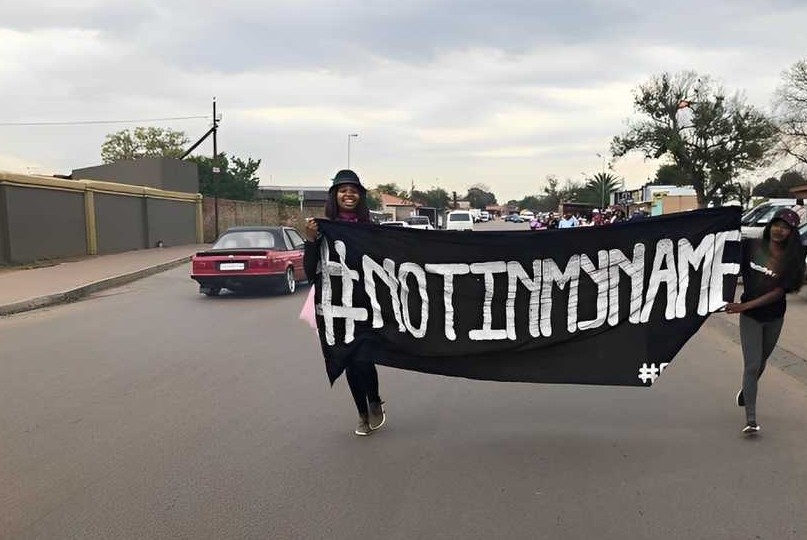
Not In My Name International NPC was ordered by the High Court to stop publishing unproven racism claims about Barloworld and to retract a letter sent to one of its clients.
Share
Facebook Twitter LinkedIn Pinterest Email
  • Court warns that freedom of expression does not shield activists who publish serious allegations without proof.
  • Targeted letter to a major client is seen as reputational and commercial harm rather than public debate.
  • Final interdict granted with forced retraction and punitive attorney and client costs order.

The High Court in Johannesburg has issued a pointed warning to activists and civil society groups that public advocacy does not give a licence to make unverified accusations that can damage a company’s name and business relationships.

The court confirmed a final interdict in favour of Barloworld South Africa (Pty) Ltd, finding that repeated claims of racism and sexism by Not in My Name International NPC went beyond protected speech and crossed into unlawful harm.

At the centre of the ruling is a clear caution from Judge L Windell, who stressed that constitutional protections for free expression do not extend to publishing serious allegations that cannot be proven, especially when those allegations are directed at a company’s customers.

Court draws a line between activism and defamation

The dispute arose after social media posts and direct correspondence accused Barloworld of racist, sexist and unethical conduct linked to an earlier contractual fallout with a service provider. The respondents framed their conduct as public interest advocacy and said they were highlighting the alleged mistreatment of a black woman-owned business.

But the court held that once defamatory statements are published, the law presumes they are wrongful and intentional. It then becomes the publisher’s duty to justify them.

Judge Windell said the respondents failed to do so. “The respondents did not place before the court admissible evidence establishing the truth of the allegations of racism and sexism advanced,” the judgment states.

“Absent proof of substantial truth, publication cannot be justified on the basis of public interest.” That finding became the backbone of the court’s caution. Activism, the court made clear, must still be grounded in facts.

Freedom of expression has limits

A key part of the defence relied on freedom of expression and the idea that civil society organisations should be allowed to interrogate powerful corporations. The judge accepted the constitutional importance of robust debate, but emphasised that the right is not unlimited.

“The defence of fair comment likewise fails,” the court said. “The statements complained of go beyond protected opinion and rest upon factual assertions not shown to be true.”

The judge added that freedom of expression “does not extend to the unsubstantiated publication of defamatory allegations, particularly where such allegations are directed at damaging existing commercial relationships.” In other words, strong opinions are lawful, but factual claims that damage reputations must be backed by evidence.

Letter to a customer seen as especially serious

The most troubling conduct for the court was not only the social media posts, but a direct letter sent to Tharisa Minerals (South Africa) (Pty) Ltd, described as a longstanding Barloworld customer.

The letter repeated the same accusations and effectively invited the client to reconsider doing business with the company. Judge Windell drew a firm distinction between general commentary and targeted interference.

“The letter addressed to Tharisa Minerals was not a general commentary but a targeted communication to a longstanding customer of the applicant, repeating defamatory allegations and inviting reconsideration of its business relationship with the applicant,” the court said.

“A prohibition on future publication does not, on its own, remedy the harm already occasioned by that communication.”

That reasoning led to an unusual remedy. The respondents were ordered not only to stop publishing further allegations, but also to issue an unconditional written retraction to the customer.

Final order and a punitive costs warning

The court confirmed the earlier interim interdict and made it final. The respondents are now barred from publishing or disseminating defamatory statements about Barloworld and from contacting its customers or employees about the dispute. They must retract the letter within seven days and pay costs on the attorney and client scale.

Judge Windell was critical of their conduct, noting they persisted with “serious allegations without placing before the Court evidence capable of justifying them” and escalated the dispute despite legal warnings.

Conviction.co.za

Get your news on the go. Clickhere to follow the Conviction WhatsApp channel.

corporate reputation defamation law freedom of expression Gauteng High Court Interdict
Share. Facebook Twitter Pinterest LinkedIn Tumblr Telegram Email
Kennedy Mudzuli

    Multiple award-winner with passion for news and training young journalists. Founder and editor of Conviction.co.za

    Related Posts

    System failures leave disabled child unlawfully arrested and detained for nearly three months

    April 15, 2026

    Free State farmers win legal battle to pursue fire damage claims against Eskom

    April 13, 2026

    Judge’s walkout ‘most regrettable’ but does not invalidate 74-day trial, ConCourt rules

    April 9, 2026
    Leave A Reply Cancel Reply

    Prove your humanity: 7   +   9   =  

    Subscribe to our newsletter:
    Top Posts

    Making sectional title rules that work: A practical guide

    January 17, 2025

    Protection order among the consequences of trespassing in an ‘Exclusive Use Area’

    December 31, 2024

    Between a rock and a foul-smelling place

    November 27, 2024

    Irregular levy increases, mismanagement, and legal threats in a sectional title scheme

    June 2, 2025
    Don't Miss
    Constitutional Law
    4 Mins Read

    JSC overrules tribunal and finds Judge President Mbenenge guilty of gross misconduct

    By Kennedy MudzuliApril 16, 20264 Mins Read

    The Judicial Service Commission has found Judge President Selby Mbenenge guilty of gross misconduct, overturning a tribunal’s findings and referring the matter to Parliament for possible removal.

    Firearm laws and court processes explained through the Julius Malema case

    April 16, 2026

    Asylum seekers are paying bribes to stay free, and the system is letting it happen

    April 16, 2026

    Dignity SA asks Pretoria High Court to open a lawful path for assisted dying

    April 16, 2026
    Stay In Touch
    • Facebook
    • Twitter
    • WhatsApp
    Demo
    About Us
    About Us

    Helping South Africans to navigate the legal landscape; providing accessible legal information; and giving a voice to those seeking justice.

    Facebook X (Twitter) WhatsApp
    Our Picks

    JSC overrules tribunal and finds Judge President Mbenenge guilty of gross misconduct

    April 16, 2026

    Firearm laws and court processes explained through the Julius Malema case

    April 16, 2026

    Asylum seekers are paying bribes to stay free, and the system is letting it happen

    April 16, 2026
    Most Popular

    Making sectional title rules that work: A practical guide

    January 17, 2025

    Protection order among the consequences of trespassing in an ‘Exclusive Use Area’

    December 31, 2024

    Between a rock and a foul-smelling place

    November 27, 2024
    © 2026 Conviction.
    • Home
    • Law & Justice
    • Special Reports
    • Opinion
    • Ask The Expert
    • Get In Touch

    Type above and press Enter to search. Press Esc to cancel.