


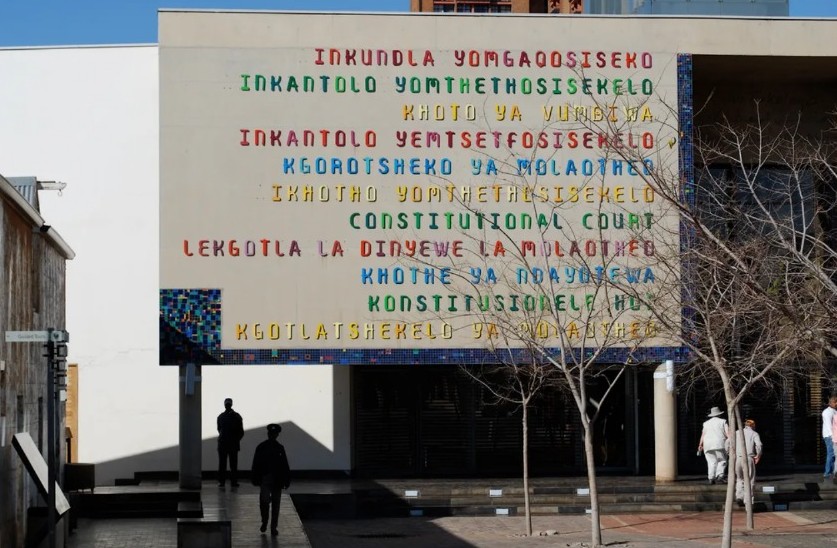
- The Constitutional Court found that the trial judge’s conduct did not establish a reasonable apprehension of bias.
- The Supreme Court of Appeal got it wrong by treating the proceedings as a nullity without properly applying the bias test.
- The matter has been sent back to the Supreme Court of Appeal to decide the merits of the dispute.
The Constitutional Court has overturned a Supreme Court of Appeal decision that had thrown out an entire 74-day High Court trial between Systems Applications Consultants (Pty) Ltd trading as Securinfo and SAP SE. The court held that the trial judge’s conduct did not create a reasonable apprehension of bias.
Writing for a unanimous court, former Acting Deputy Chief Justice Mbuyiseli Madlanga held that although the judge’s conduct in walking out without formally adjourning was irregular and “most regrettable”, it did not justify a finding that the judge was not impartial.
The dispute stems from proceedings brought by Systems Applications Consultants (Pty) Ltd trading as Securinfo against SAP SE in 2008. At the heart of the case was whether a software distribution agreement existed between Systems Applications Consultants and SAP Systems Integration, a subsidiary of SAP, and whether SAP had unlawfully interfered with that agreement.
Ungani Investments (Pty) Ltd was brought into the proceedings because it had funded the litigation and could be held liable for costs.
The hearing kicked off on 12 October 2020 and ultimately ran for 74 days in the High Court in Johannesburg, conducted entirely online. During the hearing, SAP’s counsel cross-examined Mario Linkies about an internal email dated 21 September 2004, in which he wrote that Peter Tattersall was “breathing down [his] neck” for approval of the agreement.
Linkies testified that Tattersall was not actually pressuring him. He had used that wording to push his own colleagues within SAP Systems Integration to approve the agreement.
The incident and recusal application
During cross-examination, SAP’s counsel kept pressing Linkies on whether he had lied in the email. The trial judge stepped in and told counsel to move on. “May we proceed, please and then you can argue that point. The question has been answered repeatedly,” the judge said.
When the exchange continued, the judge said, “When you’ve finished, you’ll let me know. I’m taking a break,” and left the virtual proceedings without formally adjourning.
He was back roughly two and a half minutes later and said, “You keep repeating one question after the other, and you want a different answer.”
SAP applied for the trial judge’s recusal, arguing that the conduct showed bias and that the judge had closed his mind to the case. The trial judge dismissed the application, explaining that the questioning had been repetitive and that he had simply needed a bathroom break. The trial continued, and judgment on the merits was ultimately delivered against SAP.
Supreme Court of Appeal
The Supreme Court of Appeal upheld SAP’s appeal on the recusal issue. It found that the trial judge had misread the evidence, improperly cut short cross-examination, and walked out in circumstances where the hearing could not lawfully continue.
It held that the conduct created a reasonable apprehension of bias and that the High Court judgment on the merits was a nullity, setting aside the entire proceedings without even considering the merits.
Constitutional Court on the test for bias
The Constitutional Court confirmed that the applicable test is whether a reasonable, objective and informed person would, on the correct facts, reasonably apprehend that the judge would not bring an impartial mind to the adjudication of the case.
Justice Madlanga stated, “The question is whether a reasonable, objective and informed person would, on the correct facts, reasonably apprehend that the Judge has not or will not bring an impartial mind to bear on the adjudication of the case.”
The court also reiterated that judicial officers are presumed to be impartial, and that it takes “cogent” or “convincing” evidence to displace that presumption.
Assessment of the judge’s conduct
The court accepted that the judge’s conduct in leaving the proceedings without adjourning was irregular. Justice Madlanga stated, “The trial Judge’s conduct of leaving the hearing without first adjourning the proceedings… is most regrettable.”
However, the court held that irregular conduct alone is not enough to establish bias. Justice Madlanga stated, “Not all instances of irregular judicial conduct amount to bias – something more is required.”
On the facts, the court found that the judge’s intervention during cross-examination was a case management call. The questioning had already drawn out Linkies’ explanation, and the judge was entitled to stop the repetition.
Justice Madlanga explained, “The cross-examiner had made his point, and he had complied with his duty to confront the witness.”
The court rejected the conclusion that the judge had closed his mind to SAP’s case. Justice Madlanga said, “At no point do the trial Judge’s actions suggest that he disregarded SAP’s line of questioning… or made a preliminary or definitive factual finding on [the witness’s] credibility.”
Frustration and context
The court looked at the exchange in context and found that the judge’s conduct reflected irritation rather than bias. Justice Madlanga said a reasonable observer would conclude that the judge “was merely irritated and frustrated and likely needed to ‘cool off’.”
The court also noted that the trial ran for a considerable time after the incident, with no sign of partiality in the judge’s conduct for the rest of the proceedings or in the judgment on the merits.
Justice Madlanga concluded, “The trial judge’s conduct did not go beyond mere irritation. Thus, the presumption of judicial impartiality has not been dislodged.”
Order and costs
The Constitutional Court upheld the appeal, set aside the Supreme Court of Appeal’s order, and sent the matter back to that court to decide the merits.
SAP was ordered to pay the costs related to the recusal issue, including the costs of two counsel, while the costs relating to the merits were reserved for the Supreme Court of Appeal to determine.
Get your news on the go. Click here to follow the Conviction WhatsApp channel.
