


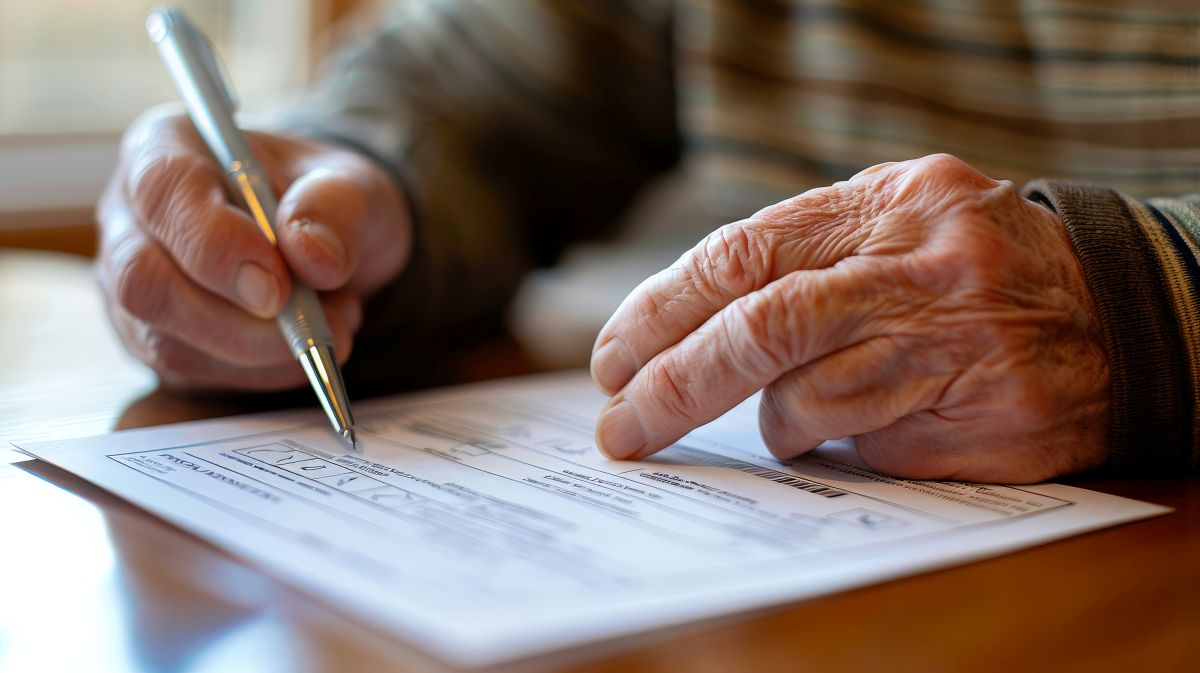
- The High Court in Johannesburg ordered the Master to accept a handwritten document signed by a deceased man in hospital as his Will.
- The judge found that the deceased had demonstrated both authorship and an intention to distribute his estate through the document, despite irregularities in the witnessing process.
- The application to appoint the deceased’s partner as executrix was dismissed, as the power to appoint executors rests with the Master.
A handwritten document prepared and signed by a seriously ill man during his hospital stay has been recognised as his Will, even though it did not comply with the formal signing and witnessing requirements prescribed by law.
The High Court in Johannesburg found that the deceased intended the document to operate as his Will while he was waiting for it to be formalised by his legal insurer. Acting Judge KD Iles ruled that the evidence met the requirements for recognising a Will that does not comply with all formalities, under Section 2(3) of the Wills Act 7 of 1953.
The handwritten Will prepared in hospital
The application was brought by the deceased’s partner, who asked the court to direct the Master of the High Court in Johannesburg to accept a handwritten document as the deceased’s Will. The deceased had three children from a previous marriage and three minor children with the applicant. He also had another minor child, whose interests were represented in the proceedings by a guardian.
The deceased was hospitalised in December 2020. During one of her visits, the applicant brought him a notebook and pen at his request. On Christmas Day, 25 December 2020, he handed her the notebook containing a document he had prepared and signed.
He instructed her to take it to his legal insurer, LIPCO, so that it could be formalised. However, the insurer’s offices were closed for the festive season, which delayed the process.
When the applicant returned to the hospital on 3 January 2021, the deceased asked two members of the medical staff to witness the document, but they declined. He later arranged for two other people to sign as witnesses.
One was a hospital employee who had been caring for him, while the other was a former colleague. On 8 January 2021, the former colleague signed the document outside the hospital after the applicant brought the notebook to him.
The deceased underwent a medical procedure later that day, never regained consciousness, and died on 13 January 2021.
Family disputes authenticity of the Will
The deceased’s three children from his previous marriage opposed the application. They questioned whether their father had written the document and whether he had the mental capacity to make a Will while in hospital. They also alleged fraud, raising concerns about the applicant’s interest in the estate and the circumstances surrounding the document.
The applicant submitted a handwriting expert’s report supporting her claim that the deceased had written and signed the document. The respondents produced a competing expert report that criticised the methodology and evidence relied upon by the applicant’s expert.
However, Judge Iles found that the respondents had not shown that the handwriting did not belong to the deceased. Their allegations of fraud were also unsupported by evidence. The judge noted that the applicant’s account was supported by affidavits from the two witnesses, who confirmed their involvement in signing the document.
The respondents also challenged WhatsApp messages between the applicant and the deceased, but did not provide evidence to support their claims that the messages were unauthentic. Judge Iles concluded that the allegations amounted to speculation rather than a genuine dispute of fact. The judge found that the requirement of authorship had been established.
Why the document qualified as a Will
The central legal question was whether the handwritten document could be recognised as a Will, even though it did not comply with the formal requirements of the Wills Act.
Section 2(1)(a) of the Act sets out the requirements for signing and witnessing a Will. The applicant accepted that these requirements had not been met, as the witnesses signed on different occasions and not in the required presence of one another and the deceased.
However, Section 2(3) allows a court to direct the Master to accept a document as a Will if it is satisfied that the deceased drafted or executed it and intended it to be his Will. Acting Judge Iles examined the document, which ran over several pages and contained detailed information about the deceased’s family, assets, beneficiaries, and instructions for distributing his estate.
The document was headed “Will” and ended with the deceased’s full name, identification number, signature, and the date of 25 December 2020. The respondents argued that the document was merely a set of instructions for preparing a formal Will, since the deceased had asked LIPCO to ratify it and obtain his signature approval.
The judge rejected this view, distinguishing the matter from previous cases in which deceased persons had simply provided instructions for someone else to draft their Wills. Judge Iles pointed out that the deceased referred to the document as “this Will” and had already signed it.
The judge further found that the deceased’s efforts to secure witnesses after learning that his legal insurer could not immediately formalise the document showed that he wanted it to operate as his Will in the meantime.
The judgment stated, “Formalisation would have perfected a will already made; it would not have been the making of the will.”
Mental capacity and appointment of executrix
The respondents also questioned whether the deceased had the mental capacity to make a Will while in hospital. However, the judge found that they had not provided medical records or sufficiently detailed evidence to show that he lacked the necessary capacity.
The contents of the document showed that the deceased could identify his relatives, recall his assets, and provide detailed instructions about their distribution. The judge therefore found no evidence to conclude that the deceased lacked the capacity to form the required testamentary intention.
Although the applicant substantially succeeded in having the document recognised as a Will, she was unsuccessful in her request to be declared executrix of the estate. Acting Judge Iles explained that section 15(1) of the Administration of Estates Act 66 of 1965 reserves the power to appoint executors to the Master of the High Court.
The order
The High Court directed the Master to accept the document signed by the deceased on 25 December 2020 as his Will for purposes of the Administration of Estates Act. The application to have the applicant declared executrix was dismissed.
The deceased’s first three children were ordered to pay the applicant’s legal costs jointly and severally on Scale B. No costs order was made against the guardian representing the interests of the deceased’s minor child.
Get your news on the go. Click here to follow the Conviction WhatsApp channel.
