


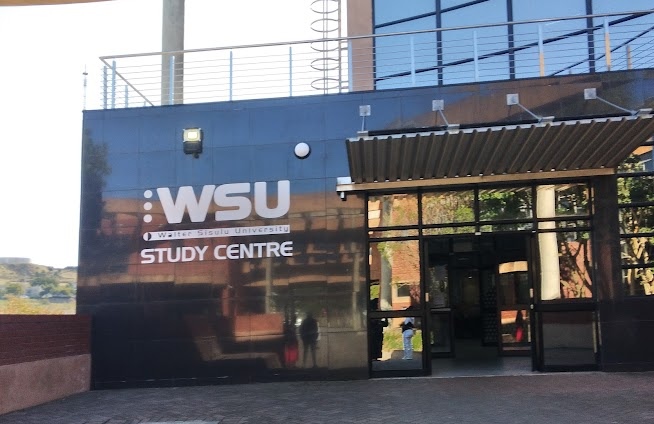
- Final-year LLB students Pholani Bandla and a fellow applicant rushed to court seeking to compel Walter Sisulu University to add five percent attendance marks to their Legal Research Methods results, arguing this would allow them to pass and graduate.
- Judge GNZ Mjali found that the urgency was self-created and that the applicants failed to prove a prima facie right to an interim interdict, noting they had known of their final marks since 13 October 2025.
- The court held that the constitutional right to education was not infringed, dismissed the application, and ordered the students to pay costs.
The dispute over five percent attendance marks in a final-year module has ended in defeat for LLB students who turned to the High Court in Mthatha in an attempt to force their university to alter their academic records.
Judge GNZ Mjali dismissed an urgent application brought by Pholani Bandla and another final-year student against Walter Sisulu University and several of its officials. The students wanted the court to compel the university to allocate an additional five percent attendance mark in their Legal Research Methods module, which they argued would push them over the pass threshold.
The application was framed as one for interim relief pending a contemplated review of the university’s decision. The students sought, among other things, a regrading of their scripts, written authorisation for mark adjustments, the reopening of the computer system to capture the additional marks, and amendments to their academic records to reflect passes of 50 percent and 51 percent respectively.
Background to the dispute
The applicants were final year LLB students who had failed to obtain a pass mark in Legal Research Methods. Their complaint was not that their scripts had been incorrectly marked in substance, but that they had not been credited with an additional five percent attendance mark when their papers were assessed.
They approached the court on 28 November 2025 on an urgent basis, contending that the matter had to be resolved before the institution closed for the December holidays and before the start of the 2026 academic year. They argued that failure to act immediately would jeopardise their ability to attend Law School in January and to graduate in May 2026.
Judge Mjali summarised their position, stating: “As I understand, the applicant’s case is premised on the complaint that they were denied an additional five percent attendance marks when their papers were assessed in respect of the Legal Research Method Module.”
The university opposed the application, arguing both a lack of urgency and lack of merit.
Urgency found to be self-created
Judge Mjali dealt first with urgency. Although the students cited the looming closure of the university and potential prejudice to their academic progress, the court found these arguments unconvincing.
The judge pointed out that by the time the matter was heard on 23 December 2025, the institution had already closed, making the immediate implementation of the relief impossible. More importantly, the disagreement over the marks had been ongoing for some time, and the final decision had been communicated to the students on 13 October 2025.
“They only approached this court on 28 November 2025,” the judge noted, adding: “I am inclined to agree with the respondents that if any, the urgency in this matter was self-created.”
On this basis alone, the court held that the application fell to be struck from the urgent roll.
No prima facie right to an interim interdict
Even if urgency had been established, Judge Mjali found that the students had failed to meet the well-known requirements for an interim interdict.
The judge restated the established test, including the need to show “a prima facie right” and “a well-grounded apprehension of irreparable harm if interim relief is not granted.”
The court emphasised that the students did not challenge the validity of their final marks as such. Instead, they accepted that they had not attained the required pass mark and relied solely on the addition of five percent attendance marks to tip them into a pass.
In response, the university explained that the allocation of such marks was discretionary and that the final marks already included the five percent. Any further adjustment, it argued, would require Senate approval.
Judge Mjali concluded that the students had not established a prima facie right. “They do not challenge the validity of the final marks they obtained,” the judgment records. “Their only contention is that the addition of the 5 percent attendance mark would result in them obtaining a pass mark.”
The court also rejected the constitutional argument advanced by the applicants. “Save for the mere allegation of the denial of their Constitutional right to education, nowhere do the applicants make a case to prove such denial,” Judge Mjali said. The students had been registered, given the opportunity to study, and had failed to obtain a pass mark even after some discretionary marks were allocated.
In a further blow, the court dismissed a new argument raised in reply that the scripts had not been externally moderated. “An applicant must stand and fall by his founding affidavit and the facts alleged therein,” the judge held. “An applicant cannot make out a new case in the replying affidavit.”
Referring to the Supreme Court of Appeal’s caution in Memory Institute SA CC t a SA Memory Institute v Hansen and others, Judge Mjali reiterated that an interim interdict is “an exceptional remedy which is available before the rights of the parties are fully determined” and “should therefore be granted with caution and only if a proper case is made out.”
Costs order against the students
Having found that the applicants failed to establish a prima facie right, the court held that it was unnecessary to consider the remaining requirements in detail.
On costs, Judge Mjali applied the general rule. “The general rule is that costs follow the event. There is no reason for deviation from the general rule,” the judgment states.
The final order reads: “The application for an interim interdict is dismissed with costs.”
Get your news on the go. Click here to follow the Conviction WhatsApp channel.
