


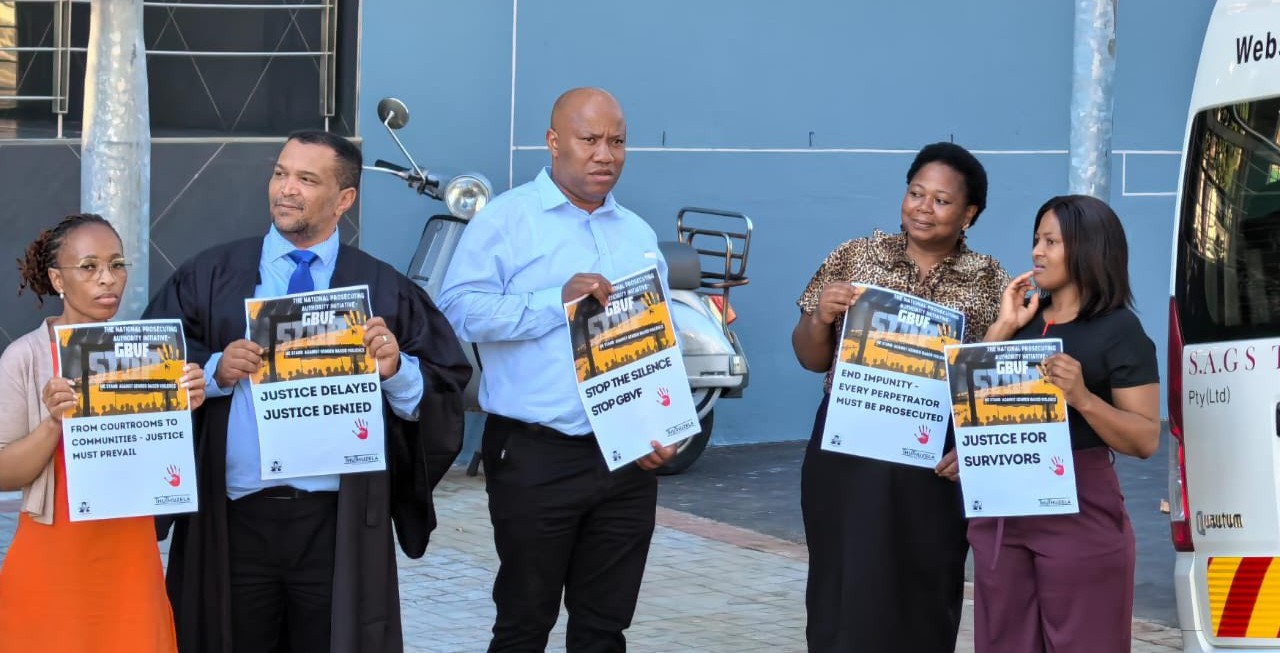
- The 16 Days of Activism exposes how gender-based violence is maintained through colonial power structures and violent masculinities rather than isolated criminal acts.
- Women, girls and LGBTIQA+ persons remain trapped inside a necropolitical system that determines whose bodies are protected and whose are disposable.
- Ending violence requires decolonial justice, institutional reform and epistemic rebellion beyond symbolic campaigns and policy statements.
Every year from 25 November to 10 December, the International 16 Days of Activism Against Gender-Based Violence towards Women and Girls raises global awareness of violence that is neither accidental nor isolated, but systemic, historical and deeply political.
South Africa, a country besieged by one of the highest gender-based violence rates in the world, has folded the campaign into its National Development Plan 2030 and the National Strategic Plan on Gender-Based Violence and Femicide, aligning itself with the commitments of the United Nations and the African Union to end violence and promote gender justice.
The vision is ambitious and necessary: a society free from fear, misogyny and patriarchal harm. Yet this aspiration runs headlong into an unforgiving reality — the violent return of hypermasculinities that are authoritarian, territorial and deeply entangled within the colonial matrix of power.
Prof Mothoagae on the colonial wound written on the body
Building on my work Reclaiming Our Black Bodies (2016), the haunting image of Sarah (Saartjie) Baartman remains a powerful reminder that colonial violence did not disappear with political independence. It merely changed form. Her body, once placed on public display for European consumption, persists as a symbol of how women, girls and LGBTIQA+ bodies remain sites of spectacle, domination and disposability.
The colonial matrix of power, as an interlocking system of economic exploitation, institutional domination, gender regulation and epistemic control, continues to script whose lives matter and whose suffering is normalised. It produces racialised, sexualised and gendered hierarchies that make violence appear inevitable and women expendable. In this theatre of necropolitical power, bodies are sorted into categories of value and violation.
Within this framework, hypermasculinities do not merely express aggression; they perform power. They operate as rituals of control, reaffirming colonial and patriarchal authority through fear, violation and symbolic terror. Violence becomes theatre, and women, girls and queer persons are forced into unwilling roles in a drama where domination acts as proof of sovereignty.
Foucault, bodies and death-worlds
Michel Foucault’s concept of biopower helps illuminate how modern power governs life itself — regulating sexuality, reproduction, identity and health to shape acceptable bodies and behaviours. But in postcolonial contexts such as South Africa, biopower exists alongside necropolitics, where authority decides not merely how people live, but who must die, socially, spiritually or physically.
The resurgence of violent masculinities operates as a technology of domination, simultaneously subjecting women, girls and LGBTIQA+ people to strict social control while exposing them to lethal vulnerability. They are governed through silence, shamed into invisibility and punished through violence when they resist.
This is not accidental. This is patterned. It is systemic. It is political.
Spaces of resistance and dangerous belonging
Maps of struggle reveal that violence is not random but structured through geography, social position and enduring colonial legacies. LGBTIQA+ communities, in particular, experience layered vulnerabilities: external hostility from homophobic institutions and actors, and internal violence shaped by inherited colonial heteronormativity and patriarchal norms.
Against this harsh terrain, Foucault’s concepts of heterotopia and utopia offer critical hope. Heterotopias are real, contested spaces where marginalised bodies carve out safety, allow refusal and practise resistance. They are churches that shelter queer youth, community platforms that disrupt silence, and activist circles that refuse erasure. Utopias, by contrast, represent the future that refuses to be silenced — imagined worlds free from violence, domination and hierarchy.
The policy frameworks of the NDP and the National Strategic Plan are necessary scaffolding, but policy alone cannot dismantle the theatre of necropolitical power. Laws do not speak. Bodies do. And bodies continue to be broken.
From symbolism to rupture
The 16 Days of Activism cannot remain symbolic if it hopes to be transformative. It must become a rupture. It must confront the violence not merely as a social failure but as a political inheritance. Gender-based violence is not an outbreak. It is a system.
To reclaim women’s, girls’ and LGBTIQA+ bodies, we must dismantle more than individual attitudes. We must unmake the colonial script that idealises domination and eroticises power over vulnerability. This requires institutional reform, epistemic disobedience and a radical commitment to decolonial justice. It demands listening to those who bleed first, and believing those who survive longest.
The violence that occurs within marginalised communities must be addressed without denial or deflection, through community-led justice that heals without reproducing harm. Reclamation does not happen through slogans. It happens through courage, confrontation and care.
The future imagined by the 16 Days will never be realised unless we dismantle the stage on which brutality performs. Only then can South Africa genuinely honour its commitments to dignity, equality and life. Only then can we silence the theatre of necropolitical power and return sovereignty to all bodies long denied it.
Get your news on the go. Click here to follow the Conviction WhatsApp channel.
