


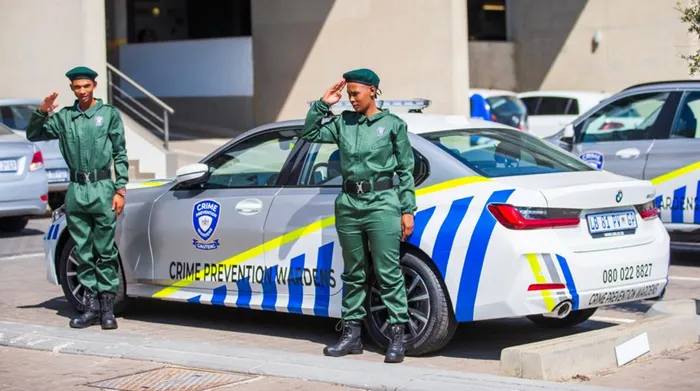
- The Public Protector found that Gauteng’s crime wardens were established without legal authority.
- Lesufi announced the disbandment of the unit and its retraining as provincial traffic officers.
- The next three years will test Gauteng’s ability to rebuild legally.
The Public Protector’s report on Gauteng’s Crime Prevention Wardens hit hard. This came shortly after Premier Panyaza Lesufi stated that the controversial unit would be phased out and retrained as provincial traffic officers.
The report confirmed that the 8 800 wardens, created under Lesufi’s provincial safety initiative, were **illegally formed and deployed without legal backing**. The Public Protector stated the Department of Community Safety acted “without any supporting legislative framework,” leading to “impropriety and maladministration.”
Despite these serious findings, the report does not call for the wardens’ firing. Instead, it instructs Lesufi to transform the unit into a lawful and properly established force within 180 days, following existing regulations under the National Road Traffic Act.
At his media briefing, Lesufi confirmed that the province would start a phased disbandment of the current unit while retraining the members. “There will be a phased disbandment of the unit as they undergo training to become provincial traffic officers,” he said.
A legal turning point
The Public Protector’s investigation started after complaints that Lesufi’s administration had “moved outside the lines of the law” by deploying wardens with policing powers. The report stated that although the Premier launched the initiative in 2022 to tackle high crime in Gauteng, the **province lacked the authority** to create its own policing structure.
The findings clarify that provincial governments may oversee and support policing, but they cannot operate their own enforcement agencies. “The law as it stands does not empower provincial government to exercise policing powers,” the report stated.
The wardens had already joined over 51 000 operations with the South African Police Service, often in dangerous areas, before it became clear that their work lacked legal support.
Lesufi’s balancing act
For Lesufi, the consequences have been personal as well as political. He has defended the initiative as an urgent response to violent crime in Gauteng but admits the legal foundation must now be addressed. “I have to explain to the Public Protector why we have wardens. I have to respond to parliamentary questions about them. I have to visit hospitals to check on wardens who are shot at because they lack protection,” he said.
Lesufi stressed that the retraining process is not about stepping back from his crime-fighting mission, but about ensuring it is done correctly. “Our focus is on fighting crime, not getting into disputes between governments,” he said. “We are fixing the system, not abandoning our people.”
The Premier stated that the new plan will ensure the wardens are trained, certified, and deployed legally. This transformation will occur over the next 36 months, with groups being removed from active duty and sent to accredited training colleges.
Rebuilding within the law
The Public Protector’s remedial steps require Lesufi to oversee the conversion of the wardens into provincial traffic officers, a role that is legally recognised under the National Road Traffic Act. The Ministers of Police and Justice must support the process to ensure that all training, certification, and appointments meet national legal standards.
Lesufi believes this new chapter is not a setback but an evolution. “The mandate remains the same: to fight crime in the province,” he said. “We will do it legally, smartly, and together.”

Get your news on the go. Click here to follow the Conviction WhatsApp channel.
