Skip to content
Close Menu
ConvictionConviction
  • Home
  • Law & Justice
  • Special Reports
  • Opinion
  • Ask The Expert
  • Get In Touch

Subscribe to Updates

Get the latest creative news from FooBar about art, design and business.

What's Hot

Ahmed Kathrada Foundation renews call to identify 20,000 women of the 1956 march

August 8, 2026

Can a managing agent’s tenure with a body corporate survive a lapsed contract?

August 7, 2026

Judges order Free State Premier to decide on Barolong Boo Seleka leadership dispute

August 7, 2026
Facebook X (Twitter) Instagram
Trending
  • Ahmed Kathrada Foundation renews call to identify 20,000 women of the 1956 march
  • Can a managing agent’s tenure with a body corporate survive a lapsed contract?
  • Judges order Free State Premier to decide on Barolong Boo Seleka leadership dispute
  • High Court overturns contempt conviction imposed during unlawful warrant enquiry
  • Sanlam franchise principal paid R1.1 million in ‘protection’ bribes to shield business
  • Mother told of child’s brain damage at Tembisa Hospital can still sue Gauteng Health Department
  • Attorney removed from late sister’s estate for using estate funds in personal court fight
  • Court reinstates National Arts Council and freezes replacement process pending review
Facebook X (Twitter) Instagram
ConvictionConviction
Sonneblom
  • Home
  • Law & Justice
  • Special Reports
  • Opinion
  • Ask The Expert
  • Get In Touch
ConvictionConviction
Home » Double murder in Mamelodi East sparks outrage and renewed debate on alcohol-related violent murders
Opinion

Double murder in Mamelodi East sparks outrage and renewed debate on alcohol-related violent murders

The killing of Tshiamo and Bolaseng Moralanga exposes the toxic mix of alcohol, patriarchy, and illegal guns in township life.
Professor Nokuthula C MazibukoBy Professor Nokuthula C MazibukoNovember 4, 2025Updated:November 4, 2025No Comments
Facebook Twitter Pinterest LinkedIn WhatsApp Reddit Tumblr Email
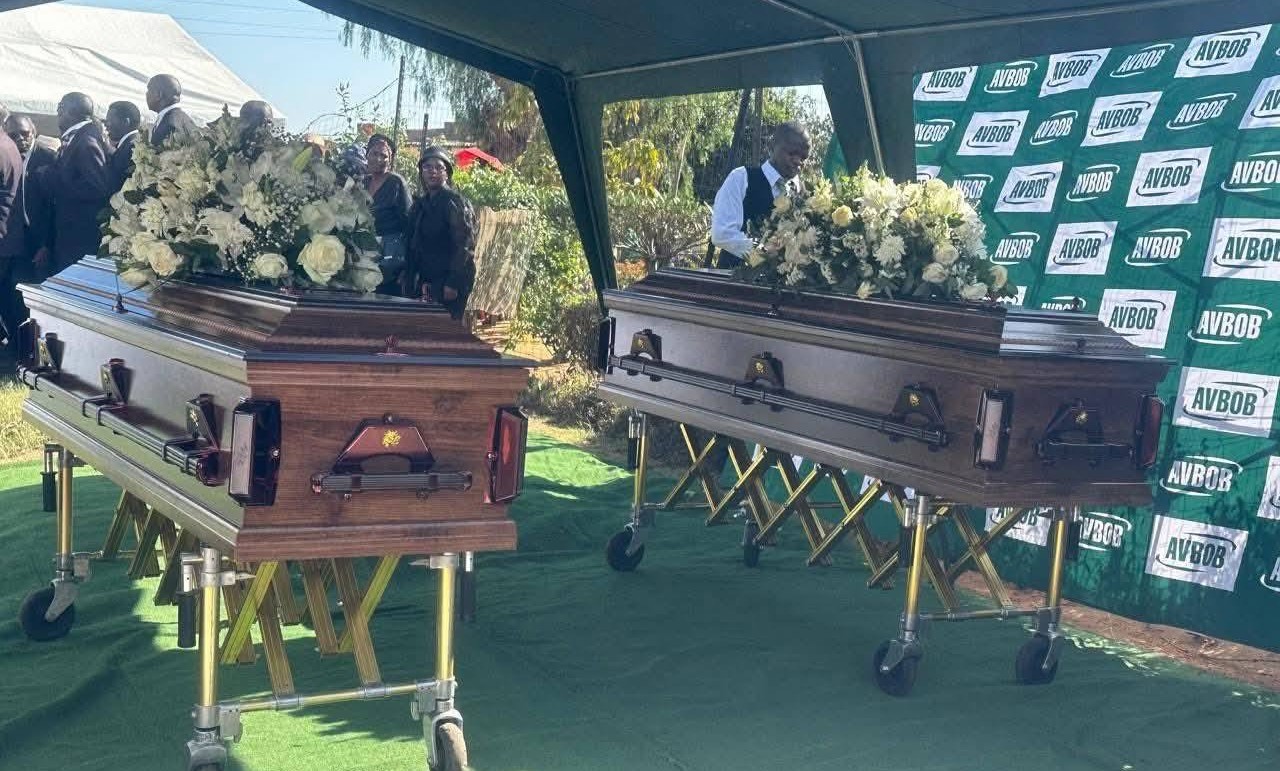
Tshiamo and Bolaseng Moralanga were laid to rest in Luckau village, near Groblersdal in Limpopo.
Share
Facebook Twitter LinkedIn Pinterest Email
  • The murder of two cousins, Tshiamo and Bolaseng Moralanga, has brought renewed national attention to the problem of intimate partner violence.
  • Alcohol abuse, illegal guns, and patriarchal control are key structural drivers that together fuel violence in Mamelodi East.
  • The situation calls for urgent, holistic interventions and a cultural shift in how masculinity is understood to help end the cycle of violence.

The murder of two cousins, Tshiamo Moralanga, 22, and Bolaseng Moralanga, 21, in Mamelodi East on 26 October 2025, has once again forced the nation to confront the persistent scourge of intimate partner violence.

The alleged perpetrator, Tebogo Mnisi, 38, reportedly a tavern bouncer and partner to one of the victims, has become the face of yet another tragedy rooted in the toxic intersection of alcohol abuse, patriarchal power, and access to illegal guns, closely tied to power.

Research studies suggest that South Africa has between 2.5 and 4 million illegal guns in circulation, exceeding the number of legally owned ones. Many of these weapons are a result of the apartheid era, lost or stolen from state armouries, or trafficked through organised crime networks.

As the community reels from shock, outrage, and anger, it is difficult not to recall the deeper structural and historical forces that continue to enable such violence. Between 2012 and 2014, I conducted doctoral research in Mamelodi East that examined the relationship between alcohol consumption and domestic violence in township settings.

At that time, the Moralanga cousins would have been no older than 10 or 11 years old, growing up in a social landscape already defined by hardship, gendered inequalities, and limited opportunity. My research participants repeatedly emphasised that alcohol played a central role in many instances of intimate partner violence. But they also highlighted that it is not alcohol alone; it is the environment that sustains it.

Townships such as Mamelodi remain spaces of limited socio-economic mobility and scarce recreational infrastructure. In many sections of Mamelodi, taverns (or shebeens) are among the visible gathering spaces for young adults. Churches and spaza shops form the rest of the social landscape.

For many, drinking becomes a form of escape from realities, a form of entertainment, and a means of belonging. It is a ritual of community life that often masks despair. This environment, built on inequality and deprivation, normalises a social pattern in which male dominance, alcohol abuse, and violence intertwine. In such spaces, gender-based violence becomes both visible and invisible: visible in its public manifestations such as screams, injuries, and police sirens but invisible in its normalisation and collective silence.

From intimate partner violence to intimate partner murder

What has changed in Mamelodi, however, is the escalation of violence. My earlier study recorded patterns of violence and control; the current trend increasingly involves murder. The killing of the Moralanga cousins is not an isolated event; it is part of a growing pattern of fatal violence within relationships across South African townships.

This shift demands urgent reflection. It reveals how deeply entrenched social ills, alcohol dependency, illegal guns, and patriarchy have converged into a volatile mix. Each femicide, each tragic death, becomes both a personal loss and a collective indictment of a society that continues to fail its women.

Despite more than three decades of democracy, township life still reflects the unfinished business of liberation. When alcohol consumption becomes a marker of social success, and masculinity remains tethered to control and dominance, communities like Mamelodi remain trapped in cycles of self-destruction.

Breaking the cycle

It has been more than three decades since the dawn of democracy, yet the promise of dignity and equality remains elusive for many in the townships. The glorification of excessive drinking, often equated with success, masculinity, and celebration, persists, while the social cost is measured in the lives of women and children.

If we are to honour the memory of Tshiamo and Bolaseng, we must confront the uncomfortable truth that alcoholism is not merely an individual weakness but a structural and cultural wound. It is sustained by poverty, gender inequality, and a lack of mental health support.

The crisis of intimate partner murders in South Africa cannot be addressed through law enforcement alone. It also requires a holistic social intervention - investment in community infrastructure, strict regulation of taverns, accessible rehabilitation programmes, and above all, a cultural reimagining of what it means to be a man, a partner, and a community member in post-apartheid South Africa.

The deaths of Tshiamo and Bolaseng should not fade into the background noise of South Africa’s ongoing gender-based violence epidemic. They should compel us to confront uncomfortable truths. One such truth is that the townships remain both a product and a prisoner of their history, and that without addressing alcohol abuse, illegal guns, and entrenched patriarchy, we risk losing yet another generation to violence that is, by now, tragically predictable.

Until then, the screams of the next victim will continue to echo through our townships, unheard, unheeded, and unhealed.

Conviction.co.za 

Get your news on the go. Click here to follow the Conviction WhatsApp channel.

alcohol abuse Gender-based violence illegal guns intimate partner murder township life
Share. Facebook Twitter Pinterest LinkedIn Tumblr Telegram Email
Professor Nokuthula C Mazibuko

Professor at Unisa's College of Human Sciences.

Related Posts

A genuine reset of the Section 22 Committee can restore confidence and strengthen accountability

August 6, 2026

South Africa is sliding into a household debt trap, and banks must act now

August 5, 2026

GBV requires a stronger public health response that goes beyond the justice system

August 5, 2026
Leave A Reply Cancel Reply

Prove your humanity: 0   +   3   =  

Subscribe to our newsletter:
Top Posts

Making sectional title rules that work: A practical guide

January 17, 2025

Protection order among the consequences of trespassing in an ‘Exclusive Use Area’

December 31, 2024

Between a rock and a foul-smelling place

November 27, 2024

Irregular levy increases, mismanagement, and legal threats in a sectional title scheme

June 2, 2025
Don't Miss
Human Rights
7 Mins Read

Ahmed Kathrada Foundation renews call to identify 20,000 women of the 1956 march

By Kennedy MudzuliAugust 8, 20267 Mins Read

The Ahmed Kathrada Foundation has renewed its public appeal to identify the estimated 20,000 women who marched to the Union Buildings on 9 August 1956. The campaign has been running since 2020 and has recovered 106 names so far.

Can a managing agent’s tenure with a body corporate survive a lapsed contract?

August 7, 2026

Judges order Free State Premier to decide on Barolong Boo Seleka leadership dispute

August 7, 2026

High Court overturns contempt conviction imposed during unlawful warrant enquiry

August 7, 2026
Stay In Touch
  • Facebook
  • Twitter
  • WhatsApp
Demo
About Us
About Us

Helping South Africans to navigate the legal landscape; providing accessible legal information; and giving a voice to those seeking justice.

Facebook X (Twitter) YouTube WhatsApp Twitch RSS
Latest posts

Making sectional title rules that work: A practical guide

January 17, 2025

Protection order among the consequences of trespassing in an ‘Exclusive Use Area’

December 31, 2024

Between a rock and a foul-smelling place

November 27, 2024
OUR PICKS

R112,000 hospital bill reduced to R750, allowing refugee child’s body to be released for burial

August 3, 2026

Attorney who briefs advocate remains liable for fees unless agreement states otherwise

July 30, 2026

High Court ends Bloemfontein-only filing rule for Supreme Court of Appeal cases

August 3, 2026
© 2026 Conviction.
  • Home
  • Law & Justice
  • Special Reports
  • Opinion
  • Ask The Expert
  • Get In Touch

Type above and press Enter to search. Press Esc to cancel.

Powered by
►
Necessary cookies enable essential site features like secure log-ins and consent preference adjustments. They do not store personal data.
None
►
Functional cookies support features like content sharing on social media, collecting feedback, and enabling third-party tools.
None
►
Analytical cookies track visitor interactions, providing insights on metrics like visitor count, bounce rate, and traffic sources.
None
►
Advertisement cookies deliver personalized ads based on your previous visits and analyze the effectiveness of ad campaigns.
None
►
Unclassified cookies are cookies that we are in the process of classifying, together with the providers of individual cookies.
None
Powered by