


- Six months without action does not automatically make a Labour Court review lapse.
- The Registrar has to issue the required notice before a review can be treated as lapsed.
- A request to consolidate two reviews was premature because the municipality’s reinstatement application had not yet been decided.
Basyl Patrick Sampson abandoned his application to reinstate a labour review after the Labour Court questioned whether the proceedings had actually lapsed. He had also asked for his review to be heard together with a cross-review brought by Amathole District Municipality, but that could not go ahead because the municipality’s own reinstatement application was still unresolved.
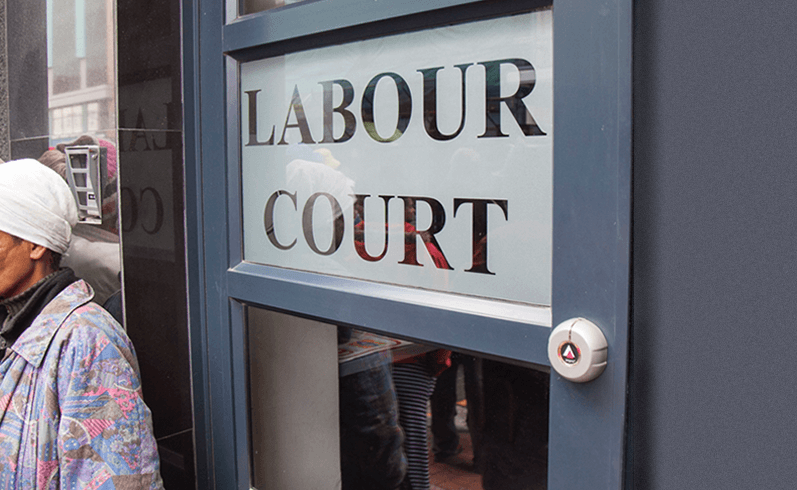
Acting Judge PN Kroon heard the matter in the Labour Court in Gqeberha. The application was argued on 13 November 2026, and judgment was delivered on 17 November 2026.
Six-month inactivity did not automatically lapse review
Sampson’s reinstatement application was based on the fact that six months had passed without any steps being taken to move his review forward. He relied on Clause 16.1 of the Labour Court’s old Practice Manual, which allowed for review files to be archived if nothing had happened within six months of filing the application or the last document filed.
During the hearing, Judge Kroon asked Sampson’s representative if the Registrar had issued a notice about the lapsing of the review. The representative confirmed that no such notice had been received.
The judge referred to Gololo v Limpopo Department Economic Development, Environment and Tourism and Others, where the Labour Court held that lapsing under clause 16.1 was not automatic. The Registrar had to issue the required notice before the review could lapse.
After this exchange, Sampson’s representative abandoned the reinstatement application and continued only with the request to consolidate the two review proceedings.
Municipality’s reinstatement application remained unresolved
The request to consolidate raised another issue when the court was told that Amathole District Municipality had also applied to reinstate its cross-review.
Judge Kroon asked whether the two cases could be combined before the municipality’s reinstatement application had been decided. If the cross-review had lapsed, it could not just be treated as a pending application.
Sampson’s representative argued that the municipality’s reinstatement application was similar to the one he had abandoned and that the court should treat the cross-review as still pending.
The judge rejected this view, explaining that allowing consolidation would mean the court was saying the municipality’s reinstatement application was unnecessary without hearing from the municipality first.
The municipality was entitled to have its own application considered. Judge Kroon stressed that a court cannot make a decision affecting a party without giving them a chance to be heard. “One must be careful not to sacrifice due process on the altar of expediency,” the judge said.
Judge favours hearing both reviews together
Although the court could not grant the consolidation order at that stage, Judge Kroon recognised that there were good reasons for hearing the review and cross-review together.
Both cases involved the same arbitration award and would usually have overlapping issues. Having separate hearings would also go against the Labour Court Rules’ aim of resolving disputes efficiently and cost-effectively.
The judge said it was hard to imagine a situation where two separate hearings about the same arbitration award would be justified. He expressed hope that the Registrar would keep these points in mind when arranging the future hearing of the two reviews.
Judge Kroon ordered that Sampson’s application for reinstatement and consolidation be removed from the roll. The order did not decide the merits of either review or the municipality’s own reinstatement application.
Get your news on the go. Click here to follow the Conviction WhatsApp channel.
